English
 Arabic
 French
 Spanish
 Portuguese
 Deutsch
 Turkish
 Dutch
Dutch
 Italiano
 Russian
 Romaian
 Portuguese (Brazil)
 Greek
Greek
 Creator, Content & Commerce (3C)
 IMS for Investors
 Global News
 Vdo Junction
 Talkfever App
Global Synthetic Feed Antioxidants to Hit USD 2.18 Billion by 2032 at 5.7% CAGR
Uncategorized |
2026-06-04 09:09:37
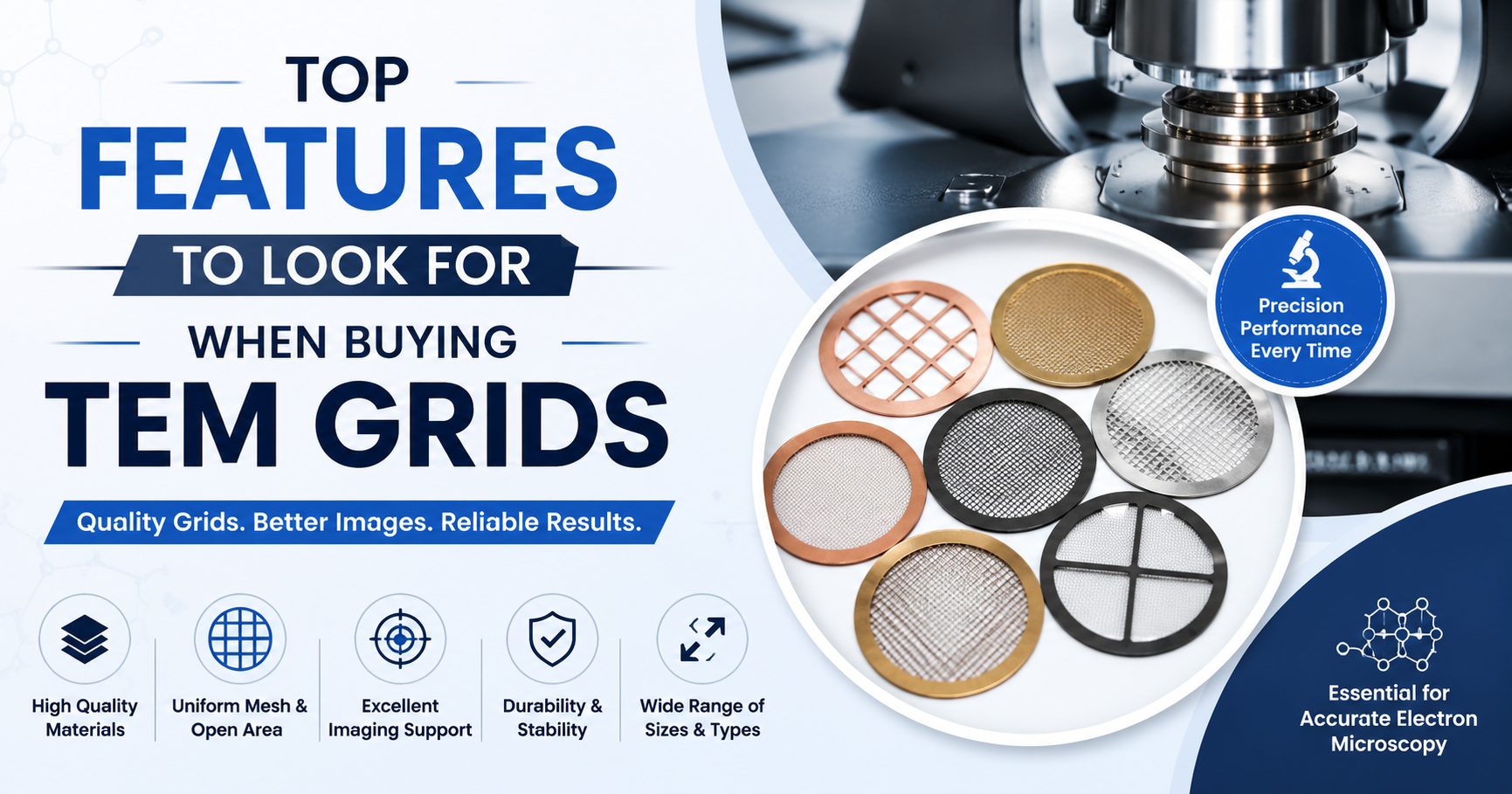
Transmission Electron Microscopy (TEM) is one of the most powerful techniques for studying materials at the nanoscale. Whether you're conducting research in materials science, nanotechnology, biology, or semiconductor manufacturing, the quality of your TEM grids plays a critical role in obtaining accurate and high-resolution images.
Choosing the right TEM grid is not just about selecting the lowest-priced option. Factors such as grid material, mesh size, support film, and compatibility with your sample significantly influence imaging quality and experimental success. This guide explores the top features to consider when buying TEM grids to help researchers and laboratories make informed purchasing decisions.
TEM grids are small circular supports, typically 3.05 mm in diameter, designed to hold ultra-thin specimens for observation under a Transmission Electron Microscope. They provide mechanical support while allowing the electron beam to pass through the sample with minimal interference.
TEM grids are widely used in:
Nanotechnology research
Material science
Semiconductor analysis
Biological imaging
Pharmaceutical research
Polymer characterization
Carbon nanomaterial studies
One of the most important considerations is the material of the TEM grid.
Common materials include:
Copper grids are the most commonly used because they are affordable and suitable for general TEM applications.
Advantages:
Cost-effective
Excellent conductivity
Widely available
Ideal for routine imaging
Nickel grids are preferred when copper may react with chemicals used during sample preparation.
Advantages:
Corrosion resistant
Better chemical compatibility
Suitable for specialized applications
Gold grids provide excellent resistance to oxidation and are commonly used in biological and cryo-TEM studies.
Advantages:
Highly stable
Chemically inert
Superior corrosion resistance
Ideal for experiments involving high temperatures or aggressive chemical environments.
Mesh size determines the number of openings across the grid.
Common mesh sizes include:
100 Mesh
150 Mesh
200 Mesh
300 Mesh
400 Mesh
Lower mesh numbers:
Larger openings
Better for thicker samples
Easier sample placement
Higher mesh numbers:
Smaller openings
Better support for fragile specimens
Preferred for ultrathin sections
Selecting the appropriate mesh depends on your sample type and imaging requirements.
Many TEM grids include a thin support film that helps hold delicate specimens.
Popular support films include:
The most widely used support film due to its excellent conductivity and low background interference.
Suitable for:
Nanoparticles
Carbon nanotubes
Biological samples
Contains regularly distributed holes that allow imaging without additional support material beneath the sample.
Ideal for:
Cryo-TEM
High-resolution imaging
Offers additional mechanical strength for delicate biological specimens.
Commonly used in:
Cell biology
Virus studies
Protein imaging
Grid thickness influences:
Mechanical strength
Sample stability
Ease of handling
A thicker grid provides greater durability, while thinner grids minimize electron scattering for improved image quality.
Electrical conductivity is essential to reduce charging effects during imaging.
Highly conductive grids:
Improve image stability
Reduce artifacts
Enhance image clarity
Prevent sample charging
Copper and gold grids are excellent choices for conductive applications.
Certain experiments involve acids, solvents, or reactive chemicals during sample preparation.
Choose chemically resistant materials if your workflow includes:
Corrosive solutions
High-temperature treatments
Chemical etching
Electrochemical studies
Nickel and gold grids generally perform better under harsh chemical conditions.
Delicate TEM samples require grids that can withstand handling during preparation.
Strong grids reduce the risk of:
Bending
Breaking
Sample loss
Damage during loading
High-quality manufacturing ensures consistent mechanical performance.
Before purchasing, verify that the grid is compatible with your microscope.
Consider:
Standard diameter (3.05 mm)
Holder compatibility
Cryo-holder requirements
Automated sample loading systems
Most modern TEM instruments support standard-sized grids.
Surface contamination can significantly reduce imaging quality.
Premium TEM grids are manufactured in clean environments to minimize:
Dust
Oil contamination
Organic residues
Manufacturing defects
Clean grids improve image contrast and reduce unwanted background noise.
Different research fields require different grid characteristics.
Recommended features:
Copper grids
Carbon support film
300 mesh
Recommended features:
Gold grids
Holey carbon film
Formvar support
Recommended features:
Nickel or molybdenum grids
High mechanical strength
Chemical resistance
Recommended features:
Carbon-coated grids
High conductivity
Ultra-clean surface
Reliable suppliers maintain strict quality control during manufacturing.
Look for suppliers offering:
Uniform mesh geometry
Precise dimensions
Consistent support films
Batch-to-batch consistency
Certified manufacturing standards
Consistent quality reduces experimental variability.
TEM grids are delicate and require protective packaging.
Quality suppliers provide:
Anti-static packaging
Dust-free containers
Secure grid boxes
Individual labeling
Proper packaging minimizes contamination and physical damage during transportation and storage.
Investing in premium TEM grids offers several advantages:
Better image resolution
Reduced sample contamination
Improved experiment repeatability
Longer storage life
Higher mechanical reliability
Greater compatibility with advanced TEM systems
More accurate analytical results
Before placing an order, consider the following:
Identify your research application.
Choose the appropriate grid material.
Select the correct mesh size.
Verify support film compatibility.
Ensure chemical resistance if required.
Purchase from reputable suppliers with consistent quality standards.
Store grids in clean, dry, dust-free conditions.
Selecting the right TEM grid is essential for achieving reliable, high-resolution electron microscopy results. Factors such as grid material, mesh size, support film, conductivity, chemical resistance, and manufacturing quality all contribute to the success of your imaging experiments. By understanding these key features, laboratories and researchers can choose TEM grids that best match their applications, improve imaging performance, and ensure consistent experimental outcomes. Investing in high-quality TEM grids ultimately leads to better data, reduced sample loss, and more efficient research.