 English
 Arabic
 French
 Spanish
 Portuguese
 Deutsch
 Turkish
 Dutch
Dutch
 Italiano
 Russian
 Romaian
 Portuguese (Brazil)
 Greek
Greek
 Creator, Content & Commerce (3C)
 IMS for Investors
 Global News
 Vdo Junction
 Talkfever App
UI UX COURSE
Music |
2026-06-06 07:02:22
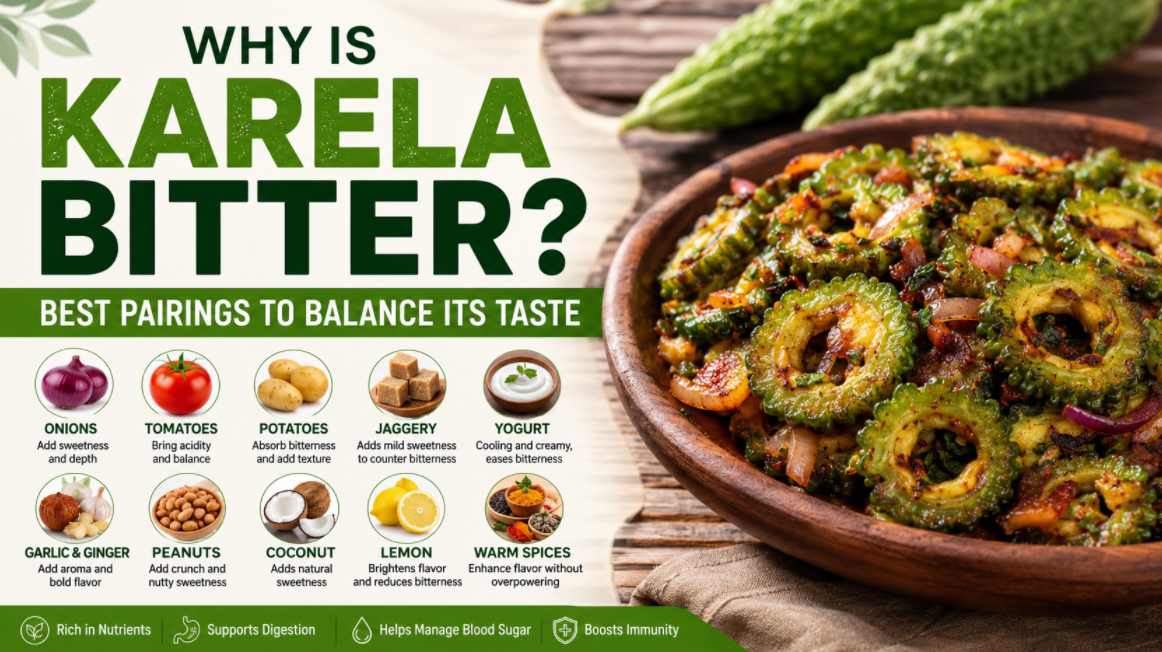
Karela, also known as bitter gourd or bitter melon, is one of the most distinctive vegetables in the culinary world. Loved for its remarkable nutritional profile yet often avoided because of its intense bitterness, karela has been a staple in Asian, African, and Caribbean cuisines for centuries. While its flavor can be challenging for first-time eaters, understanding why karela tastes bitter—and learning how to pair it with complementary ingredients—can transform it into a delicious and healthy addition to your meals.
In this guide, we'll explore the science behind karela's bitterness, its health benefits, and the best food pairings that help balance its bold flavor without compromising its nutritional value.
The bitterness of karela comes from naturally occurring plant compounds known as cucurbitacins and momordicosides. These compounds act as the plant's natural defense system, protecting it from insects, pests, and herbivores.
Unlike artificial bitterness found in spoiled or overcooked foods, karela's bitterness is completely natural and varies depending on factors such as:
Young, light-green karela tends to be milder, while darker, mature varieties usually develop a stronger bitter taste.
Interestingly, these bitter compounds are also responsible for many of karela's celebrated health benefits.
Yes. In many vegetables, bitterness is often associated with beneficial phytonutrients. Karela is rich in:
Research also suggests that compounds found in bitter gourd may help support:
Although more clinical studies are still underway, karela remains one of the most nutrient-dense vegetables available.
While it's impossible to remove bitterness completely, several traditional cooking techniques can significantly mellow its flavor.
Slice the karela and sprinkle it generously with salt. Let it rest for 20–30 minutes before squeezing out the released moisture. This process helps draw out some of the bitter compounds.
Boiling karela briefly in salted water before cooking softens both its texture and bitterness.
Older bitter gourds often have mature seeds that contribute to a harsher flavor. Removing these before cooking can make the vegetable milder.
A light marinade using lemon juice, yogurt, or spices helps soften the bitterness while adding extra flavor.
The secret to enjoying karela lies in combining it with ingredients that naturally complement or counteract its bitterness.
Caramelized onions are perhaps the most classic pairing with karela. Their natural sweetness balances the vegetable's sharp bitterness while adding depth and richness.
The slight acidity and sweetness of ripe tomatoes soften bitter notes and create a more rounded flavor profile. This combination is popular in many Indian and Middle Eastern recipes.
Potatoes absorb flavors beautifully and dilute the intensity of karela. They also add a creamy texture that makes the dish more comforting.
A small amount of jaggery or brown sugar can create a pleasant sweet-and-bitter contrast without overpowering the vegetable. Many traditional recipes use this technique sparingly.
Yogurt's cooling, creamy texture balances bitterness exceptionally well. Karela paired with yogurt-based curries or raita-style preparations offers a refreshing twist.
These aromatic ingredients provide bold flavors that complement rather than compete with karela. Together, they create a savory profile that makes bitterness less pronounced.
Roasted peanuts add crunch, richness, and a slightly sweet nutty flavor that pairs surprisingly well with bitter gourd.
Fresh or grated coconut softens karela's strong taste while adding natural sweetness and creaminess. South Indian cuisine frequently combines these ingredients.
Lemon or lime juice brightens the dish and helps balance bitterness with fresh acidity.
Cumin, coriander, fennel, turmeric, mustard seeds, and garam masala enhance karela's complexity without masking its unique flavor.
If you're new to bitter gourd, these recipes provide an excellent starting point:
Each recipe balances bitterness differently, allowing you to discover your preferred flavor profile.
If you've never enjoyed bitter gourd before, don't be discouraged by the first bite. Like coffee, dark chocolate, or olives, karela is an acquired taste that many people grow to appreciate.
To make the experience more enjoyable:
With repeated exposure, many people begin to appreciate karela's unique taste and satisfying complexity.
Karela's bitterness is not a flaw—it's a defining characteristic that reflects its unique composition and nutritional richness. The naturally occurring compounds responsible for its bold flavor are also linked to many of its potential health benefits. Rather than trying to eliminate the bitterness entirely, the key is learning how to balance it with complementary ingredients such as onions, tomatoes, potatoes, yogurt, garlic, coconut, and warm spices.
Whether you're preparing a traditional family recipe or experimenting with modern cooking techniques, thoughtful pairings can transform karela from an intimidating vegetable into a flavorful and wholesome dish. Once you understand how to work with its distinctive taste, you'll discover why bitter gourd has remained a treasured ingredient in cuisines around the world for generations.
Karela contains natural compounds called cucurbitacins and momordicosides, which give it its characteristic bitter taste while also serving as the plant's natural defense mechanism.
No. While salting, blanching, and proper cooking can reduce bitterness, it cannot be completely eliminated without affecting the vegetable's natural flavor.
Onions, tomatoes, potatoes, yogurt, coconut, peanuts, garlic, ginger, lemon juice, and a small amount of jaggery are among the best ingredients for balancing karela's taste.
Generally, stronger bitterness indicates a higher concentration of beneficial plant compounds, although excessive bitterness is not always directly proportional to nutritional value.
Light stir-frying, steaming, grilling, or baking helps preserve nutrients while maintaining flavor. Avoid excessive deep-frying if your goal is maximum health benefits.


