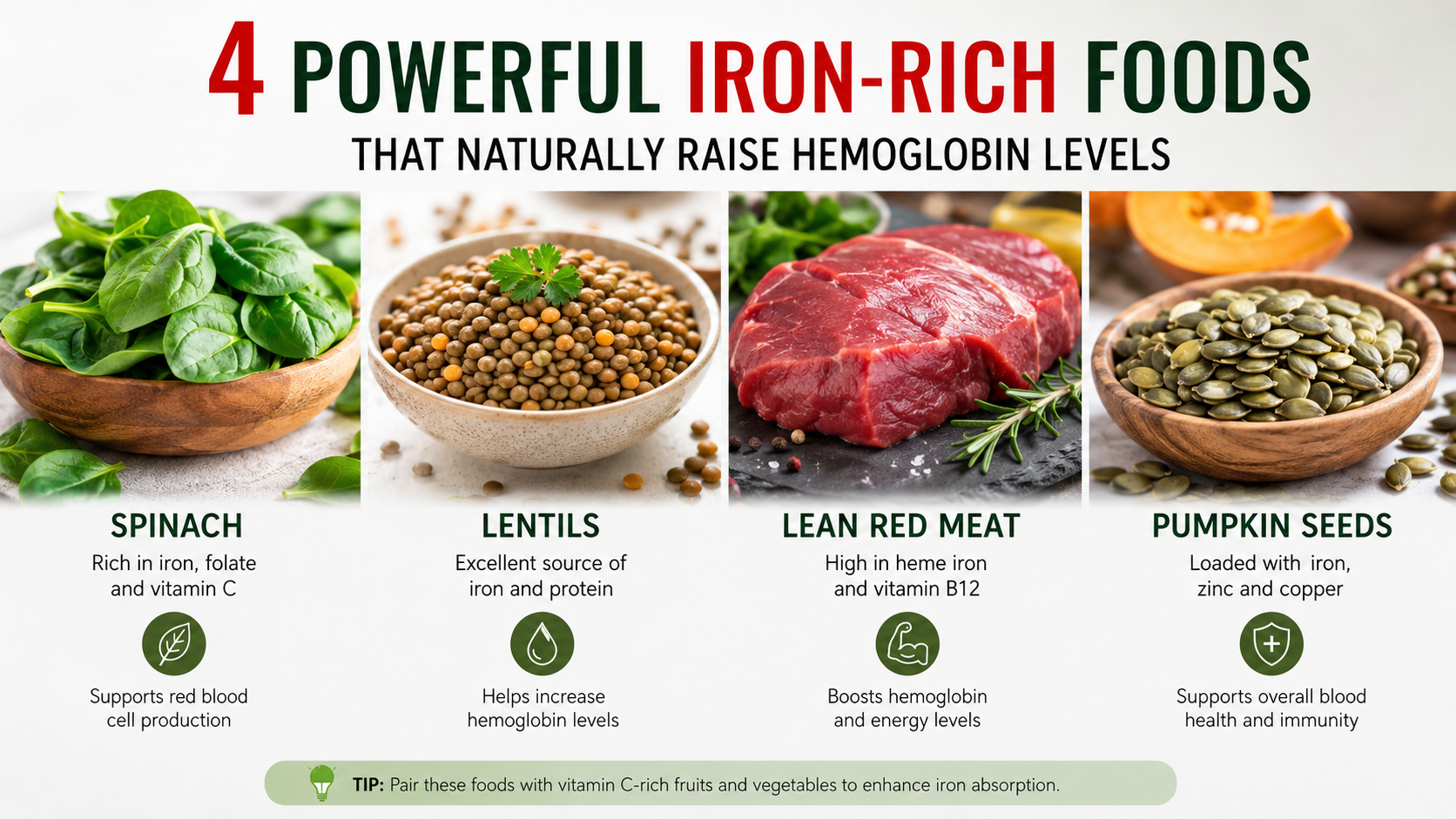
Hemoglobin is a vital protein found in red blood cells that carries oxygen from the lungs to every part of the body. When hemoglobin levels are low, the body's organs and tissues receive less oxygen, which can lead to fatigue, weakness, dizziness, headaches, and reduced physical performance. One of the most common causes of low hemoglobin is iron deficiency, making dietary choices an essential part of maintaining healthy blood.
While supplements may be necessary in some cases, a well-balanced diet rich in iron can naturally support healthy hemoglobin production. Along with iron, nutrients such as vitamin C, folate, vitamin B12, and copper also play important roles in the formation of healthy red blood cells.
In this article, we'll explore four powerful iron-rich foods that can naturally help raise hemoglobin levels and support overall health.
1. Spinach – A Nutrient-Dense Green for Healthy Blood
Spinach is one of the most popular leafy greens and an excellent source of non-heme iron, making it an ideal addition to a hemoglobin-friendly diet. Besides iron, spinach provides folate, vitamin A, vitamin C, and antioxidants that contribute to healthy blood cell production.
Although the iron in spinach is plant-based and not absorbed as efficiently as animal-based iron, pairing it with vitamin C-rich foods can significantly improve absorption.
Benefits of Spinach
- Rich in iron and folate
- Supports red blood cell production
- Contains antioxidants that promote overall wellness
- Low in calories and highly nutritious
Best Ways to Eat Spinach
- Add fresh spinach to salads.
- Blend it into smoothies with oranges or berries.
- Stir into soups, curries, or lentil dishes.
- Lightly sauté with garlic and olive oil.
Tip: Pair spinach with lemon juice, tomatoes, bell peppers, or citrus fruits to enhance iron absorption.
2. Lentils – An Affordable Plant-Based Iron Powerhouse
Lentils are among the best plant-based sources of iron and protein. They are also packed with fiber, folate, potassium, and complex carbohydrates, making them a highly nutritious food for supporting healthy hemoglobin levels.
Regular consumption of lentils can help replenish iron stores, especially for vegetarians, vegans, and individuals at risk of iron deficiency.
Benefits of Lentils
- Excellent source of plant-based iron
- Rich in folate, which supports red blood cell formation
- High in protein and dietary fiber
- Helps maintain steady energy levels
Best Ways to Eat Lentils
- Prepare traditional lentil soups or dals.
- Add cooked lentils to salads.
- Mix into vegetable curries.
- Use as a filling for wraps and grain bowls.
Tip: Serve lentils with tomatoes or a squeeze of fresh lemon to improve iron absorption.
3. Lean Red Meat – A Highly Absorbable Source of Iron
Lean red meat is one of the richest natural sources of heme iron, the form of iron most easily absorbed by the body. Unlike plant-based iron, heme iron has a significantly higher absorption rate, making it especially beneficial for individuals with low hemoglobin or iron deficiency.
Red meat also provides vitamin B12, zinc, and high-quality protein, all of which contribute to healthy blood formation and overall wellness.
Benefits of Lean Red Meat
- High in highly absorbable heme iron
- Rich source of vitamin B12
- Supports muscle health and energy production
- Helps maintain healthy red blood cell levels
Best Ways to Eat Lean Red Meat
- Grilled lean beef steaks
- Lean beef stir-fries with vegetables
- Homemade beef stews
- Lean minced beef in balanced meals
Tip: Choose lean cuts and enjoy them in moderation as part of a balanced diet.
4. Pumpkin Seeds – Small Seeds with Big Nutritional Benefits
Pumpkin seeds may be small, but they are packed with nutrients that support healthy hemoglobin levels. They are an excellent source of iron, magnesium, zinc, copper, and healthy fats.
Copper, in particular, works alongside iron to help the body produce healthy red blood cells, making pumpkin seeds an excellent addition to an iron-rich eating plan.
Benefits of Pumpkin Seeds
- Rich in iron and copper
- Good source of plant-based protein
- Supports immune function
- Provides heart-healthy fats and antioxidants
Best Ways to Eat Pumpkin Seeds
- Sprinkle over salads.
- Add to yogurt or oatmeal.
- Blend into smoothies.
- Enjoy as a healthy snack.
Tip: Choose unsalted, roasted, or raw pumpkin seeds for maximum nutritional value.
Tips to Improve Iron Absorption Naturally
Eating iron-rich foods is important, but ensuring your body absorbs the iron efficiently is equally essential. Consider these simple dietary habits:
- Pair iron-rich foods with vitamin C-rich fruits such as oranges, kiwi, strawberries, and guava.
- Include vegetables like bell peppers, tomatoes, and broccoli in meals.
- Avoid drinking tea or coffee immediately before or after iron-rich meals, as they contain compounds that can reduce iron absorption.
- Include foods rich in folate and vitamin B12, such as eggs, dairy products, leafy greens, and fortified cereals.
- Maintain a balanced diet with adequate protein to support healthy blood production.
Who May Benefit Most from Iron-Rich Foods?
Certain individuals are at greater risk of developing low hemoglobin or iron deficiency and may benefit from increasing iron-rich foods in their diet, including:
- Women during menstruation
- Pregnant women (under medical guidance)
- Growing children and adolescents
- Vegetarians and vegans
- Endurance athletes
- Older adults
- Individuals recovering from illness or surgery
If symptoms such as persistent fatigue, shortness of breath, dizziness, or pale skin continue despite dietary improvements, consult a healthcare professional. Blood tests can determine whether iron deficiency or another underlying condition is contributing to low hemoglobin levels.
Lifestyle Habits That Support Healthy Hemoglobin
In addition to consuming iron-rich foods, several healthy lifestyle practices can support optimal blood health:
- Eat a varied, nutrient-rich diet.
- Stay well hydrated.
- Exercise regularly to promote healthy circulation.
- Get sufficient sleep each night.
- Manage chronic health conditions with your healthcare provider.
- Attend regular health check-ups if you're at risk of anemia.
A comprehensive approach combining proper nutrition and healthy lifestyle habits offers the best support for maintaining normal hemoglobin levels.
Conclusion
Maintaining healthy hemoglobin levels is essential for energy, oxygen transport, and overall well-being. While many factors influence blood health, incorporating iron-rich foods into your daily diet is one of the most effective natural strategies to support healthy hemoglobin production.
Foods such as spinach, lentils, lean red meat, and pumpkin seeds provide valuable iron along with other nutrients that contribute to red blood cell formation. Pairing these foods with vitamin C-rich ingredients can further improve iron absorption and maximize their benefits.
Although diet plays a significant role, it is important to remember that persistently low hemoglobin may result from medical conditions that require professional evaluation. If you experience ongoing symptoms or have been diagnosed with anemia, consult a qualified healthcare provider for personalized advice and appropriate treatment.
By combining a balanced diet, healthy lifestyle habits, and regular medical check-ups when needed, you can naturally support healthy hemoglobin levels and enjoy better energy, vitality, and long-term health.
Frequently Asked Questions (FAQs)
1. Which food increases hemoglobin the fastest?
Foods containing heme iron, such as lean red meat, are generally absorbed more efficiently than plant-based sources. Pairing any iron-rich food with vitamin C can further improve absorption.
2. Can vegetarians naturally increase hemoglobin?
Yes. Vegetarians can support healthy hemoglobin levels by eating iron-rich foods such as spinach, lentils, beans, pumpkin seeds, tofu, and fortified cereals, along with vitamin C-rich fruits and vegetables.
3. How long does it take for iron-rich foods to improve hemoglobin?
The timeframe varies depending on the cause and severity of low hemoglobin. With consistent dietary improvements, some people may notice gradual improvements over several weeks, but significant deficiencies may require medical treatment or iron supplements.
4. Which fruits help improve iron absorption?
Oranges, guava, kiwi, strawberries, lemons, amla (Indian gooseberry), and papaya are rich in vitamin C, which helps the body absorb iron more effectively.
5. Can drinking tea or coffee affect iron absorption?
Yes. Tea and coffee contain compounds called polyphenols and tannins that can reduce iron absorption when consumed with meals. It's generally recommended to wait at least one to two hours after eating before drinking them.
6. Should I take iron supplements without a doctor's advice?
No. Iron supplements should only be taken under medical supervision, as excessive iron intake can be harmful. A healthcare provider can recommend appropriate treatment based on blood test results and your individual needs.
 English
 Arabic
 French
 Spanish
 Portuguese
 Deutsch
 Turkish
 Dutch
Dutch
 Italiano
 Russian
 Romaian
 Portuguese (Brazil)
 Greek
Greek
 Social Networth OS
 Creator Commerce
 Launch Startup
 Global News
 Creator Award
 Talkfever App
See All
Talkfever App
See All