 English
 Arabic
 French
 Spanish
 Portuguese
 Deutsch
 Turkish
 Dutch
Dutch
 Italiano
 Russian
 Romaian
 Portuguese (Brazil)
 Greek
Greek
 IMS for Investors
 Global News
 Vdo Junction
 Talkfever App
 Upcoming
Latest News: Industrial Vehicles Market Share, Size, Analysis, Trends, Growth, Report and Forecast 2025-2034
Networking |
2025-03-12 04:37:17
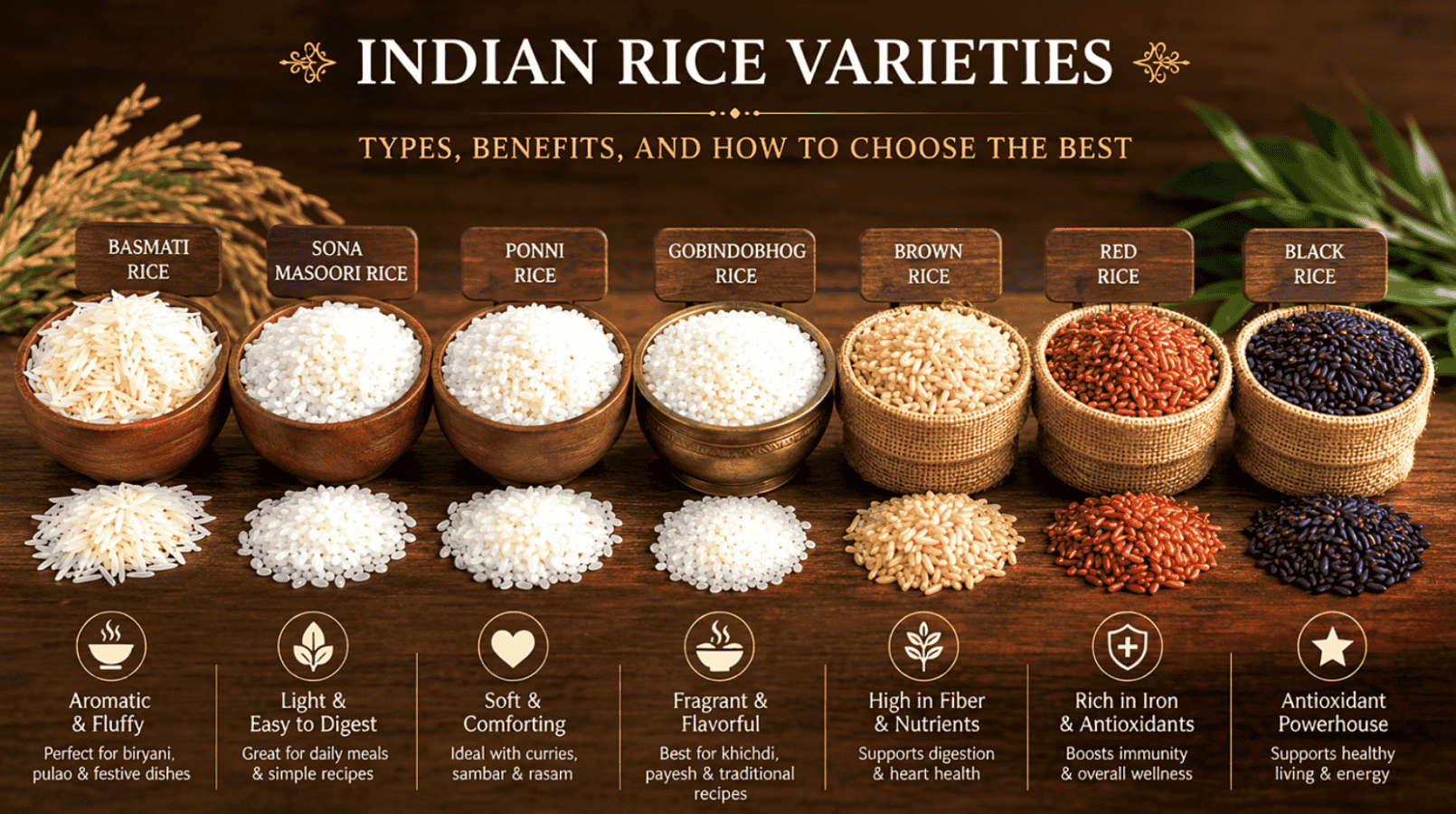
Rice is more than just a staple food in India—it's a symbol of culture, tradition, and regional diversity. As one of the world's largest producers and consumers of rice, India is home to thousands of rice varieties, each offering unique flavors, textures, aromas, and nutritional benefits. From the fragrant grains of Basmati to the wholesome goodness of red and black rice, choosing the right variety can elevate both your meals and your health.
This guide explores the most popular Indian rice varieties, their benefits, ideal culinary uses, and practical tips to help you select the best rice for your needs.
India's diverse climate, fertile river basins, and centuries-old farming traditions have given rise to an extraordinary range of rice varieties. Different regions cultivate rice that is best suited to their soil, rainfall, and culinary preferences.
Today, Indian rice can broadly be categorized into:
Each type differs in grain length, cooking characteristics, nutritional profile, and intended use.
Basmati is internationally renowned for its long, slender grains, delicate fragrance, and fluffy texture after cooking. Primarily grown in northern India, it is considered the premium choice for festive and special occasions.
Best for:
Benefits:
Sona Masoori is a lightweight, medium-grain rice widely consumed across South India. It offers a soft texture and mild flavor, making it suitable for daily meals.
Best for:
Benefits:
Popular in Tamil Nadu, Ponni rice is known for its soft texture and balanced flavor. It pairs exceptionally well with traditional South Indian curries and gravies.
Best for:
Benefits:
Originating from West Bengal, Gobindobhog is a short-grain aromatic rice prized for its rich fragrance and creamy texture.
Best for:
Benefits:
Red rice retains its bran layer, giving it its characteristic reddish color and superior nutritional value.
Best for:
Benefits:
Brown rice is minimally processed, preserving the bran and germ layers that contain valuable nutrients.
Best for:
Benefits:
Often referred to as "forbidden rice," black rice is one of India's most nutritious traditional grains. Its deep purple-black color comes from anthocyanins—the same antioxidants found in blueberries.
Best for:
Benefits:
While all rice varieties provide carbohydrates for energy, their nutritional profiles differ considerably.
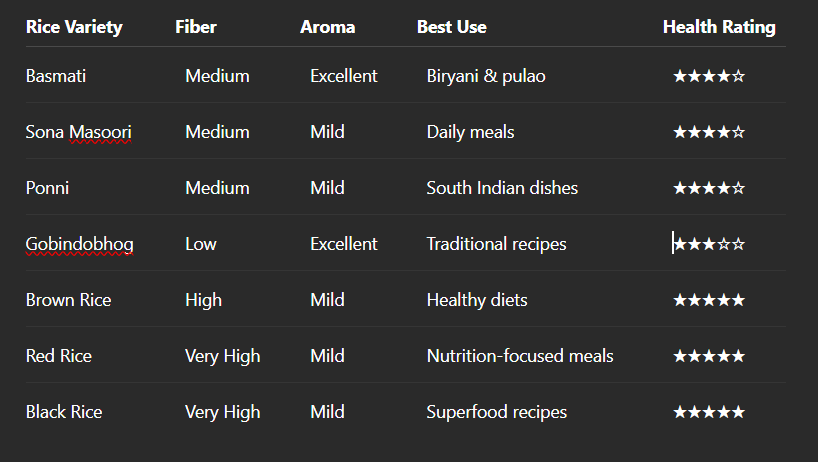
There is no single "best" rice for everyone. The ideal choice depends on your cooking style, nutritional goals, and personal preferences.
When purchasing rice, keep these practical considerations in mind:
Every rice variety requires slightly different cooking techniques.
India's remarkable diversity of rice varieties reflects the country's rich agricultural heritage and culinary traditions. Whether you prefer the fragrant elegance of Basmati, the everyday versatility of Sona Masoori, the comforting softness of Ponni, or the nutritional advantages of brown, red, and black rice, each variety has its own strengths.
Rather than searching for one universally "best" rice, consider the purpose of your meal, your dietary preferences, and the flavors you enjoy most. Keeping more than one variety in your pantry allows you to pair the right rice with every recipe—from festive biryanis to nourishing weekday dinners.
Ultimately, the best Indian rice is the one that complements your lifestyle, supports your nutritional goals, and brings authentic flavor to your table. By understanding the characteristics of each variety, you can make informed choices that enhance both your cooking and your overall well-being.
The information provided in this article is intended for general informational and educational purposes only. While every effort has been made to ensure the accuracy and reliability of the content, nutritional values, health benefits, and dietary recommendations may vary depending on the rice variety, cultivation methods, processing techniques, and individual health conditions.
This article should not be considered medical, nutritional, or professional dietary advice. If you have specific health concerns, food allergies, diabetes, or other medical conditions, consult a qualified healthcare professional or registered dietitian before making significant changes to your diet.
Product availability, quality, and regional rice varieties may differ across India and international markets. Readers are encouraged to verify product labels, certifications, and sourcing information before making purchasing decisions.
The opinions expressed in this article are based on generally accepted information and are intended to help readers make informed choices. The publisher and author are not responsible for any decisions made based on the information provided herein.


