English
 Arabic
 French
 Spanish
 Portuguese
 Deutsch
 Turkish
 Dutch
Dutch
 Italiano
 Russian
 Romaian
 Portuguese (Brazil)
 Greek
Greek
 IMS for Investors
 Global News
 Vdo Junction
 Talkfever App
 Upcoming
Comprehensive Analysis of the United States Airway Stent/Lung Stent Market 2034
Health |
2026-06-30 14:42:41
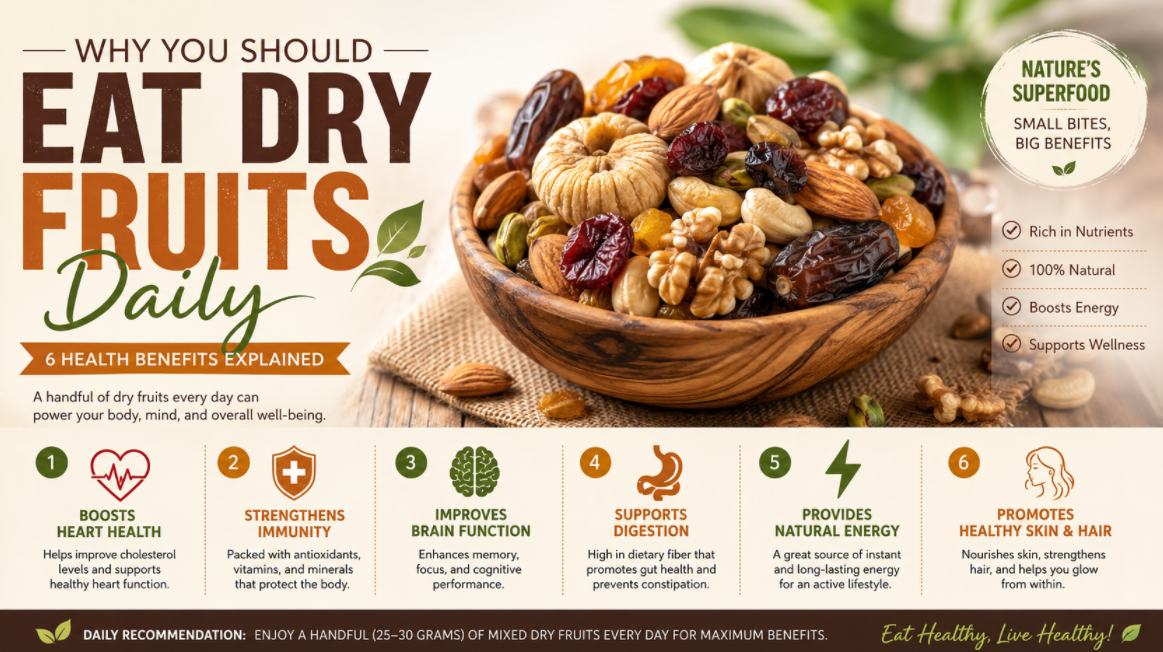
Looking for a simple way to improve your overall health? ✨ Adding a handful of dry fruits to your daily diet can make a significant difference. Packed with essential nutrients, antioxidants, healthy fats, vitamins, and minerals, dry fruits are a natural superfood that supports your body from the inside out.
Dry fruits such as almonds and walnuts contain healthy fats, omega-3 fatty acids, and antioxidants that help:
• Support healthy cholesterol levels
• Improve blood circulation
• Promote overall cardiovascular wellness
Rich in vitamins, minerals, and antioxidants, dry fruits help your body:
✔ Fight free radicals
✔ Support immune function
✔ Reduce oxidative stress
Nuts like walnuts and almonds are known to support:
• Memory and concentration
• Cognitive performance
• Long-term brain health
Dry fruits such as figs, raisins, and prunes are excellent sources of dietary fiber, which helps:
• Promote regular bowel movements
• Improve gut health
• Support healthy digestion
Instead of reaching for processed snacks, enjoy dry fruits for:
✓ Long-lasting energy
✓ Reduced hunger between meals
✓ Better daily productivity
The vitamins, minerals, and healthy fats found in dry fruits may help:
• Maintain glowing skin
• Support healthy hair growth
• Protect cells from oxidative damage
🥜 Enjoy approximately 25–30 grams (a small handful) of mixed dry fruits each day as part of a balanced diet.
Great choices include:
• Almonds
• Walnuts
• Cashews
• Pistachios
• Raisins
• Dates
• Figs
Eating dry fruits every day is one of the easiest and most nutritious habits you can adopt. Their combination of healthy fats, protein, fiber, vitamins, minerals, and antioxidants supports heart health, brain function, digestion, immunity, natural energy, and healthy skin. When consumed in moderation alongside a balanced diet and an active lifestyle, dry fruits can contribute to long-term health and overall well-being.
Yes. A small handful (25–30 grams) of mixed dry fruits daily is generally a healthy choice for most people.
Almonds, walnuts, pistachios, raisins, dates, and figs are among the most nutrient-dense options.
You can enjoy them in the morning, as a mid-day snack, or before a workout for sustained energy.
Yes. Although calorie-dense, their protein, fiber, and healthy fats help increase fullness when eaten in appropriate portions.
Many dry fruits can be included in a diabetes-friendly diet, but portion control is important. It's best to choose unsweetened varieties and seek personalized advice from a healthcare professional.
💬 Which dry fruit is your favorite—Almonds, Walnuts, Cashews, Pistachios, Raisins, Dates, or Figs? Tell us in the comments! 👇
👍 Like | 💬 Comment | 🔄 Share this post to help friends and family make healthier food choices.
#DryFruits #HealthyEating #Nutrition #HealthyLifestyle #Superfoods #Wellness #HealthyHabits #NaturalNutrition #Fitness #HeartHealth #BrainHealth #Immunity #SkinCare #EnergyBoost #DailyNutrition