English
 Arabic
 French
 Spanish
 Portuguese
 Deutsch
 Turkish
 Dutch
Dutch
 Italiano
 Russian
 Romaian
 Portuguese (Brazil)
 Greek
Greek
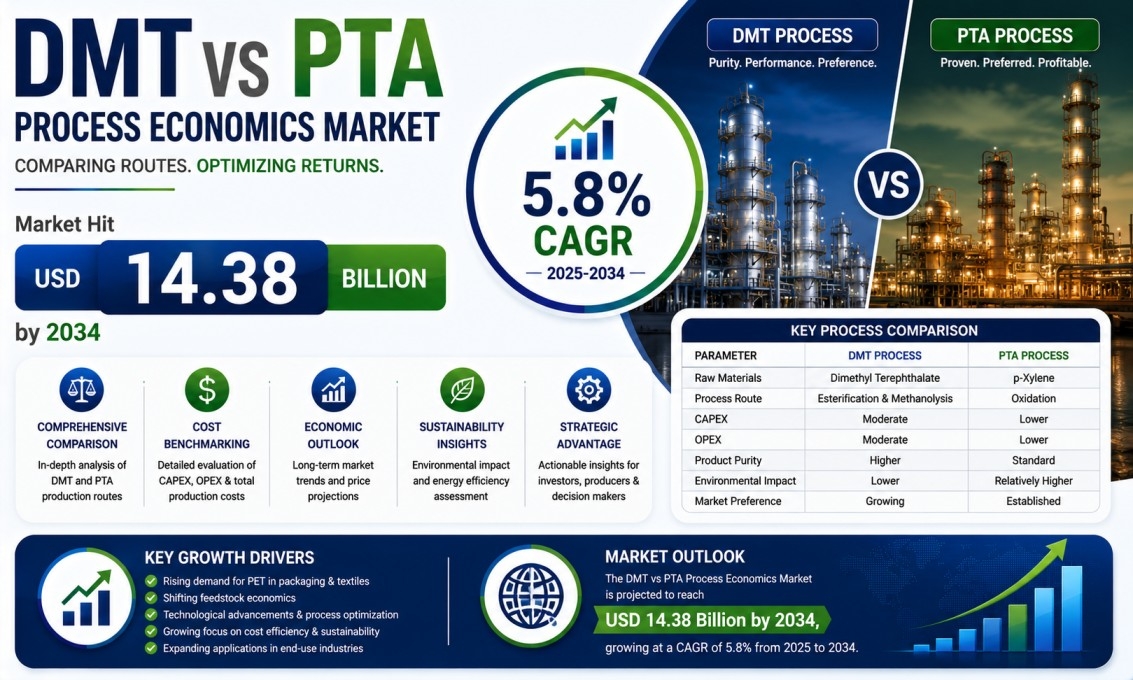
DMT vs PTA Process Economics Market Hit USD 14.38 Billion by 2034 at 5.8% CAGR
Sem categoria |
2026-05-22 09:37:41
 Social Networth OS
 Creator Commerce
 Launch Startup
 Global News
 Creator Award
 Talkfever App
Ver todos
Talkfever App
Ver todos

Atualizar para Plus
On-load Tap-Changers for Power Transformers: The Invisible Infrastructure That Keeps a Billion Electrical Decisions Balanced Every Day
Every second, electricity demand changes.
A metro train accelerates. A steel mill starts a furnace. A hyperscale data center switches workloads. Thousands of air conditioners turn on simultaneously during a heat wave. Across modern grids, voltage fluctuates continuously, often by 5% to 15% within operating windows.
The challenge is simple but massive: consumers expect nearly constant voltage despite constantly changing demand.
This is where On-load tap-changers for power transformers become one of the most important yet least visible pieces of electrical infrastructure.
A single utility-scale transformer may operate for 30 to 50 years. During that lifespan, it can perform hundreds of thousands of voltage adjustment operations without interrupting power flow. The ability to change transformer ratios while energized allows electrical networks to maintain stability without disconnecting customers.
The global power ecosystem contains millions of distribution and transmission transformers. However, only a smaller but strategically critical percentage utilize On-load tap-changers for power transformers. These units are concentrated in transmission substations, industrial facilities, renewable energy interconnection points, urban load centers, and large commercial power corridors where voltage regulation directly influences reliability.
The importance of On-load tap-changers for power transformers has increased dramatically during the renewable energy era.
Twenty years ago, power flowed largely in one direction—from centralized generation plants toward consumers.
Today, electricity flows in multiple directions.
Solar farms inject power during daylight hours. Wind generation varies with weather conditions. Battery systems charge and discharge according to grid requirements. Electric vehicle charging stations create localized demand spikes that can exceed traditional forecasting assumptions.
In many developed power systems, renewable penetration has crossed 25% to 40% of generation capacity. Every additional percentage point of intermittent generation increases voltage management complexity, creating a larger operational role for On-load tap-changers for power transformers.
Consider a transmission corridor carrying 500 MW during off-peak conditions and 900 MW during evening demand peaks.
Without voltage regulation, customer equipment performance deteriorates, losses increase, and protection systems experience additional stress.
On-load tap-changers for power transformers solve this problem through incremental ratio adjustments, typically in steps ranging from 0.8% to 1.5% per tap position. A transformer may have 17, 21, 33, or even more tap positions, enabling fine voltage control across varying operating conditions.
The infrastructure economics are compelling.
Building a new transmission line may require investments exceeding hundreds of millions of dollars depending on geography and voltage class. By comparison, optimizing existing transformer performance through advanced On-load tap-changers for power transformers can increase network utilization without requiring entirely new corridors.
Utilities increasingly view voltage optimization as an infrastructure multiplier rather than merely an equipment function.
Substation modernization programs across North America, Europe, Asia-Pacific, and the Middle East increasingly allocate capital toward digital monitoring systems integrated with On-load tap-changers for power transformers. These systems measure load profiles, temperature behavior, contact wear, and operational cycles in real time.
The result is measurable.
Utilities deploying advanced voltage regulation strategies often report technical loss reductions between 1% and 4%. Across networks transmitting tens of terawatt-hours annually, even a 1% reduction represents substantial energy savings.
The industrial story is equally significant.
A modern steel plant may consume between 300 and 600 kWh of electricity per ton of steel produced.
Semiconductor manufacturing facilities operate with voltage tolerance requirements that are significantly tighter than traditional industrial environments.
Large petrochemical complexes may run continuously for more than 8,000 hours annually.
In each case, On-load tap-changers for power transformers serve as operational stabilizers that protect production continuity.
Even a brief voltage deviation can trigger process interruptions costing thousands or millions of dollars depending on the industry.
For this reason, industrial operators increasingly treat transformer regulation equipment as production infrastructure rather than electrical accessories.
The digital economy adds another layer of demand.
A hyperscale data center campus can require 100 MW, 200 MW, or even more than 500 MW of connected capacity.
Artificial intelligence workloads have accelerated electricity demand forecasts worldwide. Industry projections indicate that data center electricity consumption may double in several major markets before the end of the decade.
This growth directly increases deployment opportunities for On-load tap-changers for power transformers because large digital campuses require stable voltage under rapidly changing computational loads.
Market Size Perspective
According to Staticker, the On-load tap-changers for power transformers market in 2026 is positioned for continued expansion, supported by transmission upgrades, renewable integration programs, grid digitalization investments, and industrial electrification initiatives. The market is projected to maintain a steady growth trajectory through the forecast period ending in 2032, with demand increasingly concentrated in high-voltage transmission infrastructure, renewable energy substations, smart grid deployments, and large-scale industrial power systems. Growth momentum for On-load tap-changers for power transformers is expected to outpace several traditional transformer accessory categories due to rising requirements for dynamic voltage regulation and network reliability.
What makes the technology particularly interesting is that its value is measured not by the power it generates but by the instability it prevents.
Engineers often describe power systems through reliability metrics.
Grid operators target availability levels exceeding 99.9%.
At this scale, every component contributing to voltage stability becomes economically significant.
A transformer outage can affect thousands, tens of thousands, or even hundreds of thousands of customers depending on network architecture.
Consequently, modern On-load tap-changers for power transformers are designed for exceptionally long operational life.
Many units are engineered for hundreds of thousands of switching operations before major refurbishment intervals become necessary.
Manufacturers continuously improve contact materials, insulation systems, vacuum interruption technologies, and monitoring software to extend performance.
The shift toward condition-based maintenance further strengthens the role of On-load tap-changers for power transformers.
Historically, utilities relied on fixed inspection intervals.
Today, sensors generate operational data continuously.
Parameters such as motor drive performance, switching frequency, contact resistance, oil condition, and thermal behavior are analyzed to predict maintenance requirements before failures occur.
This predictive approach can reduce unplanned outages while optimizing maintenance budgets.
The renewable energy transition may ultimately become the strongest adoption driver.
A 1 GW renewable energy zone can contain dozens of substations and multiple transformer assets operating under highly variable generation conditions.
Unlike conventional thermal plants, renewable output changes according to weather patterns.
These fluctuations create voltage management challenges that increase operational dependence on On-load tap-changers for power transformers.
As countries pursue decarbonization targets, grid operators are expected to invest heavily in transmission modernization, substation automation, and network flexibility.
Within that broader infrastructure story, On-load tap-changers for power transformers function as silent decision-makers—continuously adjusting, balancing, and optimizing electrical networks one tap position at a time.
They do not generate electricity.
They do not consume much attention.
Yet every day, across millions of megawatts of connected infrastructure, they help determine whether electricity arrives at precisely the voltage society expects.
Request for customization: https://staticker.com/reports/on-load-tap-changers-for-power-transformers-market/