


 Creator GTM Award
 Equity & Investors
 Global News
 Vdo Junction
 Talkfever App
 Upcoming
Watermelon Vs Muskmelon: Which Summer Fruit Supports Weight Loss More Effectively?
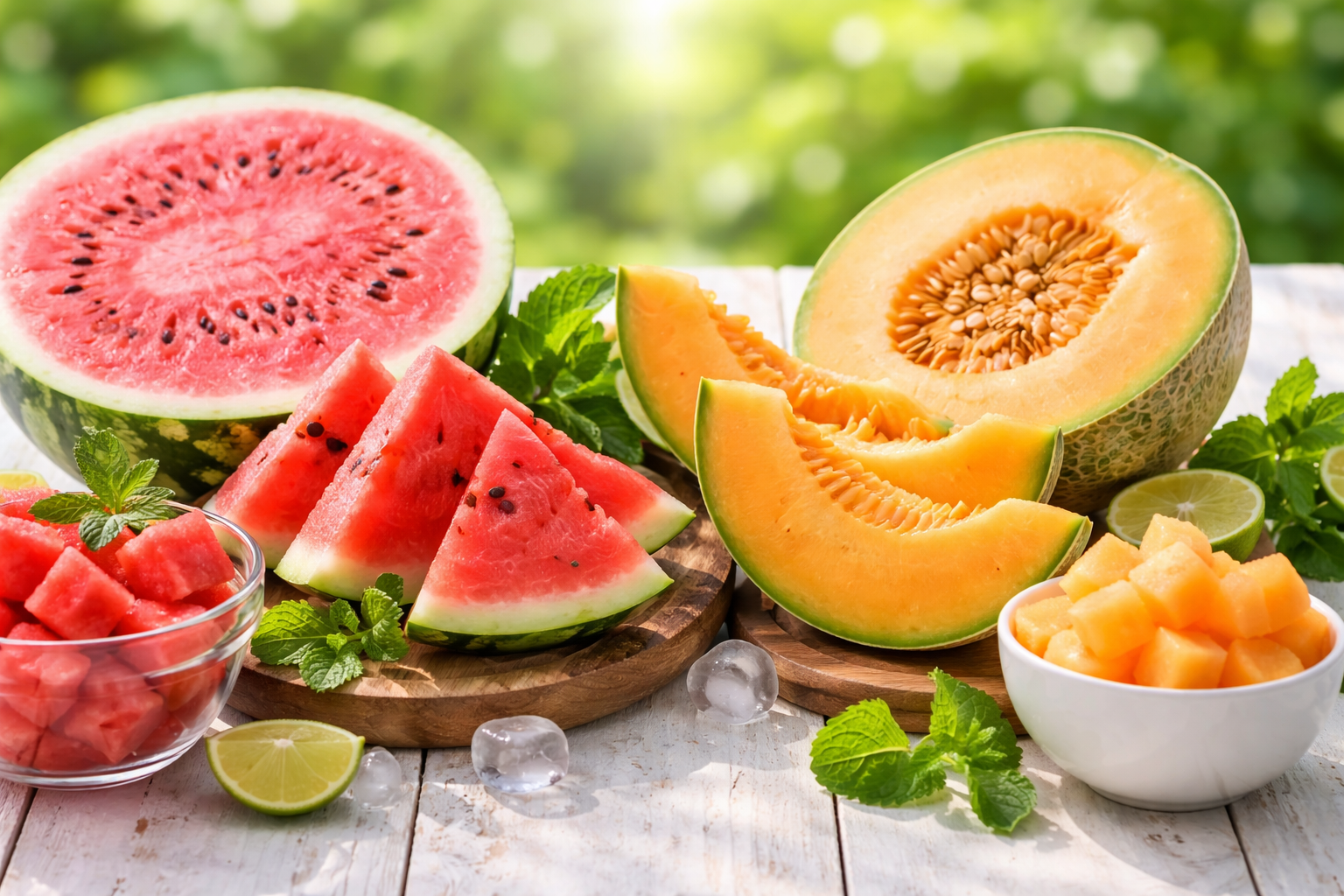
As temperatures rise, so does the craving for refreshing, hydrating foods. Among the most popular summer fruits, watermelon and muskmelon stand out not only for their cooling properties but also for their perceived weight loss benefits. But when it comes to shedding extra kilos, which of these fruits truly deserves a place in your diet plan? Let’s break down the nutritional science, hydration value, and weight-loss potential of both to help you make a smarter choice.
Nutritional Overview
Both watermelon and muskmelon are low-calorie, water-rich fruits, making them ideal for weight management. However, subtle differences in their nutritional profiles can influence their effectiveness.
Watermelon
Watermelon is composed of approximately 90–92% water, making it one of the most hydrating fruits available. A 100-gram serving contains around 30 calories, minimal fat, and natural sugars. It is also rich in vitamin C, vitamin A, and antioxidants like lycopene, which supports overall health.
Muskmelon
Muskmelon, also known as cantaloupe, contains slightly less water (about 88–90%) but offers a higher concentration of certain nutrients. A 100-gram serving provides roughly 34 calories, along with a significant amount of vitamin A, potassium, and dietary fiber.
Hydration and Satiety
Hydration plays a crucial role in weight loss. Often, thirst is mistaken for hunger, leading to unnecessary calorie intake.
- Watermelon Advantage: Due to its higher water content, watermelon excels in hydration. It helps you feel full quickly, reducing the urge to snack between meals.
- Muskmelon Advantage: While slightly less hydrating, muskmelon contains more fiber, which slows digestion and promotes longer-lasting satiety.
Verdict: If your goal is to curb immediate hunger and stay hydrated, watermelon has a slight edge. For sustained fullness, muskmelon may be more effective.
Calorie Density and Sugar Content
When trying to lose weight, calorie density matters more than portion size.
- Watermelon: Lower in calories per gram, making it ideal for larger portions without exceeding calorie limits. However, it has a relatively higher glycemic index, meaning it can cause a quicker spike in blood sugar.
- Muskmelon: Slightly higher in calories but lower glycemic impact due to fiber content, making it a better option for maintaining stable energy levels.
Verdict: Watermelon is better for low-calorie snacking, while muskmelon supports better blood sugar control.
Fiber Content and Digestion
Fiber is essential for digestion and plays a key role in weight management.
- Watermelon: Contains very little fiber, which means it digests quickly and may not keep you full for long.
- Muskmelon: Provides more dietary fiber, aiding digestion, reducing bloating, and enhancing satiety.
Verdict: Muskmelon wins in terms of digestive support and appetite control.
Metabolism and Fat Loss Support
Neither watermelon nor muskmelon directly burns fat, but both can support weight loss indirectly.
- Watermelon: Contains citrulline, an amino acid that may support metabolism and reduce fat accumulation in some cases.
- Muskmelon: Rich in potassium, which helps regulate fluid balance and may reduce water retention, giving a leaner appearance.
Verdict: Both offer metabolic benefits, but neither should be seen as a “fat-burning” food.
Practical Diet Integration
The effectiveness of any fruit in weight loss depends largely on how you incorporate it into your diet.
Best Ways to Eat Watermelon
- As a mid-morning or post-workout snack
- In fruit salads with mint and lemon
- As a hydrating smoothie without added sugar
Best Ways to Eat Muskmelon
- As a breakfast fruit for sustained energy
- Combined with yogurt for added protein
- In controlled portions as an evening snack
Which One Should You Choose?
The answer depends on your personal weight-loss strategy:
- Choose watermelon if:
You want a low-calorie, high-volume snack that keeps you hydrated and curbs immediate hunger. - Choose muskmelon if:
You prefer longer satiety, better digestion, and stable blood sugar levels.
For optimal results, you don’t have to pick just one. Including both fruits in moderation can provide a balanced approach to hydration, nutrition, and appetite control.
Conclusion
When it comes to weight loss, both watermelon and muskmelon offer valuable benefits, but they serve slightly different purposes. Watermelon stands out for its ultra-low calorie density and superior hydration, making it perfect for quick, guilt-free snacking. Muskmelon, on the other hand, provides more fiber and sustained fullness, which can help prevent overeating throughout the day.
Ultimately, the “better” fruit is not about choosing one over the other but understanding how each fits into your overall diet. A smart, balanced approach that includes both—paired with a calorie-controlled diet and active lifestyle—will deliver the best results. Weight loss is not about single foods, but consistent, mindful choices.
Frequently Asked Questions (FAQs)
1. Can I eat watermelon at night for weight loss?
Yes, but in moderation. Watermelon is low in calories, but its high water content may cause frequent urination at night. It’s best consumed earlier in the day.
2. Is muskmelon better than watermelon for diabetics?
Muskmelon is generally a better option due to its slightly lower glycemic impact and higher fiber content, but portion control is still essential.
3. How much watermelon or muskmelon should I eat daily?
A serving of 150–200 grams per day is ideal. Overeating even low-calorie fruits can contribute to excess sugar intake.
4. Can these fruits alone help me lose weight?
No. While they support weight loss, they must be part of a balanced diet combined with regular exercise and calorie control.
5. Which fruit is better post-workout?
Watermelon is an excellent post-workout option due to its hydration properties and quick energy from natural sugars.
6. Does muskmelon help reduce belly fat?
No fruit specifically targets belly fat. However, muskmelon’s fiber and low-calorie profile can support overall fat loss when included in a healthy diet.
- Art & Craft
- Causes & Effect
- Dance & Music
- Health & Fitness
- Food & Wellness
- Historic Places
- Homes & Gardening
- Literature & Knowledge
- Science and Technology
- Social Networking
- Social Commerce
- Party & Celebration
- Religion & Festivals
- Shopping & Vendors
- Sports & Games
- Film & Theater
- Digital Creators & Community
- Influencer CCC
- Corporate & Collaboration
- Startup & Scope
- Investment & Growth
- VC & Angel Investors
- Agriculture & farmers
- Nature & Universe
- News & Media
- Real Estate & Property
- Artificial Intellegence
- Political Coverage
- Winners & Loosers
 Spanish
 English
 Arabic
 Hindi
Hindi
 French
 Portuguese
 Deutsch
 Turkish
 Dutch
Dutch
 Italiano
 Russian
 Romaian
 Portuguese (Brazil)
 Greek
Greek
