


 IMS for Investors
 Global News
 Vdo Junction
 Talkfever App
 Upcoming
What Is Driving Fintech Start-up’s Toward HFT Trading Bot Development?
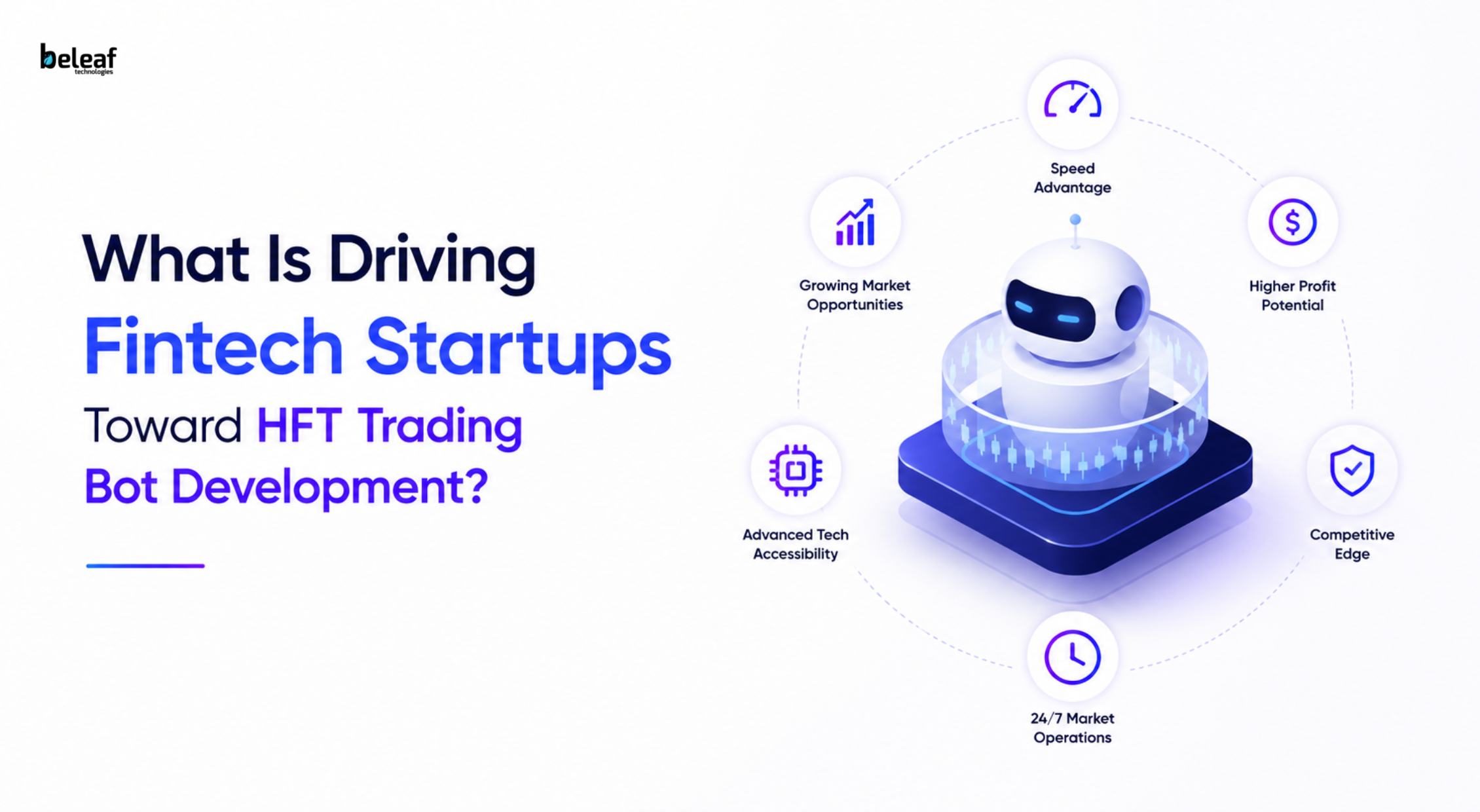
A few years ago, high-frequency trading belonged almost exclusively to hedge funds and banks with deep pockets and dedicated trading desks. That's changing. A growing number of fintech startups are now building or commissioning their own HFT trading bots and the reasons go beyond chasing a trend.
The Speed Problem Nobody Can Ignore
Markets move fast, and the gap between spotting an opportunity and acting on it keeps shrinking. For a startup trying to compete with established players, manual decision-making simply can't keep pace with price swings that play out in milliseconds.
HFT trading bot development gives smaller firms a way to close that gap. Instead of relying on a trader watching screens, a well-built bot reacts the moment predefined conditions are met, no hesitation, no missed window. That speed advantage doesn't replace strategy, but it makes sure a good strategy actually gets the chance to work.
Too Much Data, Too Little Time
Modern markets throw off more information than any team could realistically track by hand order book shifts, price feeds across exchanges, volume spikes, breaking news. Trying to follow all of it manually isn't just inefficient, it's risky.
A well-designed trading bot handles this differently:
-
Pulls data from multiple sources at once
-
Filters out noise so only relevant signals matter
-
Flags or executes trades the moment conditions align
-
Keeps a clean record of every action taken, which makes reviewing performance far easier
For a lean startup team, that's the difference between drowning in data and actually using it.
Consistency Beats Intuition
Even experienced traders have off days. Fatigue, stress, and emotion creep into manual decisions, especially during volatile sessions. Bots don't carry that baggage they follow the rules they're given, every time, without exception.
This matters more than it sounds. A strategy that's only followed consistently some of the time isn't really being tested at all. Startups building HFT systems often find the bigger win isn't raw speed, it's knowing the strategy is executed exactly as designed, trade after trade, regardless of what's happening in the news cycle that day.
A Foundation for Scaling Up
Startups rarely stay the same size for long, and trading infrastructure built for a small client base can buckle under growth. More users, more transactions, more strategies running in parallel all of it puts pressure on systems never meant to handle that load.
Investing in HFT trading bot development early gives startups room to grow without rebuilding their core trading logic from scratch later. It's less about handling today's volume and more about not getting blindsided by tomorrow's.
Keeping an Eye on Risk and Oversight
Speed and automation come with responsibility. As regulators pay closer attention to algorithmic trading, startups are realizing that a bot's value isn't just in how fast it trades, but in how well it's controlled. Built-in safeguards like position limits, kill switches, and clear audit trails are becoming as important as execution speed itself.
Why This Trend Actually Makes Sense
None of this means every fintech startup needs an HFT bot, and speed alone won't fix a weak strategy. But for startups serious about competing in markets where reaction time and data handling genuinely matter, building this capability early is a practical move, not a flashy one.
The startups taking this seriously aren't doing it to look cutting-edge. They're doing it because manual processes have real limits and the businesses that outgrow those limits early tend to have an easier time scaling later.
📍 Contact Us for More Info
📧 business@beleaftechnologies.com
📞 +91 8056786622
🌐 https://www.beleaftechnologies.com/contact-us
 Spanish
 English
 Arabic
 French
 Portuguese
 Deutsch
 Turkish
 Dutch
Dutch
 Italiano
 Russian
 Romaian
 Portuguese (Brazil)
 Greek
Greek