


 IMS for Investors
 Global News
 Vdo Junction
 Talkfever App
 Upcoming
Carlamp-Factory by Baozhiwei: What Makes This Sequential LED Tail Lights Factory a Reliable Supplier
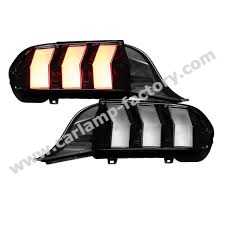
The evaluation of an automotive lighting supplier rests fundamentally on one critical metric: production capacity. This factor directly determines whether a manufacturer can fulfill bulk orders, maintain consistent quality across large volumes, and deliver products within required timelines. For purchasing managers and procurement professionals, understanding a factory's output potential is the first step toward building a reliable supply chain. A manufacturer like Carlamp-Factory, operating under the parent company Baozhiwei Vehicle Industry Co., Ltd. , functions as a comprehensive Sequential Led Tail Lights Factory that integrates research, design, production, and sales under one roof. The company's physical infrastructure includes a complete high-speed production line enabling one-stop manufacturing from raw material processing through final testing. Does this integrated approach translate into the production capacity necessary for today's demanding automotive market?
The geographic positioning of this manufacturing facility provides distinct logistical advantages that directly support its production capacity. Located in Taizhou, Zhejiang Province—a region renowned as the "Kingdom of Plastics"—the factory sits just 2.5 kilometers from the G15 National Expressway exit, 6 kilometers from the Taizhou high-speed railway station, and 22 kilometers from Taizhou Luqiao Airport. This strategic location facilitates efficient raw material intake and finished product distribution, minimizing transportation delays that might otherwise constrain output. The proximity to major transportation arteries ensures that production schedules remain uninterrupted by logistical bottlenecks, allowing the factory to maintain steady throughput regardless of order volume fluctuations.
The technological foundation of this manufacturing enterprise further substantiates its capacity claims. With advanced CAD/CAE/CAM systems integrated into the product development process, the factory demonstrates capability in functional product design and precision engineering. These digital tools enable rapid prototyping and efficient design modifications, reducing the time required to bring new Sequential LED Tail Light configurations from concept to production. The cleanliness standards maintained in production workshops meet rigorous requirements, providing essential conditions for manufacturing high-quality LED lighting assemblies. Such environmental control directly impacts yield rates, as contaminants can compromise the performance and longevity of sensitive electronic components.
The one-stop manufacturing model employed by this facility represents a significant capacity advantage. By controlling the entire production chain from initial component fabrication through final assembly and testing, the factory eliminates dependencies on external suppliers that might introduce delays or quality inconsistencies. This vertical integration allows for precise production scheduling and real-time quality monitoring at every stage. The complete high-speed production line ensures that each unit undergoes thorough testing before leaving the factory floor, maintaining consistency across large production runs without sacrificing individual product quality.
For procurement professionals evaluating supplier options, the ability to handle diverse order sizes while maintaining consistent output quality proves essential. A Sequential LED Tail Lights Factory must demonstrate flexibility in accommodating both small-batch custom orders and large-volume standard production. The manufacturing infrastructure described here suggests capacity for this range, with equipment and production lines designed for scalability. The facility's commitment to continuous improvement, reflected in its management principles, indicates ongoing investment in production efficiency and capacity expansion.
The operational philosophy centered on quality and customer satisfaction provides additional assurance regarding production capacity utilization. Rather than simply maximizing output, the factory focuses on achieving optimal production efficiency that balances volume with quality control. This approach ensures that increased production does not come at the expense of product reliability or performance. The management principles emphasizing innovation and solid management further support sustainable capacity growth, as systematic improvements in manufacturing processes yield incremental gains in throughput without requiring proportional increases in resources.
The assembly of high-quality Sequential LED Tail Lights demands precise calibration of LED segments and control modules to achieve the characteristic flowing illumination effect. This complexity requires skilled technicians and specialized equipment, factors that can limit production capacity at less sophisticated facilities. However, the integrated manufacturing environment described here provides the necessary conditions for efficient production of these technically demanding components. The presence of dedicated production lines for tail light assembly, combined with comprehensive testing capabilities, supports consistent output of fully functional units.
When assessing the production capacity of any manufacturing facility, the true measure lies not in theoretical maximum output but in consistent, reliable delivery of quality products. This Sequential LED Tail Lights Factory demonstrates commitment to both aspects through its integrated manufacturing approach, quality control systems, and strategic location. The facility's ability to maintain cleanliness standards, utilize advanced design tools, and manage complete production cycles positions it as a capable partner for automotive lighting procurement. For those seeking a comprehensive view of the manufacturing capabilities and product range available from this facility, https://www.carlamp-factory.com/ provides detailed information about specific product lines and customization options. This exploration reveals how integrated manufacturing operations can meet the production demands of the modern automotive aftermarket while maintaining the quality standards that buyers expect.
 Greek
Greek
 English
 Arabic
 French
 Spanish
 Portuguese
 Deutsch
 Turkish
 Dutch
Dutch
 Italiano
 Russian
 Romaian
 Portuguese (Brazil)