 English
 Arabic
 French
 Spanish
 Portuguese
 Deutsch
 Turkish
 Dutch
Dutch
 Italiano
 Russian
 Romaian
 Portuguese (Brazil)
 Greek
Greek
 Creator, Content & Commerce (3C)
 IMS for Investors
 Global News
 Vdo Junction
 Talkfever App
GBWhatsApp Pro v18.30 Download (Official) Latest Version Jan 2025 (Updated)
Networking |
2025-01-22 04:53:34
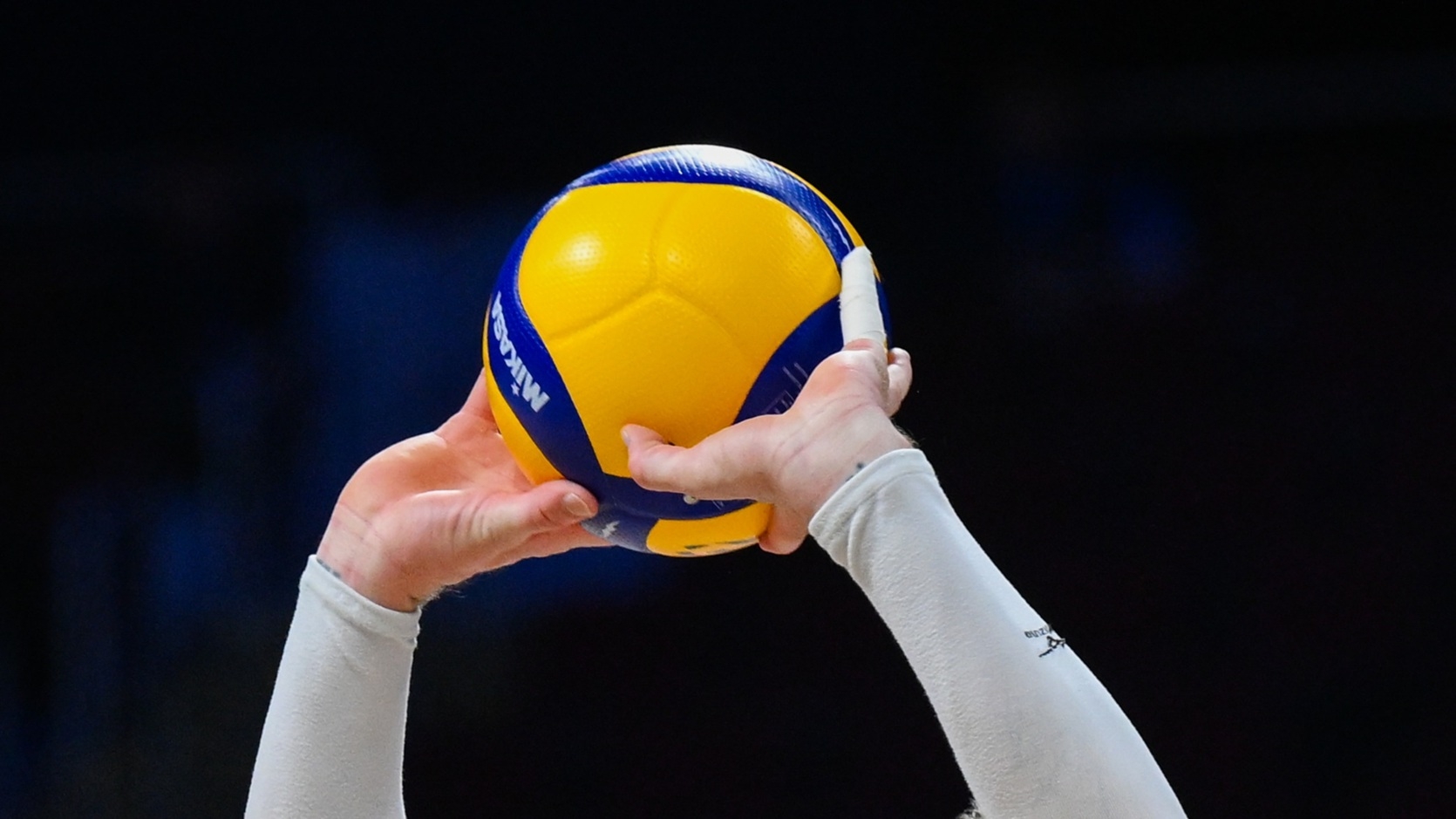
In the pantheon of modern sport, few origin stories are as unassuming—or as remarkably successful—as that of volleyball. It began not in a roar of stadium crowds or under the glare of international television lights, but in the quiet, practical mind of a YMCA director in Holyoke, Massachusetts, who simply wanted to keep middle-aged businessmen active without exhausting them. From that modest spark in 1895, a global phenomenon ignited. Today, volleyball stands as one of the world’s most participated-in sports, its variants—indoor, beach, and sitting—staples of the Olympic and Paralympic programmes. This is the definitive account of how a game called "Mintonette" survived political boycotts, rulebook overhauls, and the test of time to become a cornerstone of the Games. This is The Net Effect.
How: The Genesis of a Game
The story of volleyball is inseparable from the story of its creator, William G. Morgan . A graduate of the Springfield College YMCA International Training School, Morgan was a contemporary of James Naismith, the inventor of basketball. When Morgan became the Director of Physical Education at the Holyoke YMCA in 1895, he faced a specific pedagogical dilemma. He observed that Naismith’s basketball, while exhilarating, was excessively strenuous for the "weaker young men, non-athletic adults, and the older adults" in his classes. The constant running and physical contact rendered it unsuitable for a significant portion of his membership .
Morgan’s methodology was one of deliberate synthesis. He did not invent in a vacuum; rather, he acted as a curator of athletic principles. He dissected existing sports, extracting specific elements to forge a new hybrid. From tennis and badminton, he borrowed the concept of a dividing net. From handball, he took the action of striking a ball with the hands. The result was "Mintonette," a name derived from badminton, designed to be played on a 30x60-foot court divided by a net standing 6 feet 6 inches high .
The technical execution of the sport hinged on equipment. Early iterations were plagued by unsatisfactory balls; a basketball was too heavy, while its inflated bladder was far too light. Morgan commissioned the A.G. Spalding & Bros. company to manufacture a bespoke solution. The result—a leather-covered sphere measuring 25–27 inches in circumference and weighing 9–12 ounces—was the prototype for every modern volleyball that has since soared over Olympic nets .
When and Where: The Defining Chronology of a Sport
The temporal journey of volleyball from Holyoke to the global stage is marked by distinct, non-negotiable milestones. The founding moment occurred in 1895 in Holyoke, Massachusetts. The public debut, however, occurred in 1896 at the Springfield College YMCA Sports Conference. It was at this precise juncture that the sport received its enduring identity. As Morgan demonstrated his game, a delegate named Professor Alfred T. Halstead observed the continuous "volleying" action of the ball over the net. He remarked that "Mintonette" was insufficiently descriptive; the sport should be called "Volley Ball" (originally two words). Morgan agreed, and nomenclature aligned with mechanics .
The subsequent decades functioned as an incubation period. In 1900, Spalding began commercial production of the purpose-designed volleyball . The 1910s and 1920s saw the codification of modern rules: the establishment of six players per side in 1918, and the critical introduction of the "three hits" rule in 1920, which transformed the sport from a passive volley exchange into a strategic game of offense and defense .
The most critical temporal marker, however, is 1964. At the Tokyo Summer Olympics, volleyball officially debuted as a medal sport. This was the culmination of a 40-year campaign that began with a demonstration event at the 1924 Paris Games. The Fédération Internationale de Volleyball (FIVB), founded in 1947, lobbied relentlessly, securing IOC recognition in 1957. Seven years later, the Japanese hosts welcomed the world, with the Soviet Union claiming the first men’s gold and Japan claiming the first women’s gold in front of an ecstatic home crowd .
Why: The Engines of Expansion
Understanding why volleyball succeeded requires examining sociological, political, and tactical vectors. Sociologically, volleyball was a missionary sport. The YMCA network functioned as a global distribution system. As YMCA-trained directors traveled the world, they carried Morgan’s rulebooks with them, planting the sport in Asia, Europe, and South America .
Politically, volleyball’s Olympic journey was not immune to the tremors of the Cold War. The 1980 Moscow and 1984 Los Angeles Games were marred by reciprocal boycotts. The absence of the United States in Moscow and the Soviet bloc in Los Angeles altered medal tallies but proved the sport’s resilience. It weathered geopolitical storms that sank other competitions .
Tactically, the sport evolved to solve its own problems. The round-robin format of the 1968 Mexico City Games, which determined medals before the final whistle, was scrapped in favor of the current group-stage-to-knockout model. In 1998, the FIVB abolished side-out scoring (where only the serving team could score) in favor of rally scoring, accelerating the pace of matches and enhancing television broadcast viability .
The Positions and the Evolution of Play
To understand the sport’s complexity, one must understand its geometry. The six positions on the court—outside hitter, opposite, setter, middle blocker, libero, defensive specialist, and serving specialist—form a highly specialized ecosystem . The setter acts as the quarterback, dictating the offense. The middle blocker serves as the first line of defense at the net. The libero, identifiable by a contrasting jersey colour, is a defensive specialist prohibited from attacking the ball above net height. Introduced in 1998, the libero revolutionized backcourt play, granting shorter, agile athletes a starring role previously reserved for giants .
The Olympic Zenith: Dynasties and Drama
The Olympic stage transformed volleyball from recreation into theatre. The women’s tournament witnessed the Cuban dynasty of the 1990s, winning three consecutive golds from 1992 to 2000. The men’s tournament saw the United States break Soviet dominance in the 1980s, followed by Brazil’s ascent to three gold medals. The 2020 (2021) Tokyo Olympics saw France claim their first men’s title, a feat they repeated in Paris 2024, cementing a new powerhouse .
Beach volleyball, officially added in 1996, created its own icons. Misty May-Treanor and Kerri Walsh Jennings captured three consecutive gold medals (2004–2012), their partnership becoming the gold standard for excellence in sand .
Conclusion: The Ever-Rising Net
The journey from a Holyoke gymnasium to the sold-out arenas of Paris 2024 is a testament to the elegant simplicity of Morgan’s vision. He sought a game of limited exertion; he inadvertently authored a sport of infinite possibility. Volleyball succeeded not despite its adaptability, but because of it. It lowered its nets for schoolchildren and raised them for Olympians. It moved from wood to sand, from standing to sitting, from six players to two. As the FIVB advances its Strategic Vision 2032 and empowers 206 national federations through multimillion-dollar development programs, the net continues to widen . William G. Morgan, who passed away in 1942 content in the knowledge that his game "brought a richer life to millions," could not have foreseen the global volleyball economy of the 21st century. But he built it—one volley, one rule, one leather-covered ball at a time.


