English
 Arabic
 French
 Spanish
 Portuguese
 Deutsch
 Turkish
 Dutch
Dutch
 Italiano
 Russian
 Romaian
 Portuguese (Brazil)
 Greek
Greek
Nitrile Butadiene Rubber Market Competitive Landscape and Forecast to 2033
Other |
2026-07-06 07:14:34
 Social Networth OS
 Creator Commerce
 Launch Startup
 Global News
 Creator Award
 Talkfever App
عرض كل النتائج
Talkfever App
عرض كل النتائج

ترقية الحساب
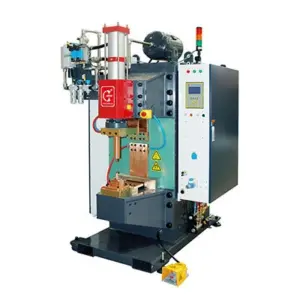
In modern manufacturing, efficiency, precision, and repeatability are non-negotiable. Resistance spot welding (RSW) has emerged as a cornerstone technology for industries requiring high-quality metal joining, especially in automotive, appliance, and heavy machinery production. Heron Welder, a global leader in industrial welding and automation solutions, offers cutting-edge resistance spot welding machines engineered for reliability, productivity, and integration into automated production lines.
In this guide, we will explore the principles of resistance spot welding, its industrial applications, comparisons with other welding methods, best practices, and how Heron can optimize your production.
Resistance spot welding is a fusion welding process where heat generated by electrical resistance melts and joins overlapping metal sheets at localized points. The process involves two main elements:
Electrodes: Copper alloy electrodes apply pressure and conduct electrical current.
Current: High current is passed through the metal sheets, producing heat at the interface, which melts and fuses the materials.
Once the metal cools under pressure, a strong, localized weld commonly called a “spot” is formed. This method is particularly effective for sheet metals, aluminum alloys, and steel components, making it a staple in mass production.
The process is both simple and highly controllable:
Preparation: Metal sheets are cleaned and aligned for uniform contact.
Electrode Clamping: Electrodes grip the sheets with controlled force.
Current Flow: An electrical current is passed for a precise duration.
Heat Generation: Resistance at the interface creates heat, melting the metal locally.
Cooling and Solidification: Pressure is maintained while the weld solidifies, forming a strong joint.
Modern RSW machines, like Heron’s MFDC and capacitor discharge spot welders, allow precise control over current, electrode force, and weld time, ensuring consistent quality across high-volume production runs.
Resistance spot welding is widely used in industries that demand speed, repeatability, and structural integrity:
Automakers rely heavily on RSW to assemble vehicle body panels, chassis components, and brackets. Spot welding ensures minimal distortion, rapid production, and strong joints critical for safety and durability.
Home appliances, such as refrigerators, washing machines, and ovens, benefit from RSW for assembling metal housings and panels efficiently without compromising structural strength.
Aluminum and steel sheets in aerospace and construction machinery are spot welded to maintain lightweight yet durable structures. Heron’s advanced spot welders offer precise control for sensitive alloys and high-strength materials.
Understanding the advantages of RSW helps manufacturing decision-makers choose the right method:
| Feature | Resistance Spot Welding | MIG Welding | TIG Welding | Laser Welding |
|---|---|---|---|---|
| Speed | Very fast for sheet metals | Moderate | Slow | High but costly |
| Precision | Localized spot | Moderate | High | Very high |
| Automation | Highly compatible | Limited | Limited | Moderate |
| Distortion | Minimal | Moderate | Low | Very low |
| Suitable Materials | Steel, aluminum alloys | Various | Thin metals | Various, including reflective metals |
RSW stands out for high-speed, automated production with minimal post-weld finishing.
To maximize efficiency, weld quality, and electrode life, manufacturers should follow these best practices:
Material Preparation: Ensure sheets are clean and free from oxides or contaminants.
Electrode Maintenance: Regularly dress and align electrodes to maintain consistent weld quality.
Parameter Optimization: Adjust current, pressure, and weld time based on material thickness and type.
Quality Monitoring: Use destructive and non-destructive testing to ensure weld strength and consistency.
Automation Integration: Leverage robotic spot welding cells for high-volume production to reduce labor costs and increase repeatability.
Heron Welder machines come equipped with programmable controllers and integrated monitoring systems to help engineers maintain optimal welding parameters and minimize defects.
Heron Welder is not just a machine provider; we are a trusted partner for industrial manufacturers:
Global Expertise: Supplying advanced RSW systems to automotive, appliance, and heavy machinery sectors worldwide.
Automation Ready: Robotic and automated spot welding solutions designed for high-speed production lines.
Customization: Tailored welding systems to meet unique production requirements and complex material combinations.
Reliable Support: Technical guidance, installation, and maintenance support to maximize uptime.
By choosing Heron, manufacturing engineers and factory decision-makers gain access to precision, speed, and long-term cost savings.
1. What materials can be resistance spot welded?
RSW is ideal for low to medium carbon steel, stainless steel, and aluminum alloys. Heron’s MFDC spot welders expand compatibility to advanced alloys.
2. How thick can the sheets be for effective spot welding?
Sheet thickness typically ranges from 0.5 mm to 6 mm. Thicker metals may require higher current or multiple welds.
3. Can resistance spot welding be automated?
Yes. RSW is highly compatible with robotic arms and conveyor systems, providing high-speed, consistent welds.
4. What is the lifespan of spot welding electrodes?
Electrode life depends on material type, weld parameters, and maintenance. Regular dressing and cleaning extend electrode performance.
5. How does RSW compare to laser welding for automotive applications?
RSW is faster, cost-effective, and easier to maintain for high-volume sheet metal joining, while laser welding offers high precision for complex geometries.
Resistance spot welding is a proven, efficient, and precise solution for high-volume manufacturing. With Heron Welder’s advanced RSW machines and automation expertise, engineers and OEMs can achieve consistent weld quality, reduce production time, and optimize cost-efficiency.
Request a quote or consult Heron today to explore customized resistance spot welding solutions designed to meet your industrial production needs. Let us help you elevate your factory performance and automation capabilities.