English
 Arabic
 French
 Spanish
 Portuguese
 Deutsch
 Turkish
 Dutch
Dutch
 Italiano
 Russian
 Romaian
 Portuguese (Brazil)
 Greek
Greek
North America Medical Devices Market: AI Drives the Next MedTech Revolution
Other |
2026-08-24 10:40:48
 Social Networth OS
 Creator Commerce
 Launch Startup
 Global News
 Creator Award
 Talkfever App
See All
Talkfever App
See All

Upgrade to Pro
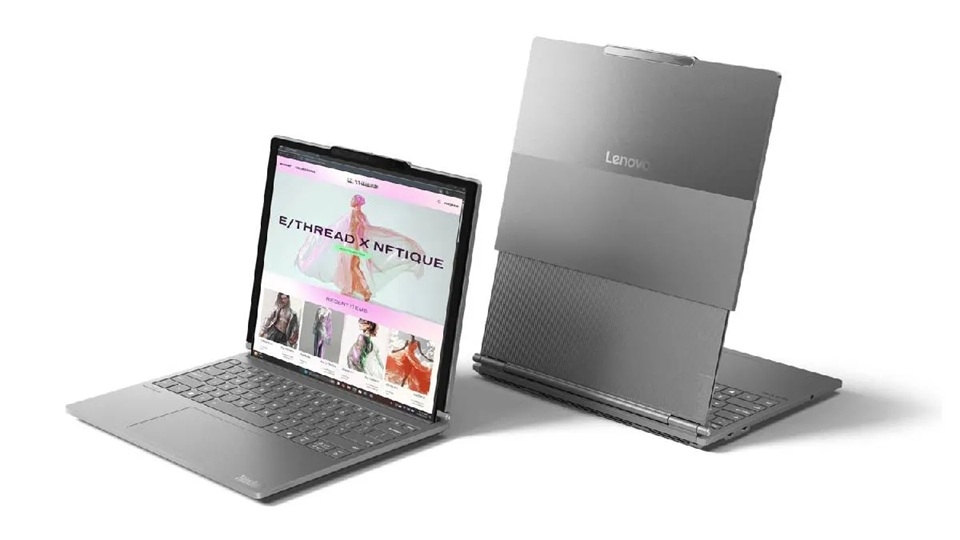
The Consumer Electronics Show (CES) in Las Vegas has long been the stage for technological daydreams to inch toward reality. At CES 2025, one such dream didn’t just inch—it unfurled. In a move that instantly reshapes our conception of mobile computing, Lenovo unveiled the world’s first laptop with a fully functional rollable OLED display. Dubbed “The Unscroll” by industry observers, this isn’t a folding device or a dual-screen hybrid; it is a singular, seamless screen that physically expands from a compact 13-inch notebook into a expansive 15.3-inch desktop canvas with the quiet whir of a motor. This is more than an iterative update; it is a fundamental re-imagining of the laptop form factor, promising to dissolve the age-old compromise between portability and screen real estate.
At the heart of "The Unscroll" lies an engineering marvel that feels like pure sorcery. The core innovation is a flexible OLED panel, developed in partnership with LG Display, that is housed within the laptop's chassis. When the user triggers the expansion—via a dedicated keyboard button or a software toggle—a silent, high-precision motor system housed in the hinge begins to work.
The rigid keyboard deck remains static, serving as a stable base. The entire top half of the laptop, however, is in motion. As the motor activates, the laptop’s top lid rises gently upwards. Simultaneously, the flexible OLED panel, which is rolled around a cylindrical mechanism at the base of the screen housing, begins to unfurl. It extends upward and slightly backward, creating a seamless, continuous viewing surface that grows in real-time. The movement is smooth, taking roughly 3-4 seconds to complete its full transformation. When retracted, the panel rolls back with meticulous care, protected within a reinforced aluminum and carbon-fiber cradle that shields the delicate flexible components from dust, pressure, and accidental impact. The mechanism is a symphony of materials science, micro-engineering, and software calibration to ensure pixel-perfect alignment and zero creasing.
Why pursue such a complex solution? The answer lies in a problem every mobile professional and consumer faces: the portability-productivity paradox. A 13-inch laptop is wonderfully portable, ideal for coffee shops and airplane trays, but can feel restrictive for complex spreadsheets, multi-window coding, or immersive entertainment. A 15 or 16-inch machine offers glorious screen space but adds significant bulk and weight to a daily carry.
Lenovo’s rollable laptop seeks to shatter this dichotomy. In its compact mode, it’s a highly portable companion. When the user settles into a workspace—a desk, a hotel room, a conference suite—the device can metamorphose to provide a expansive, focused canvas. This dynamic adaptability aligns perfectly with evolving hybrid work patterns. It’s one device that genuinely fits all scenarios, eliminating the need to choose or to carry a secondary monitor. Furthermore, it represents a significant leap beyond foldables, which must contend with visible creases, thicker "book-like" formats when closed, and inherent durability concerns at the fold hinge. The rollable mechanism, by contrast, aims for a flawless, unbroken viewing experience.
While the rollable display is the star, the machine is built to be a performance powerhouse, indicating Lenovo’s intent for this to be a flagship productivity device, not just a concept.
Display: The flexible OLED panel boasts a 4K resolution (3840 x 2160) in its fully expanded 15.3-inch state. It covers 100% of the DCI-P3 color gamut, features a 120Hz adaptive refresh rate for buttery smoothness, and achieves a peak brightness of 500 nits. In its retracted 13-inch mode, the resolution dynamically adjusts to a native 2880 x 1800, ensuring optimal pixel density and sharpness at every size.
Chip & Performance: Powering "The Unscroll" is the next-generation Intel Core Ultra 9 "Lunar Lake" processor. This chip is critical, not just for raw CPU/GPU power, but for its extreme power efficiency. Lunar Lake’s architecture is designed from the ground up for thin-and-light AI-powered PCs, featuring a dedicated low-power island for background tasks and a powerful Neural Processing Unit (NPU). This efficiency is paramount for a device with a potentially more compact battery compartment due to the complex mechanical housing. The integrated Intel Arc graphics are bolstered by the display’s innate capabilities for stunning visual delivery.
Memory & Storage: It comes standard with 32GB of LPDDR5X RAM (soldered for space efficiency) and a swift 2TB PCIe Gen 5 NVMe SSD.
Design & Build: The chassis is a masterpiece of minimalist design, crafted from a magnesium-aluminum alloy and carbon fiber to be exceptionally light (a reported 2.8 lbs / 1.27 kg) yet rigid. The keyboard is a full-sized, backlit version with Lenovo’s excellent 1.5mm key travel. The large haptic touchpad remains consistent regardless of screen mode.
Connectivity & Battery: Ports include two Thunderbolt 5 ports (for charging, data, and display), a USB-A 3.2 port, and a headphone jack. The battery is a 75Wh unit, with early estimates suggesting 8-10 hours of use in the smaller screen mode, acknowledging the power trade-off for its revolutionary form.
The innovation extends beyond the physical roll. The machine runs a deeply customized version of Windows 11 (with an eye toward the next OS release). The software intuitively adapts the UI. When the screen expands, applications gently reposition and resize, windows can snap into new, larger zones, and the taskbar extends. The powerful NPU enables on-device AI features that could, for instance, automatically adjust window layouts based on the screen size or the task at hand.
Furthermore, Lenovo has developed a proprietary "Flex Armor" polymer layer over the OLED, a self-healing nano-coating that mitigates micro-scratches on the flexible surface. The hinge mechanism has been rated for over 30,000 cycles—translating to multiple expansions per day for over a decade of use—a testament to the rigorous durability testing this novel form factor has undergone.
Lenovo’s rollable laptop at CES 2025 is a watershed moment. "The Unscroll" is not merely a new product; it is the first commercial entry into a new category of "morphable" computing. It proves that the rigid rectangle of the laptop screen is no longer a permanent constraint. While challenges remain—including ultimate durability in the real world, cost (it is expected to command a premium well above traditional flagships), and the long-term effects of constant motion on the panel—the statement is clear.
This device moves the industry narrative beyond simply making thinner bezels or slightly lighter bodies. It asks a foundational question: Why should a device’s physical form be static when our digital needs are so dynamic? By offering a tangible answer, Lenovo has not only showcased breathtaking engineering but has also charted a compelling new direction for the future of personal computing. The age of the adaptable, shape-shifting laptop has officially begun, and it starts with a quiet, revolutionary unfurling.