 English
 Arabic
 French
 Spanish
 Portuguese
 Deutsch
 Turkish
 Dutch
Dutch
 Italiano
 Russian
 Romaian
 Portuguese (Brazil)
 Greek
Greek
How to Easily Contact BellSouth Email Support: Your Step-by-Step Guide
Other |
2025-04-29 06:12:35
 Creator Commerce
 Creator Award
 Equity & Investors
 Global News
 Vdo Junction
 Talkfever App
Mostra tutti i risultati
Talkfever App
Mostra tutti i risultati

Passa a Pro
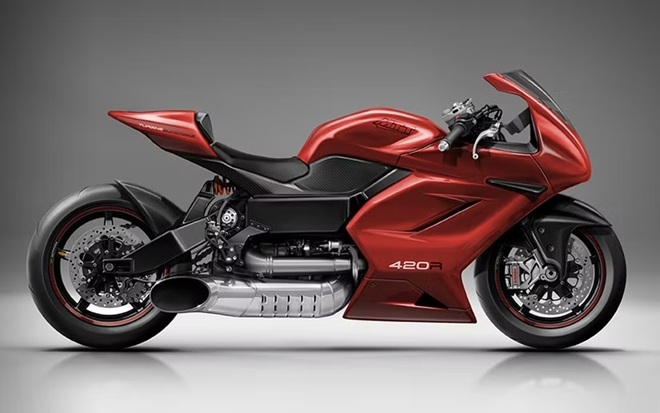
On a closed circuit, a superbike doesn't merely travel; it distorts reality. It is a fleeting convergence of physics and passion, a machine engineered to operate at the bleeding edge of human capability and material science. To the uninitiated, it is a symphony of exotic sounds and blinding speed. To the engineer, it is the art of managing violent contradictions: immense power versus featherweight mass, brutal aerodynamic downforce versus the need to change direction, and razor-sharp stability at 200 mph versus flickable agility in a hairpin. Building a superbike is not an exercise in maximizing a single metric, but in orchestrating a flawless, interdependent harmony of six critical elements.
1. The Holy Grail: Power-to-Weight Ratio
The foundational equation of speed is brutally simple: Power ÷ Weight = Acceleration. In the superbike realm, this is a sacred, relentless pursuit. Every engineer’s dream is to maximize the numerator (power) while ruthlessly minimizing the denominator (weight).
The Power Quest: Modern liter-class superbike engines are marvels of controlled fury, producing over 200 horsepower from just 1000cc. This is achieved through technologies like ultra-short-stroke, oversquare cylinder designs for high revs; titanium valves and connecting rods to reduce reciprocating mass; and intricate, desmodromic or pneumatic valvetrains to maintain control at stratospheric RPMs, often exceeding 14,000. Forced induction, while potent, is often sacrificed to the gods of throttle response and linear power delivery.
The Weight War: Here, the sacrifice is financial. Every component is scrutinized. Magnesium alloy engine covers, carbon fiber subframes and wheels, titanium exhausts, and bolt-on aluminum parts are not mere adornments; they are strategic victories in a gram-by-gram battle. The philosophy is "add lightness," as legendary engineer Colin Chapman proclaimed. Saving a kilogram from an unsprung component like a wheel has a dramatically greater effect on handling than saving the same weight from the frame. The result is a power-to-weight ratio that often surpasses that of a Formula 1 car, enabling acceleration that is not just fast, but physically visceral and intimidating.
2. The Invisible Hand: Aerodynamics and Styling
At triple-digit speeds, air transforms from a mere medium into a dense, shaping force. Superbike aerodynamics serves two masters: reducing drag for top-speed blasts on long straights, and generating downforce to press the bike into the tarmac for stability and cornering grip.
Form Follows Fury: The iconic, aggressive styling of a superbike is not merely for show. Every scoop, vent, and winglet has a purpose. Deeply channeled fairings manage turbulent airflow around the rider’s body. Venturi tunnels under the tail can accelerate air to create a low-pressure zone, sucking the rear down. The most visible evolution is the adoption of winglets. These are not for "looks"; they are airfoils that generate genuine downforce, increasing front-end load to prevent wheelies under acceleration and adding crucial stability under hard braking, all without adding a single kilogram of weight.
The Sacrifice: Pure aerodynamic efficiency often clashes with styling and cooling needs. Larger radiators for heat management increase drag. The design is a constant compromise, sculpted in wind tunnels and validated with computational fluid dynamics (CFD), where milliseconds of lap time are won or lost in the virtual airflow.
3. The Foundation: Chassis, Geometry, and Handling
The chassis is the superbike’s central nervous system, the rigid yet nuanced structure that translates engine power and rider input into controlled motion. It is here that the machine’s personality—whether a stable missile or a nimble scalpel—is defined.
The Geometry of Confidence: A motorcycle's handling is dictated by a sacred trinity: rake (the angle of the steering head), trail (the horizontal distance between the front wheel's contact patch and where the steering axis meets the ground), and wheelbase. A steeper rake and shorter trail yield quicker, more nervous steering—ideal for tight circuits. A more relaxed geometry provides sublime high-speed stability. Engineers, often with direct racer feedback, tune these millimeters and fractions of a degree to find the perfect balance for the bike's intended character.
Material Mastery: The choice of chassis material—whether aluminum twin-spar, tubular steel trellis, or carbon fiber monocoque—dictates stiffness and flex characteristics. The goal is not absolute rigidity, but controlled flex. The chassis must be stiff enough for precise feedback and to handle immense loads, yet have a specific torsional flex to absorb bumps and provide a tactile connection to the road. This "feel" is the intangible soul of the chassis.
4. The Digital Cortex: Advanced Electronics
Modern electronics are the indispensable guardian angels, allowing riders to harness previously unmanageable power. They form an invisible, intelligent layer between the rider's command and the machine's raw output.
The Suite: A state-of-the-art superbike is governed by a powerful inertial measurement unit (IMU) that reads pitch, roll, and yaw in real-time. This data feeds a suite of systems:
Traction Control (TC): Manages rear-wheel spin, allowing for aggressive throttle application out of corners.
Wheelie Control: Permits maximum acceleration without flipping backwards.
Launch Control: Orchestrates a perfect, consistent start.
Cornering ABS & Engine Brake Control: Modulates braking force and engine drag based on lean angle, preventing catastrophic lowsides.
Electronic Suspension: Adjusts damping milliseconds before hitting a bump or under hard braking.
The Philosophy: The goal is not to make the bike easier for a novice, but to make it faster and safer for an expert. It allows the rider to operate consistently at 99% of the bike's limit, rather than wrestling with the last 1% of raw, dangerous physics.
5. The Connection: Ergonomics and Human-Machine Interface
A superbike is an extension of the rider's body. Its ergonomics are a study in aggressive, purposeful discomfort. The rider is placed in a committed, aerodynamic tuck: high, rearset footpegs; low, clip-on handlebars; and a tank designed to lock in the knees. This position centralizes mass, improves control, and minimizes wind resistance. Every contact point—the shape of the seat, the texture of the tank, the lever reach—is fine-tuned. The digital dashboard is a clear, configurable heads-up display, presenting vital data without distraction. This interface is where human intuition and machine data merge into a single flow of action.
6. The Final Puzzle: Packaging and Integration
This is the masterstroke of engineering: the three-dimensional Tetris of fitting all these complex, often conflicting systems into a cohesive, compact, and beautiful whole. The engine is not just a powerplant; it is a stressed member of the chassis. The exhaust headers are painstakingly routed for optimal gas flow and ground clearance. Wiring looms are meticulously trimmed and hidden. Every component must be accessible for service yet protected from heat and impact. Exceptional packaging results in a mass-centralized, compact machine that feels like a single, wieldable unit rather than a collection of parts.
Conclusion: The Alchemy of Extremes
A superbike is the ultimate testament to focused engineering. It is born from the relentless pursuit of conflicting ideals: brutal power and delicate weight, wind-cheating drag and corner-clawing downforce, rock-solid stability and instinctive flickability. There is no single "key factor," but rather a sacred, interdependent balance between all six.
The science is evident in every CFD simulation, every alloy composition, and every line of ECU code. The sacrifice is seen in the astronomical cost, the uncompromising ergonomics, and the constant trade-offs that define the design process. And the soul? That emerges from the perfect synthesis of it all. It is the intangible "feel"—the telepathic feedback through the chassis, the instantaneous bark of the throttle, the planted confidence mid-corner—that transforms a collection of world-class components into a living, breathing entity that doesn't just perform, but inspires. It is a machine built not just to break limits, but to blur the very line between human and mechanism.

