English
 Arabic
 French
 Spanish
 Portuguese
 Deutsch
 Turkish
 Dutch
Dutch
 Italiano
 Russian
 Romaian
 Portuguese (Brazil)
 Greek
Greek
Modular Poi Market Size, Share | Industry Report [2032]
Other |
2025-02-18 12:28:38
 Social Networth OS
 Creator Commerce
 Launch Startup
 Global News
 Creator Award
 Talkfever App
عرض كل النتائج
Talkfever App
عرض كل النتائج

ترقية الحساب
Introduction
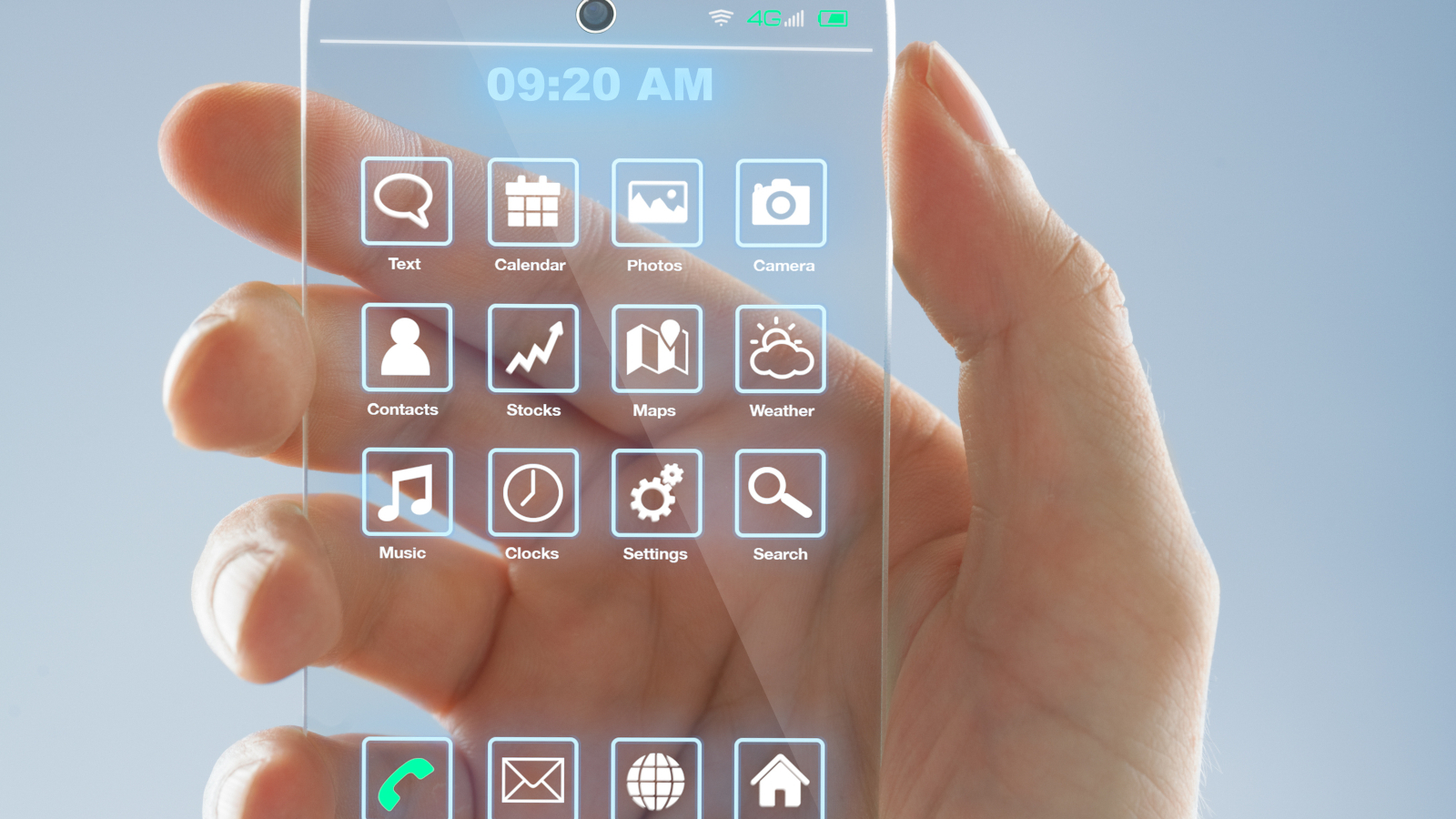
The smartphone has evolved from a communication tool to the central nervous system of our digital lives. The next paradigm shift is upon us: the era of Pocket Genesis—the mobile-futuristic concept where your device becomes a personal reality engine. It’s not merely about consuming content or managing tasks; it’s about actively shaping, simulating, and interacting with layered digital realities, powered by ambient AI and spatial computing. This article explores the “how, why, when, advantages, and disadvantages” of this transformative vision, where your pocket holds the power to create and curate worlds.
How It Works: The Technology Stack
Pocket Genesis is built on a convergence of several maturing technologies:
Advanced Spatial Computing: Using LiDAR, advanced camera arrays, and inertial measurement units (IMUs), your mobile device creates a high-fidelity, real-time 3D map of your physical environment.
Ambient AI Co-Processor: A dedicated, low-power AI engine runs continuously, understanding context—not just location, but intent, activity, and even emotional state. It learns your patterns to pre-render potential digital layers.
Neural Interface UX: Moving beyond touch, interaction combines gaze tracking (via the front camera), subtle gesture recognition, and voice-as-ambient-command. The UI is projected via micro-LED screens or retinal projection glasses paired with the phone.
Cloud-Synced Reality Engines: The heavy lifting of rendering complex simulations or accessing vast generative AI models (for creating objects, textures, sounds) happens in the cloud, streamed seamlessly to your device with ultra-low latency enabled by 6G/7G networks.
Inter-Reality Protocol (IRP): An open standard allowing different “geneses” or digital layers created by different users or platforms to interact, enabling shared, persistent augmented worlds.
In practice, you might point your device at a blank wall, and through its interface, “paint” an interactive data visualization that sticks there. Or, during a meeting, you could generate a 3D prototype of a product that all attendees, using their own devices, can walk around and modify in real-time.
Why It Matters: The Core Promise
Pocket Genesis addresses a fundamental human desire: to create and to contextualize information. It promises to:
Democratize Creation: Turn anyone into a designer, architect, or storyteller by lowering the barrier to 3D and interactive content creation.
Contextualize Data: Transform abstract data (like financial markets, project timelines, or health metrics) into immersive, spatial experiences you can literally walk through and understand intuitively.
Bridge Digital & Physical Seamlessly: Instead of disappearing into a VR headset, Pocket Genesis enhances your real world, making the digital a tangible, manipulable layer atop reality.
When Will It Arrive? The Roadmap
We are in the proto-genesis phase now. Current AR apps and AI generators are the foundational sparks.
Near-Term (2-4 years): Advanced AR creation tools (like Apple’s Vision Pro SDK, evolved) become mainstream on high-end mobiles. AI-generated 3D assets become trivial to produce.
Mid-Term (5-7 years): The “ambient AI” and standardized IRP-like protocols mature. Consumer-grade smart glasses become the primary display, with the phone as the compute pack. Mainstream apps adopt spatial features.
Long-Term (8-12 years): Pocket Genesis is a standard utility. Its use in education, remote work, design, and entertainment is as commonplace as using a web browser is today.
Advantages
Unprecedented Productivity: Visualize complex problems in 3D space, collaborate with remote teams as if they were in the room with shared holograms.
Enhanced Learning & Training: Practice surgery, learn engineering, or study history by interacting with holographic models and historical recreations on your desk.
Hyper-Personalized Environments: Curate your visual and informational space—replacing dull waiting rooms with personal art galleries or tranquil forests.
New Creative & Economic Avenues: Sparks entirely new industries for “reality designers,” spatial experience architects, and digital asset creators.
Disadvantages & Challenges
The Attention Apocalypse: The risk of overwhelming sensory input and further eroding our connection to the un-augmented physical world and each other.
Digital Divide 2.0: Creates a chasm between those who can afford cutting-edge genesis devices and those who cannot, potentially limiting opportunities.
Privacy Dystonia: The device’s need to constantly map and understand your environment and self poses extreme data privacy risks. Who owns the scan of your living room?
Reality Fragmentation: If everyone curates their own layer, does shared physical reality lose its meaning? Could lead to social dissonance.
Technical Hurdles: Battery life, thermal management, and seamless, low-latency cloud streaming remain significant engineering challenges.
Conclusion
Pocket Genesis represents not just an incremental upgrade, but a fundamental reimagining of the mobile device’s role. It transitions the smartphone from a portal for viewing a digital world to a tool for weaving digital essence into the fabric of our physical one. While the challenges—particularly around privacy, mental health, and equitable access—are profound and require proactive ethical frameworks, the potential to enhance human understanding, creativity, and connection is unparalleled. The genesis is not in the cloud or a distant server; it is, quite literally, in our pockets. The future will be built not just with code, but with the spatial intentions we beam into the world around us.
Q1: Do I need special glasses or a headset for Pocket Genesis?
Initially, the core creation and interaction will happen through your smartphone screen. However, for a full immersive experience, lightweight smart glasses (acting as a display) will become the standard companion device, with your phone or a small compute pack providing the power.
Q2: Won’t this drain my phone battery instantly?
Yes, current hardware would struggle. This vision depends on two key advancements: ultra-low-power dedicated AI/SPU (Spatial Processing Unit) chips and efficient offloading of rendering tasks to the cloud via next-generation networks, with the device acting as a sophisticated sensor and interface node.
Q3: How is this different from VR or current phone-based AR?
VR is fully immersive and cuts you off from your environment. Current phone AR is often a simple, single-object overlay. Pocket Genesis is about persistent, multi-layered, and interactive digital realities that coexist with your world. It’s less about viewing a 3D model and more about living in a blended reality you can edit in real-time.
Q4: What are the biggest security concerns?
The primary concerns are environmental data theft (detailed scans of your home or workplace) and biometric data harvesting (through constant gaze and gesture tracking). Robust, on-device processing and clear, user-controlled data permissions will be non-negotiable.
Q5: Could this make traditional screens (monitors, TVs) obsolete?
Not entirely, but it will redefine their purpose. Large, shared screens will remain for communal viewing and high-detail work. However, many personal computing tasks—checking messages, viewing instructions, watching a personal video—could seamlessly migrate to your spatial, glasses-displayed interface.
Q6: Who is likely to adopt this technology first?
Professionals in design, architecture, engineering, and medicine will be early adopters, using it for prototyping, visualization, and training. It will then filter down through education and high-end entertainment before reaching mainstream consumer markets.