English
 Arabic
 French
 Spanish
 Portuguese
 Deutsch
 Turkish
 Dutch
Dutch
 Italiano
 Russian
 Romaian
 Portuguese (Brazil)
 Greek
Greek
What Makes Hengqi Plastic Fork Mould Suitable For Tableware Manufacturing
Shopping |
2026-06-12 01:44:37
 Social Networth OS
 Creator Commerce
 Launch Startup
 Global News
 Creator Award
 Talkfever App
Ver Todo
Talkfever App
Ver Todo

Upgrade to Pro
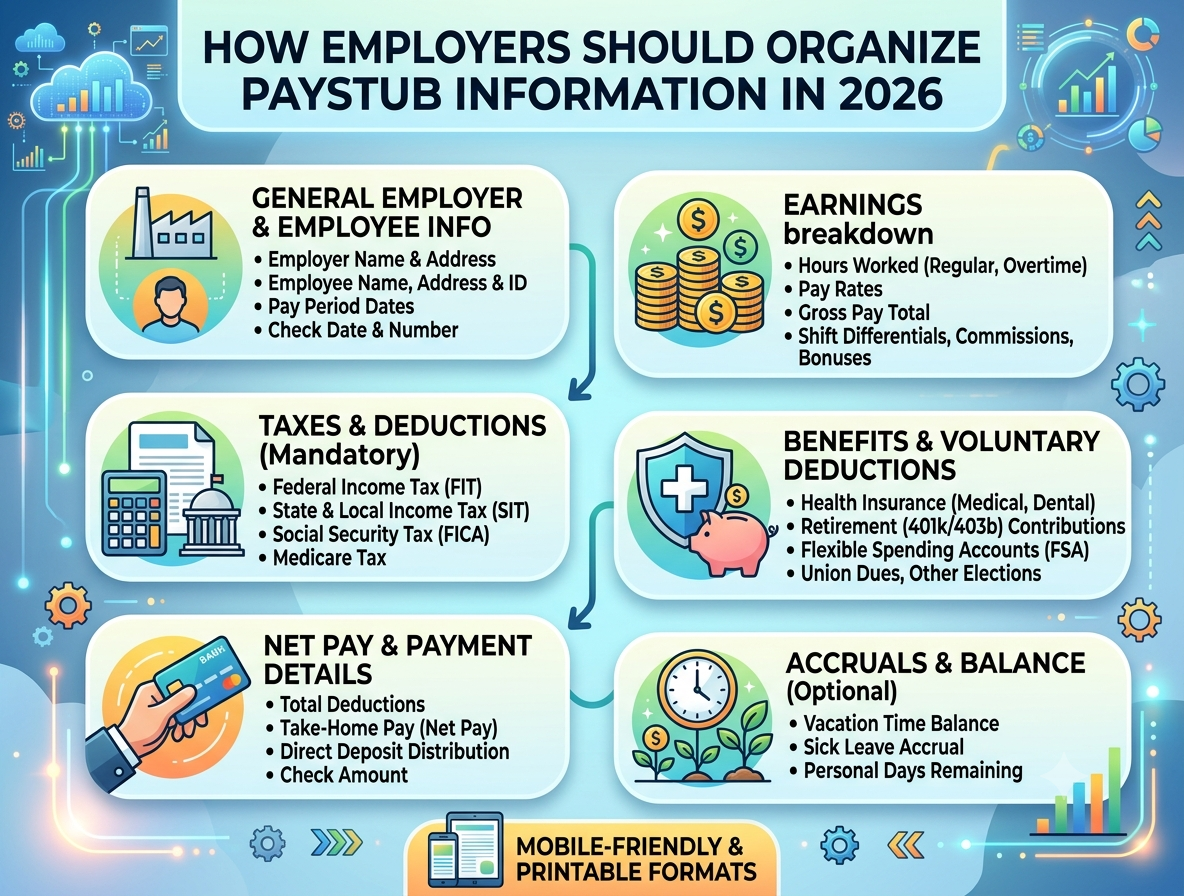
Managing payroll accurately is one of the most important responsibilities for every employer. A well-organized pay stub gives employees a clear view of their earnings, deductions, taxes, and net pay. It also helps businesses maintain consistent payroll records and respond to employee questions more efficiently.
In 2026, employers should focus on keeping pay stub information accurate, easy to understand, secure, and properly organized. A free pay stub generator can help small businesses prepare professional-looking pay stubs, while a free pay stub template can provide a consistent structure for presenting important payroll details.
Every pay stub should begin with correct employee information. Employers should maintain the employee's name, address, and other necessary identifying information in their payroll system. The Department of Labor requires covered employers to maintain accurate records related to employees, hours, wages, and payments.
Employers should review employee details regularly. An address change, job position, pay rate, or employment status can affect payroll records. Keeping these details updated reduces errors and makes future payroll processing easier.
A free pay stub template can help employers arrange employee information in a consistent location on every document. This makes pay stubs easier for workers to review and easier for payroll staff to maintain.
A well-structured pay stub should make the difference between earnings and deductions easy to understand. Employers should organize gross wages, overtime, bonuses, commissions, and other earnings separately from taxes and deductions.
The Department of Labor identifies wages, overtime earnings, additions, deductions, total wages, payment dates, and pay periods as information employers need to maintain for covered nonexempt workers.
For example, an organized paystub may show:
This structure allows employees to understand how their gross earnings become their final take-home amount.
Employers should always identify the pay period covered by each pay stub. The document should also show the actual payment date.
This information helps employees connect their earnings with a specific payroll cycle. It also gives businesses a clear record when they need to investigate payroll questions.
A free pay stub generator can make this process easier by allowing employers to enter the pay period, payment date, earnings, and deductions before creating the document.
Year-to-date, or YTD, information gives employees a broader picture of their earnings and deductions during the year. Employers can use YTD figures to show cumulative gross wages, taxes, and other applicable deductions.
This information becomes particularly useful when employees review their annual income or prepare for tax-related activities. Employers should ensure that cumulative amounts remain consistent with their payroll records.
When using a free pay stub template, businesses should select a layout that provides enough space for both current-period and YTD figures without making the document difficult to read.
Employers should organize payroll documents by employee, pay period, and calendar year. Digital records can make searching and retrieving documents easier, but businesses should protect payroll information from unauthorized access.
The IRS states that employment tax records generally must be kept for at least four years. These records can include wage payments, employee information, withholding certificates, tax deposits, and related employment tax documentation.
Employers should therefore create a consistent filing system. For example, they can organize documents into yearly folders and separate them by employee or payroll period.
Consistency matters when employers create pay stubs for multiple employees. Each document should follow the same basic structure, while still reflecting the individual employee's actual compensation and deductions.
A free pay stub template can provide a repeatable format for businesses that want professional payroll documents without designing each pay stub from scratch.
Employers should avoid unnecessary information that makes the document confusing. Instead, they should group related details under clear sections such as employee information, earnings, deductions, taxes, and net pay.
Employers should review every paystub before giving it to an employee. A quick verification can identify incorrect pay rates, hours, deductions, tax amounts, or payment dates.
Businesses using a free pay stub generator should carefully check every field before generating the final document. Automated calculations can reduce manual work, but employers remain responsible for entering accurate information and following applicable federal, state, and local requirements.
A final review should confirm that the employee details, pay period, earnings, deductions, taxes, and net pay match the company's payroll records.
A paystub should not require employees to decode complicated payroll terminology. Employers should use clear labels and logical sections so workers can quickly identify how their pay was calculated.
Simple formatting improves transparency and can reduce repetitive payroll questions. When employees understand their earnings and deductions, they can more easily identify potential discrepancies and contact payroll staff when something appears incorrect.
Organizing paystub information in 2026 requires more than simply listing an employee's earnings. Employers should create accurate, consistent, readable, and secure payroll documents that clearly explain each payment.
A free pay stub generator can help businesses prepare structured pay stubs efficiently, while a free pay stub template can provide a practical format for presenting employee information, earnings, deductions, taxes, and net pay.