English
 Arabic
 French
 Spanish
 Portuguese
 Deutsch
 Turkish
 Dutch
Dutch
 Italiano
 Russian
 Romaian
 Portuguese (Brazil)
 Greek
Greek
Single Channel ECG Machine Market Witness the Highest Growth Globally in Coming Years 2025-2034
Networking |
2025-04-12 05:07:25
 Social Networth OS
 Creator Commerce
 Launch Startup
 Global News
 Creator Award
 Talkfever App
Ver Todo
Talkfever App
Ver Todo

Upgrade to Pro
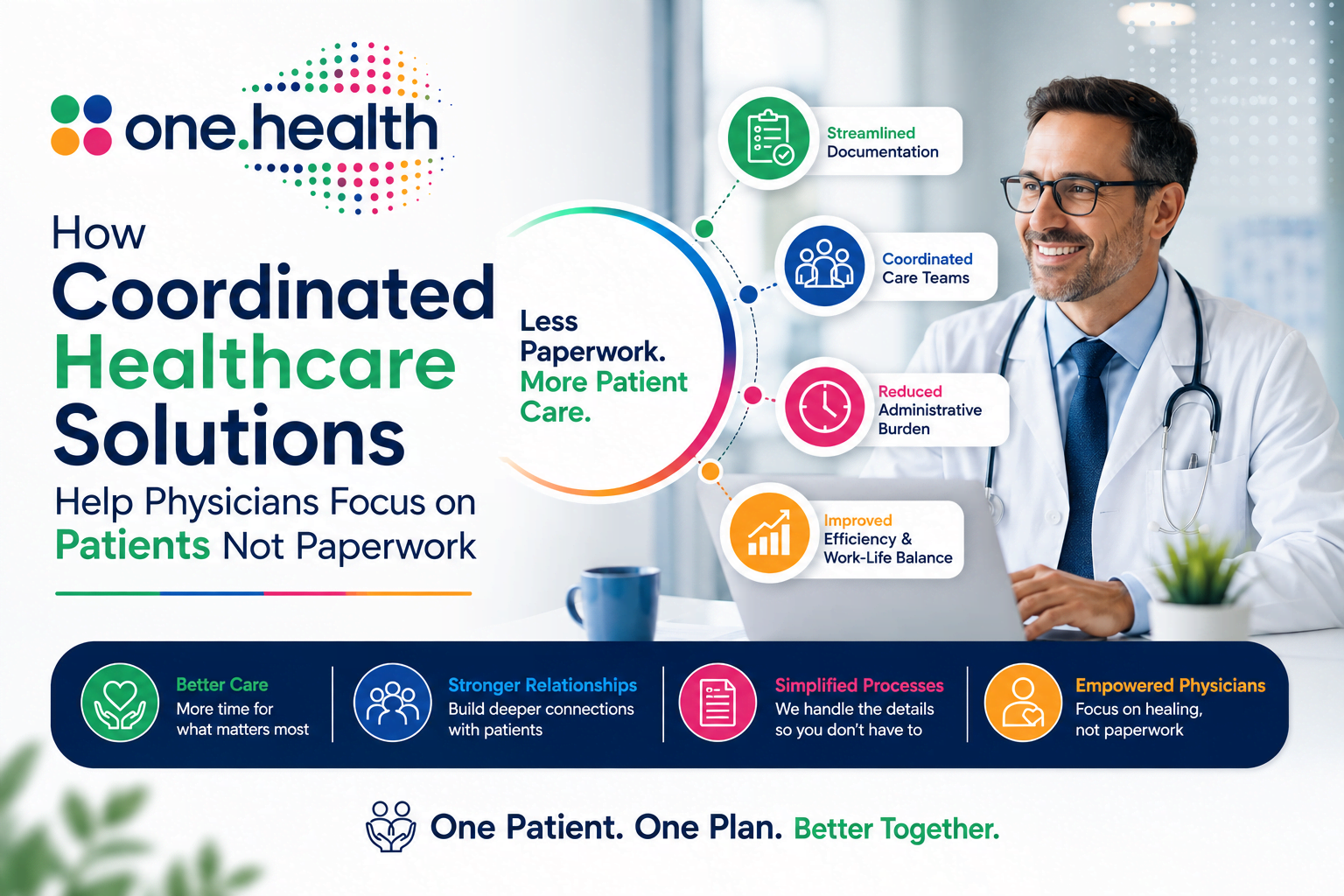
Every doctor I talk to lately sounds exhausted. Not because they spent ten hours in surgery or managed a high-stakes clinical crisis, but because they spent four hours after dinner clicking checkboxes in an Electronic Health Record system. The modern practice of medicine has quietly morphed into a high-stakes clerical job where patient interaction feels like an interruption to the data entry.
Administrative overhead now swallows nearly half of a physician's working day. When you look at the sheer volume of prior authorizations, fragmented billing codes, complex post-acute handoffs, and disjointed specialty referrals, it is no surprise that provider burnout is sitting at record levels. The current healthcare infrastructure forces independent practices into a tight spot: surrender autonomy to large corporate health systems or get crushed under operating overhead.
Real relief requires restructuring how care flows behind the scenes. Coordinated Healthcare Solutions offer a practical path forward by building integrated systems that take the heavy logistical lifting off clinical staff. When specialty care, pharmacy access, patient navigation, and post-acute follow-ups link up seamlessly, doctors get to return to what actually matters practicing medicine.
Let's be candid about what happens inside a clinic on a typical Tuesday. A primary care physician evaluates a patient with complex chronic conditions. She determines the treatment plan, prescribes specific medications, and requests a specialty consultation alongside home care follow-up.
That single patient visit triggers an avalanche of paperwork. Staff spend hours tracking down insurance approvals. Phone calls bounce between skilled nursing facilities, physical therapy offices, and independent pharmacies. If any link in that long chain breaks, the patient ends up back in the clinic or emergency room, and the physician gets stuck managing the administrative fallout.
This constant operational friction leads directly to practice administrative burden. Independent doctors often feel forced to choose between selling out to private equity firms which usually prioritize profit margins over patient outcomes or working eighty hours a week just to keep their doors open. We need a system built by healthcare operators who understand the day-to-day realities of patient care, not financial engineers looking for a quick exit strategy.
When a healthcare model actually connects fragmented services into a single unified framework, the operational dynamic changes overnight. Coordinated Healthcare Solutions eliminate repetitive tasks by aligning clinical and administrative channels before bottlenecks happen.
Here is how an integrated approach simplifies everyday practice management:
Unified Care Handoffs: Instead of clinic staff manually faxing records and hunting down updates from post-acute facilities, care coordinators manage transitions directly.
Direct Specialty Alignment: Patients move seamlessly into specialized care pathways without getting lost in administrative delays or endless referral loops.
Centralized Post-Acute Management: Bridging the gap between facilities, outpatient centers, and home care ensures patient compliance while drastically cutting down emergency readmissions.
Preserved Provider Autonomy: Physicians retain full ownership of clinical decisions while drawing on enterprise-level operational infrastructure.
By addressing friction points across the entire continuum, clinics save dozens of administrative hours every week. That reclaimed time translates directly into longer patient appointments, less staff turnover, and significantly better clinical oversight.
At its heart, medicine is a personal relationship built on trust, clear communication, and time. When billing concerns, insurance paperwork, and fragmented referral systems dominate a consultation, patient care suffers.
Adopting a patient-centered care model changes that dynamic completely. When support teams handle pre-authorizations, pharmacy coordination, and post-discharge scheduling in the background, the actual clinical visit shifts focus back to listening, diagnosing, and building long-term health plans. Patients notice when their doctor isn't staring at a computer screen the entire visit.
I’ve seen how much smoother things run when post-acute care settings, specialty clinics, and primary care physicians share a clear communication protocol. Healthcare post-acute care integration ensures that when a patient leaves a skilled nursing facility or hospital, their primary physician receives immediate updates without needing staff to chase down medical records across five different portals. The patient gets continuous care, and the doctor gets actionable data right when they need it.
For years, the standard narrative told doctors that their only escape from administrative paralysis was selling their practice to private equity groups or joining massive hospital networks. But those options often mean losing control over scheduling, patient quotas, and treatment decisions.
Fortunately, alternative frameworks exist. Non-profit, operator-led organizations are stepping in with physician burnout solutions that preserve independence while providing deep operational backing.
Traditional Independent Practice
Isolated administrative duties
Fragmented post-acute handoffs
Pressure to sell to Private Equity
Disjointed specialty referrals
Integrated Coordinated Model
Centralized care management support
Direct facility-to-home coordination
Retained clinical autonomy & ownership
Seamless Centers of Excellence access
Organizations like One Health represent this shift toward physician-focused, purpose-driven care. Built by seasoned operators rather than corporate investors, One Health creates a connected framework that links specialty care, centers of excellence, skilled nursing facility operations, and home care into one cohesive ecosystem. By taking on complex logistical challenges across the care continuum, One Health allows medical teams to keep their promises to patients while maintaining financial and operational health.
When your clinical network runs efficiently, medical providers stop acting as administrative coordinators and get back to being doctors.
The current administrative pressure on medical providers isn't sustainable, but selling out to corporate aggregators isn’t the only alternative. By leveraging structured Coordinated Healthcare Services, medical practices can cut through administrative chaos, streamline complex patient handoffs, and protect their clinical independence.
Healthcare works best when it stays centered on human relationships, not administrative systems. Restoring balance to your practice starts with building the right support framework around your care teams. Take a hard look at your current operational workflows, explore true collaborative partners, and reclaim your time for the people who matter most your patients.
Coordinated Healthcare Solutions link fragmented healthcare services like specialty practices, primary care clinics, post-acute facilities, and home health into a unified operational system. This model shares data and administrative support across the care network so providers can focus on clinical treatment rather than tracking down records or managing paperwork.
Integrated care systems handle time-consuming administrative tasks like post-acute follow-ups, specialty referral tracking, and care management logistics. Offloading these clerical duties reduces screen time and administrative stress, serving as effective physician burnout solutions.
Not necessarily. Unlike traditional private equity firms that buy out practices and dictate clinical metrics, non-profit entities like One Health offer operational infrastructure and care coordination networks that help physicians maintain their clinical autonomy and independent decision-making.
Healthcare post-acute care integration creates smooth transitions for patients moving from hospitals or skilled nursing facilities back to their homes. Shared communication channels reduce medication errors, prevent unnecessary hospital readmissions, and ensure follow-up plans are carried out without delay.
A patient-centered care model organizes administrative processes around the patient's journey rather than forcing them to navigate disconnected clinics alone. It ensures all specialists, primary doctors, and support networks communicate constantly, leading to faster diagnosis, clearer treatment paths, and better health outcomes.