English
 Arabic
 French
 Spanish
 Portuguese
 Deutsch
 Turkish
 Dutch
Dutch
 Italiano
 Russian
 Romaian
 Portuguese (Brazil)
 Greek
Greek
Intravenous Stopcock Market | Unveiling Key Developments and Players |Forecast 2032
Other |
2025-01-22 08:59:54
 Social Networth OS
 Creator Commerce
 Launch Startup
 Global News
 Creator Award
 Talkfever App
Ver todos
Talkfever App
Ver todos

Atualizar para Plus
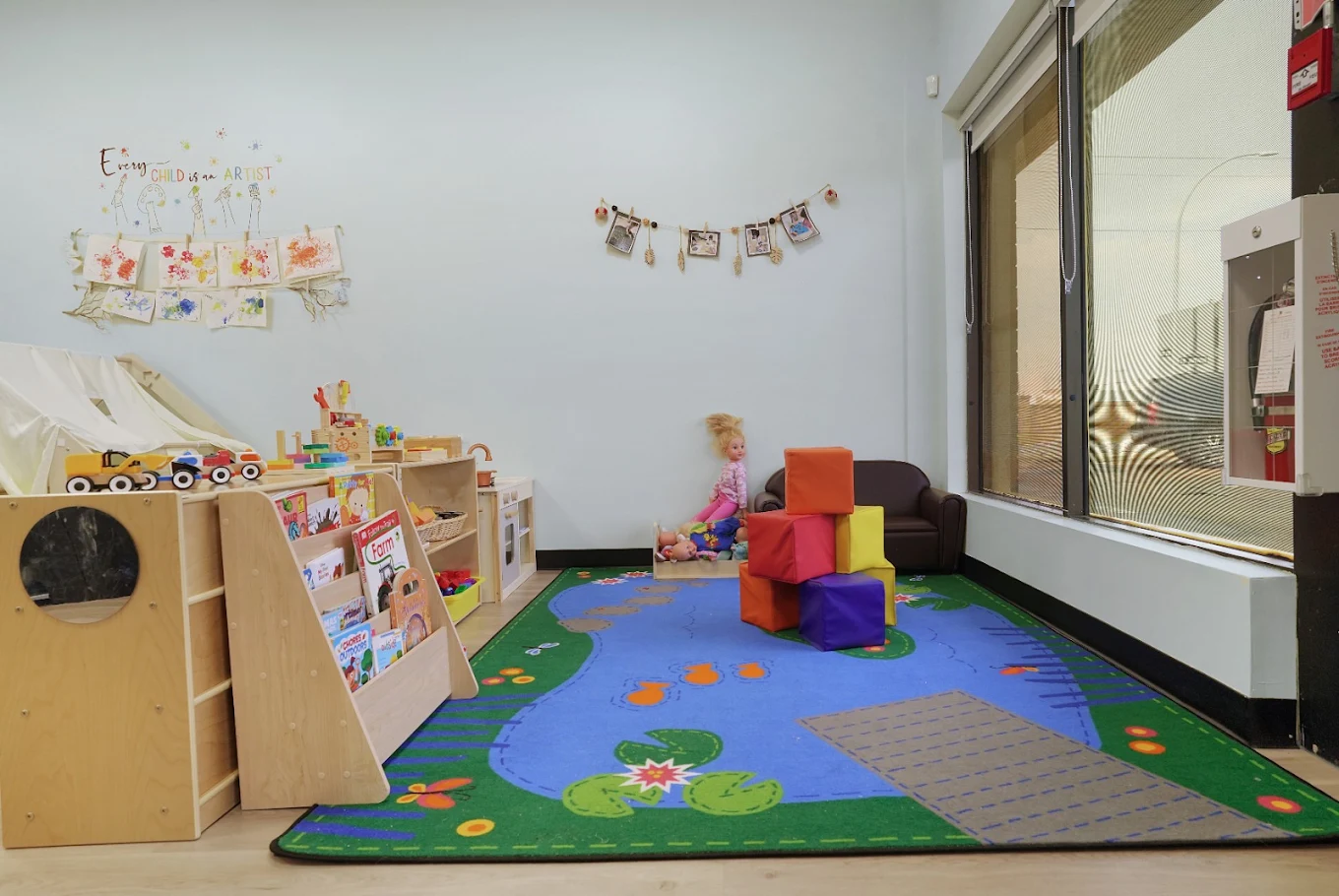
Young children are naturally curious. They want to touch, move, build, observe, ask questions, and discover how things work. Instead of learning only by listening or watching, children can often understand new concepts more effectively when they are given opportunities to participate directly. This is why hands-on learning for young children can be such a valuable part of early childhood education.
Hands-on learning allows children to explore concepts through real experiences. Whether they are building with blocks, creating artwork, planting seeds, sorting objects, experimenting with water, or participating in simple science activities, children are actively involved in the learning process.
Hands-on learning is an educational approach where children learn by actively doing rather than simply receiving information.
For young children, this might involve:
These activities can turn ordinary experiences into learning opportunities.
For example, a child building a tower with blocks may be learning about balance, size, shapes, and problem-solving without realizing that the activity has an educational purpose.
Young children learn through exploration. Their senses and physical interactions with the environment help them understand new concepts.
When children participate directly in an activity, they can make observations, test ideas, make mistakes, and try again.
This process can encourage:
The goal is not necessarily to make every activity academically focused. Instead, learning can naturally happen through meaningful play and exploration.
Many hands-on activities require children to use their fingers and hands carefully.
Activities such as drawing, painting, cutting with child-safe scissors, threading beads, building with small blocks, using play dough, and completing puzzles can help children practice fine motor movements.
Fine motor development can support everyday skills such as holding writing tools, using utensils, fastening clothing, and manipulating classroom materials.
Young children need repeated opportunities to practice these movements.
Rather than expecting them to master a skill immediately, educators can provide different activities that allow children to develop coordination gradually.
Creative activities are an important part of hands-on learning for young children.
When children receive art materials, building resources, or open-ended play objects, they can decide what they want to create.
For example, instead of telling every child exactly what their artwork should look like, an educator might provide paper, crayons, paint, and other materials and allow children to develop their own ideas.
This gives children opportunities to make choices and express themselves.
Creativity also involves experimentation. Children may discover that mixing different colors creates a new color or that changing the position of blocks makes a structure more stable.
Building activities are particularly useful for young children.
Blocks, construction sets, cardboard pieces, and other age-appropriate materials can encourage children to experiment with shapes, balance, height, and structure.
A child might build a bridge, house, tower, road, or imaginary city.
During this process, children may encounter problems. Perhaps the tower falls over or the bridge does not support another block.
Instead of immediately solving the problem for the child, an educator can ask questions such as:
Questions like these encourage children to think independently.
Hands-on activities can make early mathematics easier for young children to understand.
Instead of only looking at numbers on a worksheet, children can count real objects.
For example, educators can ask children to count blocks, sort buttons by color, compare the sizes of objects, or arrange items from smallest to largest.
These activities can introduce concepts such as:
Children can experience mathematical ideas physically before they are expected to understand them abstractly.
Young children often ask questions about the world around them.
Hands-on science activities can provide opportunities to investigate those questions.
Simple activities might include observing what happens when objects are placed in water, watching seeds grow, mixing safe materials, exploring shadows, or examining leaves and other natural objects.
The emphasis should be on observation and curiosity rather than complicated scientific terminology.
An educator might ask:
"What do you think will happen?"
After the activity, the child can compare their prediction with what actually happened.
This simple process introduces early scientific thinking.
Hands-on activities can also encourage communication.
While children are building, creating, sorting, or exploring, educators can talk with them about what they are doing.
Questions such as:
encourage children to use language to explain their ideas.
Group activities provide additional opportunities for children to listen to others, share ideas, and learn new vocabulary.
Young children often enjoy sensory activities because they allow them to explore materials using multiple senses.
Depending on age and safety requirements, sensory activities may include water, sand, play dough, textured materials, natural objects, or other suitable resources.
Sensory exploration can encourage children to describe differences in texture, temperature, shape, sound, and appearance.
For example, children might compare smooth and rough objects or observe which materials absorb water.
These experiences can help expand vocabulary while encouraging curiosity.
Learning does not have to take place inside a classroom.
Outdoor environments provide many opportunities for active exploration.
Children can collect leaves, observe insects, examine rocks, plant flowers, explore textures, or watch changes in weather.
A simple walk can become an educational activity when educators encourage children to observe their surroundings.
For example, children might search for different shapes of leaves or count the number of birds they see.
Outdoor experiences can combine physical movement with natural exploration.
Hands-on learning can also be collaborative.
Children can work together to build a structure, complete a puzzle, create artwork, or participate in a group experiment.
Working with others teaches children how to:
These social skills are important not only during early childhood but throughout school and later life.
One of the major advantages of hands-on activities is that children can often complete parts of the process independently.
For example, an educator might provide materials and explain the basic activity while allowing children to choose how they want to participate.
This gives children opportunities to make decisions.
Small choices can build confidence.
A child might choose which color to use, where to place an object, which block to select, or how to decorate a project.
Educators can provide guidance when needed while still allowing children to experience the satisfaction of solving problems themselves.
Mistakes are a natural part of hands-on learning.
A structure may fall. A craft may not look as expected. A puzzle piece may be placed incorrectly.
These situations provide valuable learning opportunities.
Instead of treating mistakes as failures, educators can encourage children to think about what happened and try another approach.
This can help children develop persistence.
They learn that not succeeding immediately does not mean they should stop trying.
Hands-on learning does not mean children are simply given materials and left alone.
Educators play an important role in preparing appropriate activities, ensuring safety, asking thoughtful questions, and observing how children interact with materials.
A skilled educator can recognize when a child needs help and when it is better to allow the child to experiment independently.
Observation is particularly important.
Educators can use children's interests to create new activities.
If a child becomes interested in animals, for example, the educator might introduce animal-themed books, sorting activities, artwork, counting games, or imaginative play.
Not every activity is appropriate for every child.
Young children develop at different rates, so activities should be adjusted according to age and ability.
Younger children may benefit from larger materials and simple sensory exploration.
Older preschoolers may be ready for more complex puzzles, building projects, counting activities, and simple experiments.
The same basic activity can often be adapted.
For example, sorting can involve two colors for a younger child and multiple categories or patterns for an older child.
Children learn best when they are interested and engaged.
Hands-on learning can make educational experiences feel more like play.
Instead of requiring children to sit still for long periods, educators can incorporate movement, materials, creativity, and interaction.
This can be particularly helpful for children who have difficulty staying engaged with traditional instruction.
Enjoyment can also encourage children to become more curious about learning.
A child who enjoys experimenting with objects may naturally begin asking more questions and seeking additional information.
The environment can influence how children participate.
Materials should be organized so children can access appropriate resources safely.
A learning space might include:
Children can be encouraged to return materials after activities, which also helps develop responsibility and organization.
Hands-on learning for young children provides opportunities to learn through active participation, exploration, creativity, and meaningful experiences. Children can develop fine motor skills, communication, problem-solving abilities, early mathematical understanding, social skills, and confidence while participating in activities that feel enjoyable and natural.
The most effective approach does not require complicated equipment. Simple blocks, art supplies, natural materials, puzzles, water, books, and everyday objects can all become valuable learning resources when used appropriately.
By allowing children to ask questions, experiment, make choices, solve problems, and learn from mistakes, educators can create an environment where children are active participants in their own learning.
When learning is connected with curiosity and play, children can develop positive attitudes toward exploration that support them well beyond their early years.