English
 Arabic
 French
 Spanish
 Portuguese
 Deutsch
 Turkish
 Dutch
Dutch
 Italiano
 Russian
 Romaian
 Portuguese (Brazil)
 Greek
Greek
Cab Service in Bareilly | Taxi Service in Bareilly
غير مصنف |
2026-04-06 05:32:09
 Social Networth OS
 Creator Commerce
 Launch Startup
 Global News
 Creator Award
 Talkfever App
عرض كل النتائج
Talkfever App
عرض كل النتائج

ترقية الحساب
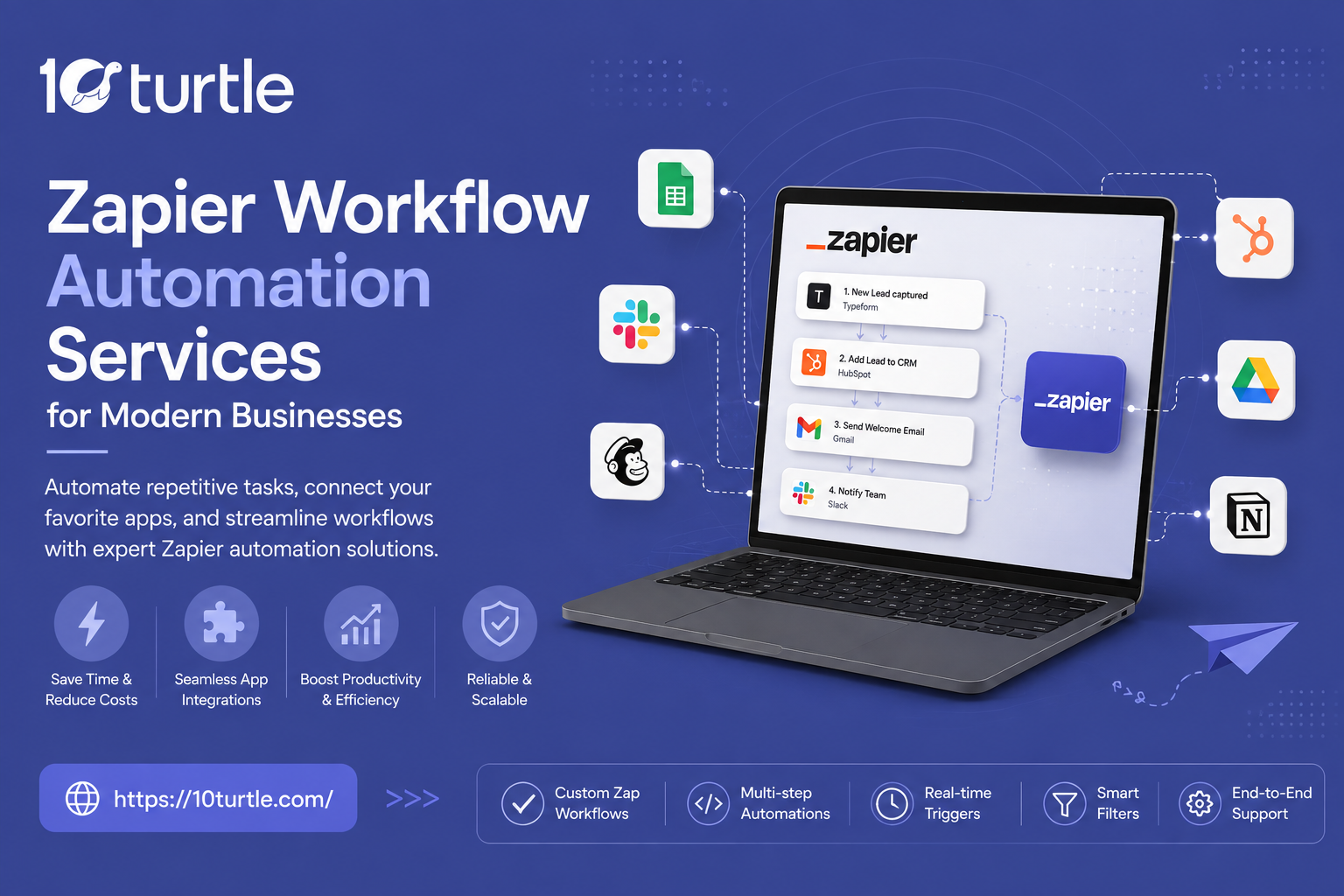
Running a small business in the U.S. today means juggling a dozen apps your CRM, email platform, invoicing software, spreadsheets, and social media tools often at the same time. Every time you copy data from one app to another manually, you lose time you could be spending on customers. That's exactly where workflow automation services step in, and Zapier has become one of the most trusted names for making it happen without writing a single line of code.
This guide breaks down what Zapier workflow automation really means, why American small businesses are adopting it faster than ever, how it compares to other automation platforms, and how to choose the right business process automation company for your needs.
At its core, Zapier connects thousands of web apps — think Gmail, Shopify, QuickBooks, Slack, HubSpot, and Google Sheets — so they can automatically share data and trigger actions. A "Zap" is simply a rule: when something happens in App A (a trigger), do something in App B (an action). No developer, no custom API code, no manual copy-pasting.
Workflow automation services built around Zapier take this a step further. Instead of you figuring out triggers and actions yourself, a specialized team designs, builds, tests, and maintains multi-step automations tailored to how your business actually operates — lead capture, invoice reminders, customer onboarding, inventory alerts, and more.
American small and mid-sized businesses are under constant pressure to do more with leaner teams. A few forces are driving the shift toward automation:
This is why searches for business process automation and workflow automation services consistently show strong commercial intent — business owners aren't just curious, they're actively looking to buy.
A single automated workflow might only save 10 minutes a day. But multiply that across lead intake, invoicing, follow-ups, and reporting, and teams routinely reclaim 10–15 hours per week.
Manual data entry between apps is one of the top sources of business errors — duplicate customer records, missed follow-ups, and billing mistakes. Automation removes the human copy-paste step entirely.
Connecting your website forms, ad platforms, and CRM through custom workflow automation services means a new lead can get an instant email, a Slack alert to your sales team, and a CRM entry — all within seconds of filling out a form.
Instead of hiring an admin assistant for every new location or product line, well-built automations let your existing team handle growing volume.
Automated syncing between your sales, marketing, and finance tools means leadership gets accurate, real-time dashboards instead of outdated monthly reports.
A question we hear often from U.S. clients: should we use Zapier, or something like n8n, Make, or Workato?
| Factor | Zapier | n8n / Make | Enterprise RPA (UiPath, Workato) |
|---|---|---|---|
| Ease of use | Very high (no-code) | Moderate (some technical setup) | Requires IT involvement |
| Best for | Small–mid U.S. businesses | Technical teams wanting flexibility | Large enterprises, complex systems |
| App integrations | 7,000+ apps | Growing library | Deep but narrower |
| Setup speed | Fast | Moderate | Slow |
| Cost for SMBs | Affordable tiers | Often cheaper but needs dev time | Expensive |
For most American small businesses, Zapier remains the fastest path to real ROI because it doesn't require an in-house developer to maintain.
When you decide to hire a Zapier expert or agency instead of building automations in-house, look for:
One development worth watching in 2026 is the merging of AI workflow automation services with traditional no-code tools like Zapier. Instead of simple "if this, then that" logic, businesses are now layering AI steps into their Zaps — for example, having an AI model draft a personalized reply to a customer inquiry before it's sent, or having AI automatically categorize and prioritize incoming support tickets before routing them. This shift means workflow automation is moving from purely mechanical data-passing toward genuinely intelligent decision-making inside everyday business processes — a trend U.S. SaaS platforms are actively building toward.
1. What is the average cost of Zapier workflow automation services in the USA? Costs vary widely depending on complexity. Simple single-step Zaps might cost a few hundred dollars to set up, while a full multi-app automation system built by an agency can range from $1,000–$10,000+ depending on the number of workflows and ongoing support needed.
2. Do I need coding knowledge to use Zapier? No. Zapier is a no-code platform designed so business owners and non-technical staff can build automations using simple trigger-and-action logic.
3. Is Zapier secure enough for handling customer data? Zapier uses encryption and offers enterprise-grade security features on higher-tier plans, but businesses handling sensitive data (like health or payment information) should work with a provider familiar with U.S. compliance standards.
4. How long does it take to set up a business workflow automation? Simple automations can be live within a day. More complex, multi-step workflows involving several apps typically take one to three weeks including testing.
5. Can Zapier automation replace my existing software? No — Zapier doesn't replace your CRM, accounting, or email tools. It connects them so they work together automatically, without needing separate integrations built by developers.
6. What happens if a connected app changes its API? This is a common cause of automation breakage. A good workflow automation services provider monitors your Zaps and updates them proactively when a connected app changes.
For American small businesses trying to compete with leaner teams and tighter budgets, Zapier workflow automation services aren't a luxury anymore — they're becoming a baseline expectation for operational efficiency. Whether you're automating lead intake, invoicing, or customer onboarding, the right automation partner can save your team dozens of hours a month while reducing costly manual errors. The businesses that get ahead in the next few years will likely be the ones that treat workflow automation not as a one-time project, but as an ongoing part of how they operate.