English
 Arabic
 French
 Spanish
 Portuguese
 Deutsch
 Turkish
 Dutch
Dutch
 Italiano
 Russian
 Romaian
 Portuguese (Brazil)
 Greek
Greek
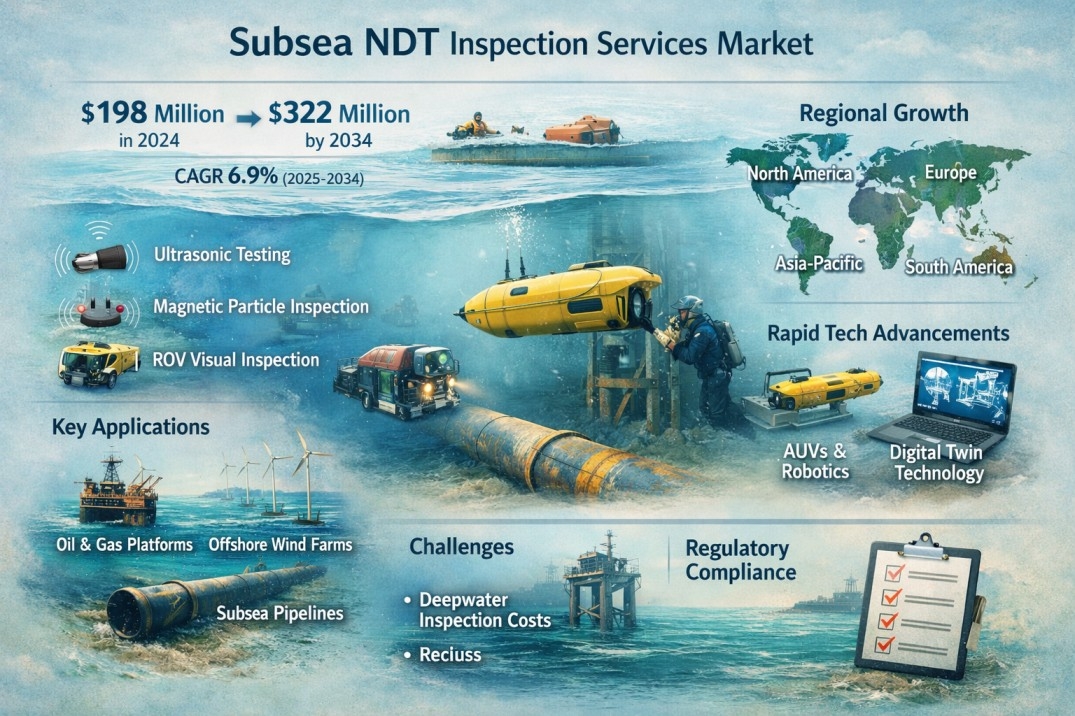
Subsea NDT Inspection Market Trends 2025–2034: Steady Growth at 6.9% CAGR Driven by Offshore Demand
Music |
2026-04-07 17:28:16
 Social Networth OS
 Creator Commerce
 Launch Startup
 Global News
 Creator Award
 Talkfever App
عرض كل النتائج
Talkfever App
عرض كل النتائج

ترقية الحساب
Thyristor Devices for Electric Power Systems: How Grid Expansion, HVDC and Renewable Integration Are Turning Power Semiconductors Into Critical Infrastructure
The modern electricity grid is becoming a power-electronics grid. Electricity is no longer moving only through transformers, conductors and mechanical switchgear. More of the system now depends on devices that can control voltage, current and power flow within milliseconds. This is where Thyristor Devices for Electric Power Systems become strategically important.
A thyristor is essentially a controlled semiconductor switch. Once triggered, it can carry very large currents until the current falls below its holding level or the circuit commutates it. That simple operating principle becomes valuable when a transmission system is handling hundreds or thousands of megawatts.
Consider a ±500 kV HVDC transmission link carrying 2,500 MW. At that power level, even a small improvement in controllability has infrastructure-level consequences. A 1% improvement in effective transmission utilization represents roughly 25 MW of additional transferable capacity on such a link. This is why Thyristor Devices for Electric Power Systems remain relevant even as newer silicon-carbide and IGBT-based technologies expand.
The grid investment story is creating the demand layer
India provides a useful example of how infrastructure spending translates into semiconductor demand.
The country's National Electricity Plan for 2023–2032 targets an increase in transmission networks from about 491,000 circuit kilometers in 2024 to 648,000 circuit kilometers by 2032. Transformation capacity is planned to rise from approximately 1,290 GVA to 2,342 GVA. The plan also includes nine additional HVDC lines totaling 33.25 GW.
That is not simply a transmission-line story. Every HVDC station requires a chain of power-electronic equipment, including converter valves, control systems, cooling systems, protection equipment and semiconductor devices. Thyristor Devices for Electric Power Systems sit inside this architecture wherever line-commutated conversion and high-power switching are used.
The economic multiplier is substantial. If 33.25 GW of new HVDC capacity is eventually built, a 1% increase in the utilization of that incremental capacity would correspond to roughly 333 MW of additional effective transfer capability.
That is the infrastructure logic behind the technology.
HVDC is the heavyweight use case
The strongest historical application for Thyristor Devices for Electric Power Systems is HVDC.
Line-commutated converter systems use large thyristor valves to convert AC to DC and DC back to AC. A converter bridge can contain multiple semiconductor positions, with each valve comprising a series connection of many thyristors to withstand the required voltage.
For a high-voltage installation, this creates a very different semiconductor economics compared with consumer electronics.
A device may have to withstand several kilovolts while carrying thousands of amperes. The design challenge therefore moves beyond the semiconductor chip itself. The complete system requires electrical insulation, heat removal, optical triggering, mechanical compression, monitoring and fault protection.
This is why manufacturers such as Hitachi Energy, Mitsubishi Electric, Toshiba, GE Vernova and other high-voltage equipment suppliers operate at the system level, while semiconductor specialists such as Infineon, Vishay, Littelfuse and related suppliers participate further down the component chain.
The commercial opportunity is therefore distributed across devices, valves, cooling equipment, controls and service contracts.
Market size is small compared with the grid opportunity
Staticker estimates the global Thyristor Devices for Electric Power Systems market at approximately US$401 million in 2026, with the market forecast to reach approximately US$504 million by 2031. The figures reflect the narrower market for thyristor devices specifically used in electric power systems rather than the much larger overall thyristor or power-semiconductor universe.
That distinction matters. A grid project can involve hundreds of millions or billions of dollars of infrastructure while the semiconductor-device layer represents only a fraction of the project value. The strategic importance of Thyristor Devices for Electric Power Systems therefore cannot be measured simply by comparing semiconductor revenue with total grid spending.
FACTS adds a second infrastructure pathway
HVDC is only one route.
Flexible AC Transmission Systems, or FACTS, create another application layer. Thyristor-controlled series capacitors can modify effective line impedance and improve power-flow control. Static VAR compensation can regulate reactive power and support voltage stability.
India has already deployed thyristor-controlled series compensation on 400 kV transmission infrastructure. Examples include the Kanpur–Ballabgarh corridor and other 400 kV installations associated with major transmission routes.
The physical scale matters.
A 400 kV double-circuit transmission line extending 350–400 km can become a major power-transfer corridor. Adding controlled compensation can change how much power the line can carry without requiring an entirely new right-of-way.
This makes Thyristor Devices for Electric Power Systems an infrastructure optimization technology, not merely a switching component.
Renewable power changes the job description
Solar and wind generation introduce a new problem: generation is increasingly located away from traditional demand centers.
A solar-rich region may have hundreds of gigawatts of generation potential while industrial and residential loads remain hundreds of kilometers away. Transmission therefore becomes the bridge between renewable generation and electricity consumption.
India's renewable build-out illustrates the challenge. Large renewable-energy zones in Rajasthan and Gujarat require new transmission corridors to move electricity toward load centers.
China, Europe and North America face similar geography problems.
This expands the relevance of Thyristor Devices for Electric Power Systems because power electronics can provide controllability where conventional AC networks become constrained by voltage, stability or power-flow limits.
The semiconductor is also a thermal-management problem
A high-power thyristor cannot be evaluated only by its voltage and current rating.
Suppose a power device dissipates 1 kW of heat. Over one hour, that becomes 1 kWh of thermal energy that must be continuously removed. At a converter station containing hundreds of high-power semiconductor positions, thermal management becomes a system-design variable.
That is why high-power thyristor assemblies use water cooling, heat sinks, electrically insulated cooling structures and carefully controlled thermal interfaces.
For Thyristor Devices for Electric Power Systems, reliability is directly connected to thermal cycling. Repeated current loading produces expansion and contraction across semiconductor, ceramic and metallic layers. Over years of operation, those mechanical stresses can influence failure rates.
The result is a market where lifetime reliability can be more valuable than a small reduction in initial component cost.
Refurbishment is becoming part of the opportunity
Grid infrastructure also has a long operating life.
A transmission asset installed 20–30 years ago may still be strategically important even when its original converter valves, controls or protection systems are approaching obsolescence.
That creates a refurbishment market around Thyristor Devices for Electric Power Systems.
A December 2025 order involving GE Vernova T&D India and Power Grid Corporation focused on refurbishment of the 2 × 500 MW Chandrapur HVDC link, including upgrades to HVDC thyristor valves and controls and protection systems.
This is significant because refurbishment does not require construction of an entirely new transmission corridor.
If a converter station can be modernized while the associated transmission line remains useful, the investment effectively extends the economic life of existing infrastructure. In markets with constrained rights-of-way, that can be more attractive than building new lines.
The next battleground is response speed versus power rating
Power semiconductor technology is not moving in one direction.
IGBTs and voltage-source converters have become increasingly important because they provide controllability at higher switching frequencies and work well with modern renewable integration architectures.
Yet Thyristor Devices for Electric Power Systems retain an advantage where extremely high power, high voltage and proven long-duration operation are priorities.
A thyristor does not need to switch thousands of times per second to create value. In an HVDC converter, its job is often to control enormous power flows at the fundamental AC frequency.
That changes the engineering equation.
For a 50 Hz grid, one electrical cycle lasts 20 milliseconds. The semiconductor does not need the switching frequency of a high-frequency converter to influence the power system. It needs to survive repeated high-energy electrical events reliably for decades.
That is precisely where thyristor technology continues to occupy a defensible position.
Request for customization: https://staticker.com/reports/thyristor-devices-for-electric-power-systems-market/