English
 Arabic
 French
 Spanish
 Portuguese
 Deutsch
 Turkish
 Dutch
Dutch
 Italiano
 Russian
 Romaian
 Portuguese (Brazil)
 Greek
Greek
How to Launch a Successful White-Label Delivery App Business
Music |
2026-06-12 11:43:21
 Social Networth OS
 Creator Commerce
 Launch Startup
 Global News
 Creator Award
 Talkfever App
Afiseaza-i pe toti
Talkfever App
Afiseaza-i pe toti

Upgrade to Pro
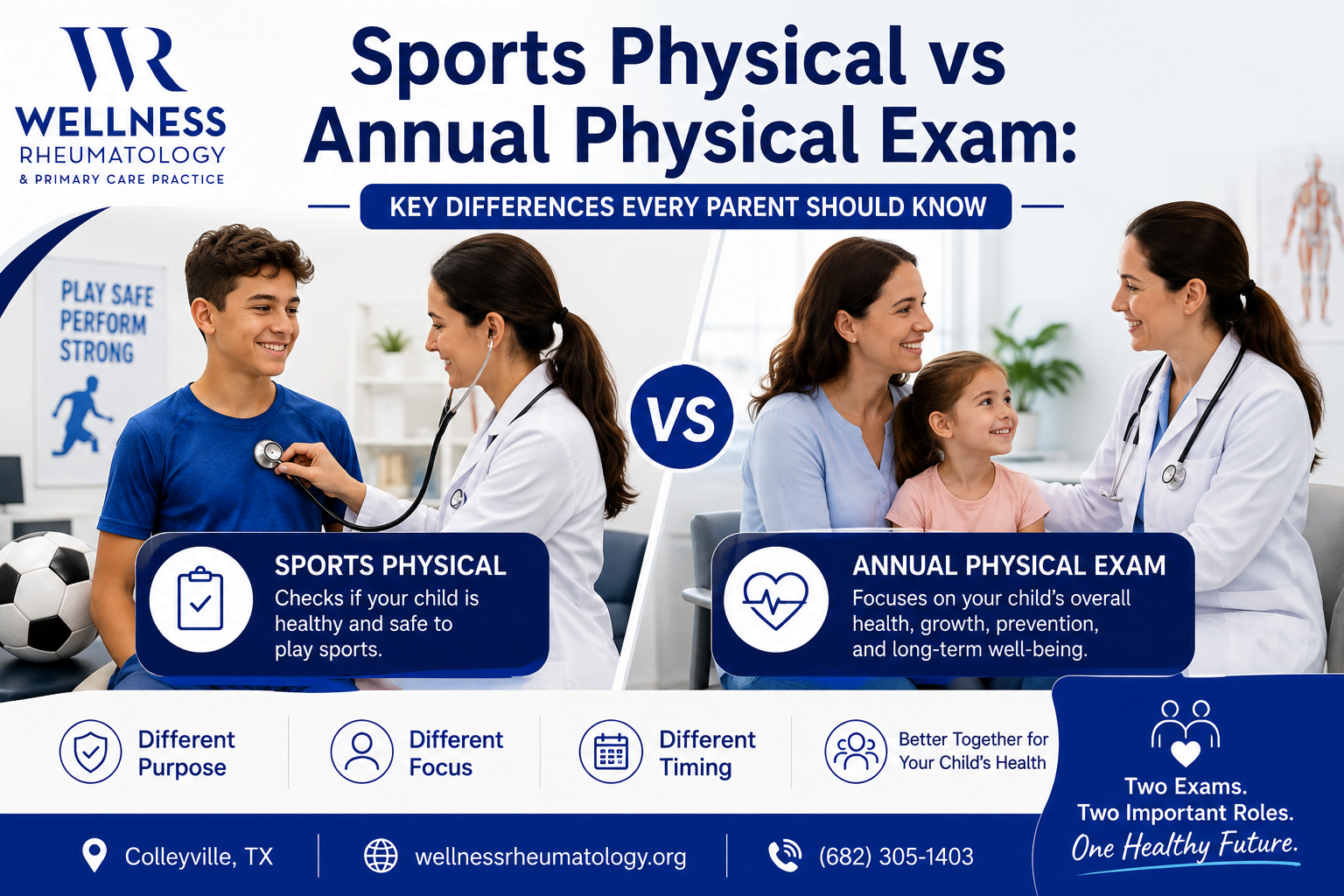
If you are a parent, this situation may sound familiar. Your child is excited about joining the school football team, trying out for basketball, or starting a new season, and then the form arrives: sports physical required. At the same time, you may remember that your child already had an annual physical exam. So naturally, the question comes up: aren't they basically the same thing?
Honestly, not quite.
A sports physical vs annual wellness exam and annual physical exam in Colleyville, Texas comparison matters because these appointments serve different purposes, even though both are important parts of keeping children and teens healthy. One focuses specifically on whether a young athlete can safely participate in sports. The other takes a broader look at overall health, development, prevention, and medical needs.
For busy families, especially around back-to-school season in communities like Colleyville, Texas, understanding the difference can prevent last-minute scheduling problems and help parents make better healthcare decisions. In this article, we'll explain how a sports physical and annual physical exam differ, what each appointment covers, and when your child may need one or both.
A sports physical, also called a pre-participation physical examination or PPE, is designed to assess whether a child or teenager can safely participate in a particular sport or physical activity.
The goal is not simply to "clear" a student as quickly as possible. A proper sports physical gives the healthcare provider a chance to review health concerns that could affect athletic participation.
During a sports physical, the provider may review:
Personal and family medical history
Previous injuries, fractures, or concussions
Heart and breathing concerns
Asthma or exercise-related symptoms
Joint, muscle, and bone problems
Current medications and allergies
Vision and other factors relevant to participation
Height, weight, blood pressure, and other basic measurements
Physical movement and musculoskeletal health when appropriate
For example, a teenager who develops chest discomfort, dizziness, unusual shortness of breath, or fainting during exercise should not have those symptoms brushed aside as "just being out of shape." They deserve proper medical attention before returning to strenuous activity.
The same goes for recurring knee pain, shoulder injuries, back problems, or repeated sprains. From my perspective, this is one reason a sports physical exam should never feel like a meaningless formality. The paperwork matters, yes, but the child's health matters more.
An annual physical exam takes a much wider view of your child's overall health.
Rather than focusing mainly on sports participation, an annual exam gives the healthcare provider an opportunity to review general wellness, growth, development, preventive care, and health changes that may not be connected to athletics at all.
Depending on the child's age and individual needs, an annual wellness exam may include discussion of:
Growth and development
Nutrition and eating habits
Sleep patterns
Physical activity
Mental and emotional well-being
School and daily routines
Medical history and medications
Immunizations and preventive care
Ongoing or newly developed health concerns
This appointment is also useful because children change quickly. What was normal a year ago may not be relevant today. A parent might mention persistent fatigue, frequent headaches, joint stiffness, unexplained pain, changes in appetite, or another concern that has gradually become part of everyday life.
Those conversations matter. Sometimes parents wait because a symptom does not seem urgent. Then months pass. It happens.
An annual physical creates dedicated time to step back and look at the bigger picture.
The easiest way to understand the difference is this:
A sports physical asks, "Can this child safely participate in this activity?"
An annual physical exam asks, "How is this child doing overall?"
There is overlap between the two appointments. Both may involve reviewing medical history, measuring height and weight, checking vital signs, and performing a physical examination. Still, their purpose is different.
The provider is looking closely at health issues that could create risks during athletic activity. This can include past injuries, heart-related symptoms, breathing concerns, musculoskeletal problems, and other conditions relevant to exercise.
The appointment is broader. It may address preventive healthcare, development, lifestyle habits, general wellness, and concerns affecting the child's day-to-day health.
That distinction is important for parents because an annual physical exam is not automatically the same as a sports physical. Whether one appointment can satisfy school or athletic requirements depends on the required forms, the information needed, timing requirements, and the healthcare provider's evaluation.
So, before assuming last year's annual exam covers this season's team paperwork, check with the school or sports organization. A quick look at the requirements can save a lot of frustration later. Anyone who has dealt with August paperwork knows what I mean.
Sometimes, yes.
In many cases, families can discuss both sports physicals and annual wellness care during the same appointment if the provider has enough time and the child's needs can be appropriately addressed. However, this should not be assumed. The requirements of the school, athletic organization, insurance coverage, forms involved, and the patient's individual health needs can all affect how the visit is handled.
The practical approach is simple:
Call ahead before scheduling.
Explain that your child needs a sports physical and an annual physical exam.
Ask what forms or records should be brought to the appointment.
Confirm whether both needs can be addressed during one visit.
At Wellness Rheumatology, families in and around Colleyville can access preventive healthcare services, including annual wellness exams and sports physicals, with attention to the patient's individual health needs. That matters because a rushed, one-size-fits-all approach is rarely helpful when parents have questions or a child has an ongoing concern that needs more discussion.
Kids and teenagers are active. That's the point of sports. But increased activity can also reveal problems that are not obvious during ordinary routines.
A young athlete may feel perfectly fine at school yet experience symptoms only during intense running, repeated training, or competition. A pre-participation sports physical creates an opportunity to identify concerns that may deserve further evaluation.
It also allows families to discuss previous injuries.
Take a student who sprained an ankle several times during the previous season. They may feel "good enough" by the time tryouts return. But repeated injuries can sometimes point to unresolved weakness, instability, or another issue worth discussing.
Parents should also mention symptoms even if they seem minor. For example:
Pain that keeps returning during activity
Unusual fatigue during exercise
Dizziness or fainting
Chest discomfort
Shortness of breath that seems excessive
Repeated joint injuries
Ongoing swelling or stiffness
No parent wants to slow their child down unnecessarily. I understand that. But ignoring a problem to avoid missing practice is not a good trade-off either.
A sports physical does not replace comprehensive preventive healthcare.
Your child may be perfectly safe to play soccer and still have other health needs that deserve attention. An annual physical exam provides time to discuss those broader issues, including growth, nutrition, sleep, emotional health, preventive care, and symptoms that have nothing to do with sports.
This is especially important for children and teens who are growing rapidly. Their routines change. Their activity levels change. School stress changes. Sometimes their eating and sleeping habits change without parents realizing how much.
An annual exam gives everyone a chance to pause and check in.
That, frankly, is one of the most useful parts of preventive care. You do not have to wait for a major problem before talking to a healthcare professional.
Preparation can make the appointment smoother. Before leaving home, consider bringing:
The required school or sports physical form
A list of current medications
Information about allergies
Details about past surgeries or hospitalizations
Records or information about previous injuries
Information about any recent symptoms or health concerns
Relevant family medical history, if requested
If your child has experienced symptoms during exercise, encourage them to be honest. Teenagers sometimes minimize problems because they are worried about losing playing time. It is worth reminding them that speaking up does not automatically mean they will be removed from sports. It simply helps the healthcare provider make an informed assessment.
When parents ask which appointment their child needs, I think the answer should start with the purpose of the visit.
Choose a sports physical when the school or athletic organization requires a pre-participation examination or when your child is preparing to participate in organized sports.
Choose an annual physical exam when your goal is a broader review of your child's overall health and preventive care needs.
And if your child needs both, ask whether the appointments can be coordinated appropriately.
For families seeking sports physicals in Colleyville, TX, or a broader annual wellness visit, planning ahead is usually much easier than waiting until the final week before a deadline. Schools, teams, and activities tend to create the same seasonal rush every year. No mystery there.
Understanding the difference between a sports physical vs annual physical exam helps parents make sure their children receive the right type of care at the right time.
A preparticipation sports physical exam in Colleyville, Texas focuses on health and safety related to athletic participation, including previous injuries, exercise-related symptoms, and other concerns that may affect participation. An annual physical exam looks more broadly at overall health, development, preventive care, and everyday well-being.
Neither appointment should be viewed as unnecessary paperwork. Each has a different role.
For parents, the real benefit is peace of mind. You know your child's sports requirements have been addressed, while also keeping broader health needs from being overlooked. If your child needs a sports physical, an annual wellness exam, or both, Wellness Rheumatology provides personalized preventive healthcare for families in Colleyville and surrounding communities.
Don't wait until the deadline is sitting on the kitchen counter. Schedule the right visit, bring your questions, and give your child the attention their health deserves, on the field and well beyond it.
No. A sports physical focuses specifically on whether a child can safely participate in athletic activities, while an annual physical exam provides a broader review of overall health, development, wellness, and preventive care.
Requirements vary by school, state, athletic organization, and sport. Parents should check the specific requirements and deadlines provided by their child's school or team.
Sometimes, but not always. The required sports form, timing requirements, and information needed for athletic participation may differ. Check with the school or sports organization and discuss the requirements with the healthcare provider.
A sports physical generally includes a review of personal and family medical history, current health concerns, previous injuries, medications, allergies, vital signs, and a physical examination focused on issues relevant to athletic participation.
Share information about past injuries, concussions, asthma, fainting, dizziness, chest discomfort, breathing problems, joint pain, recurring swelling, medications, and any symptoms that occur during exercise.