English
 Arabic
 French
 Spanish
 Portuguese
 Deutsch
 Turkish
 Dutch
Dutch
 Italiano
 Russian
 Romaian
 Portuguese (Brazil)
 Greek
Greek
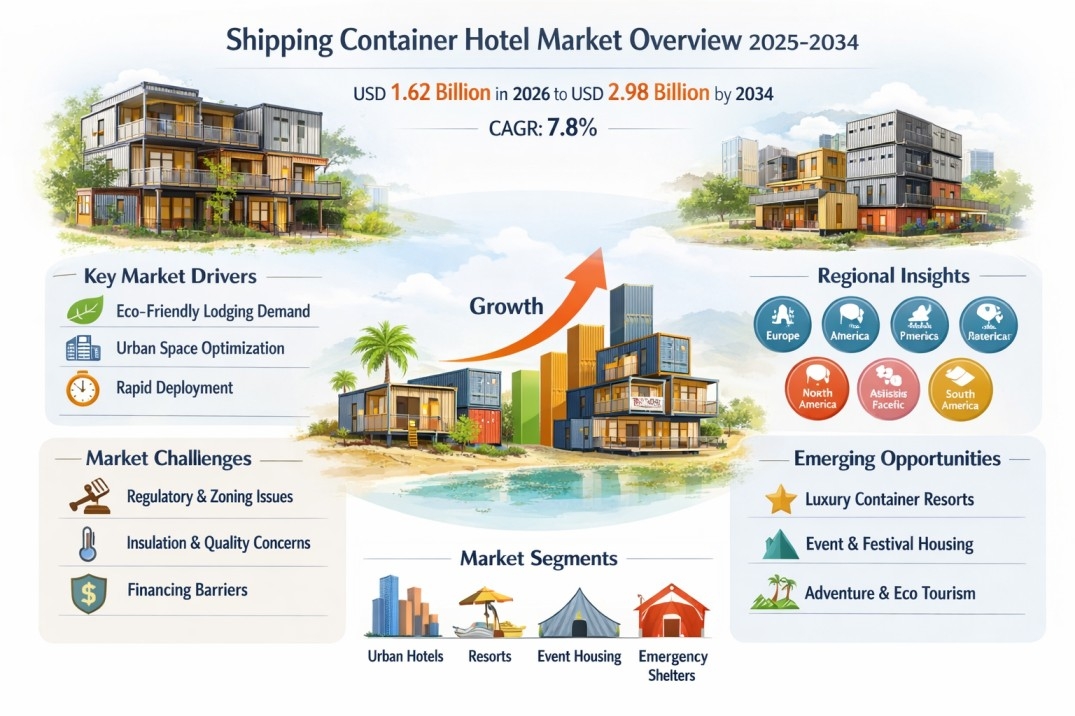
Shipping Container Hotel Market Forecast to 2034 Shows USD 2.98 Billion Opportunity at 7.8% CAGR
Uncategorized |
2026-04-14 12:04:44
 Social Networth OS
 Creator Commerce
 Launch Startup
 Global News
 Creator Award
 Talkfever App
Mostra tutti i risultati
Talkfever App
Mostra tutti i risultati

Passa a Pro
Lead generation is the lifeblood of modern business. Yet, traditional outbound and inbound sales funnels face a persistent bottleneck: human capacity. No matter how talented your sales development reps (SDRs) are, there are only so many hours in a day to make calls, follow up on web forms, and qualify inbound leads.
Enter the next evolution in customer engagement: conversational Voice AI platforms.
Far beyond the clunky, touch-tone automated phone trees of the past, modern Voice AI leverages advanced Natural Language Processing (NLP), Large Language Models (LLMs), and hyper-realistic text-to-speech technology. These systems don't just "talk"—they listen, adapt, reason, and converse with human-like nuance.
Here is a closer look at how businesses are leveraging automated voice agents for lead generation and why the scalability of Voice AI support is fundamentally changing the sales landscape.
Consider the standard inbound lead scenario: A potential customer fills out a contact form on your website at 9:00 PM. Research shows that responding to that lead within five minutes dramatically increases your chances of conversion. But at 9:00 PM, your sales team is offline. By the time an SDR calls them back the next morning, that lead may have already moved on to a competitor.
On the outbound side, manual calling is notoriously inefficient. SDRs spend a significant portion of their day listening to ringtones, navigating voicemail boxes, and getting hung up on, leaving them exhausted before they ever reach a genuine prospect.
These inefficiencies stem from a lack of true scalability. To double your outbound volume manually, you have to double your headcount. Voice AI removes that linear constraint.
Deploying automated voice agents for lead generation allows businesses to automate the top of the sales funnel without sacrificing personalization. Here is what these agents can do:
Instant Speed-to-Lead: When an inbound lead fills out a form, a Voice AI agent can initiate an outbound phone call within seconds. The agent greets the prospect by name, references the specific product or service they inquired about, and begins the qualification process immediately.
Natural, Two-Way Conversations: Unlike rigid scripts, modern conversational agents understand context, handle interruptions, answer unexpected questions, and pivot the conversation based on the user's responses.
Smart Qualification (BANT): Voice agents can be programmed to qualify leads using frameworks like BANT (Budget, Authority, Need, Timeframe). They ask the right qualifying questions, gauge interest levels, and score the lead in real time.
Seamless CRM Integration: Once a conversation concludes, the Voice AI platform automatically updates your CRM. It logs call transcripts, tags lead statuses, and can even schedule a calendar appointment for a human account executive if the lead is deemed "hot."
While customer service is often the first use case that comes to mind, the scalability of Voice AI support translates directly into massive advantages for sales and lead generation:
Handling Traffic Spikes: Whether you run a Super Bowl ad, launch a viral social media campaign, or experience a sudden surge in website traffic, Voice AI scales instantly. A platform can handle 10 concurrent calls or 10,000 concurrent calls with zero degradation in performance or tone.
Cost-Effective Expansion: Scaling a traditional sales team involves recruitment costs, onboarding time, overhead, and continuous management. Scaling a Voice AI agent simply involves adjusting system parameters and expanding concurrency limits, offering a radically lower cost per acquired lead.
24/7 Global Reach: Leads don't operate on a 9-to-5 schedule. Voice agents operate around the clock, capturing leads from international time zones or late-night web browsers while your human team sleeps.
Consistent Messaging: Human fatigue leads to missed talking points, off-brand messaging, or skipped compliance disclosures. Voice AI delivers your exact value proposition with 100% consistency on every single call.
If you are looking to integrate conversational Voice AI into your lead generation strategy, keep these best practices in mind:
Be Transparent: Always let the user know they are speaking with an AI assistant. Modern audiences appreciate honesty, and trying to trick prospects into thinking they are talking to a human usually backfires once the deception is revealed.
Keep Human-in-the-Loop: Voice AI is brilliant at the top of the funnel—prospecting, initial outreach, and basic qualification. However, closing high-value, complex deals still requires human empathy and expertise. Design your workflow to seamlessly transfer qualified leads to human closers.
Continuously Optimize: Review call transcripts and analytics provided by your platform. Analyze where prospects drop off, refine your prompts, and continuously train your agent to handle common objections more effectively.
The debate is no longer about whether AI has a place in sales, but how fast organizations can adopt it. By leveraging advanced conversational Voice AI platforms, businesses can eliminate the tedious administrative tasks of prospecting, respond to inquiries at lightning speed, and achieve unprecedented growth.
Embracing automated voice agents for lead generation isn't about replacing your sales team—it's about supercharging them. By letting AI handle the heavy lifting of high-volume outreach and qualification, your human sales professionals can focus on what they do best: building relationships and closing deals.