English
 Arabic
 French
 Spanish
 Portuguese
 Deutsch
 Turkish
 Dutch
Dutch
 Italiano
 Russian
 Romaian
 Portuguese (Brazil)
 Greek
Greek
North America 3D and 4D Technology Market Positioned for Significant Expansion by 2031
Uncategorized |
2026-06-03 12:03:28
 Social Networth OS
 Creator Commerce
 Launch Startup
 Global News
 Creator Award
 Talkfever App
Hepsini Gör
Talkfever App
Hepsini Gör

Upgrade to Pro
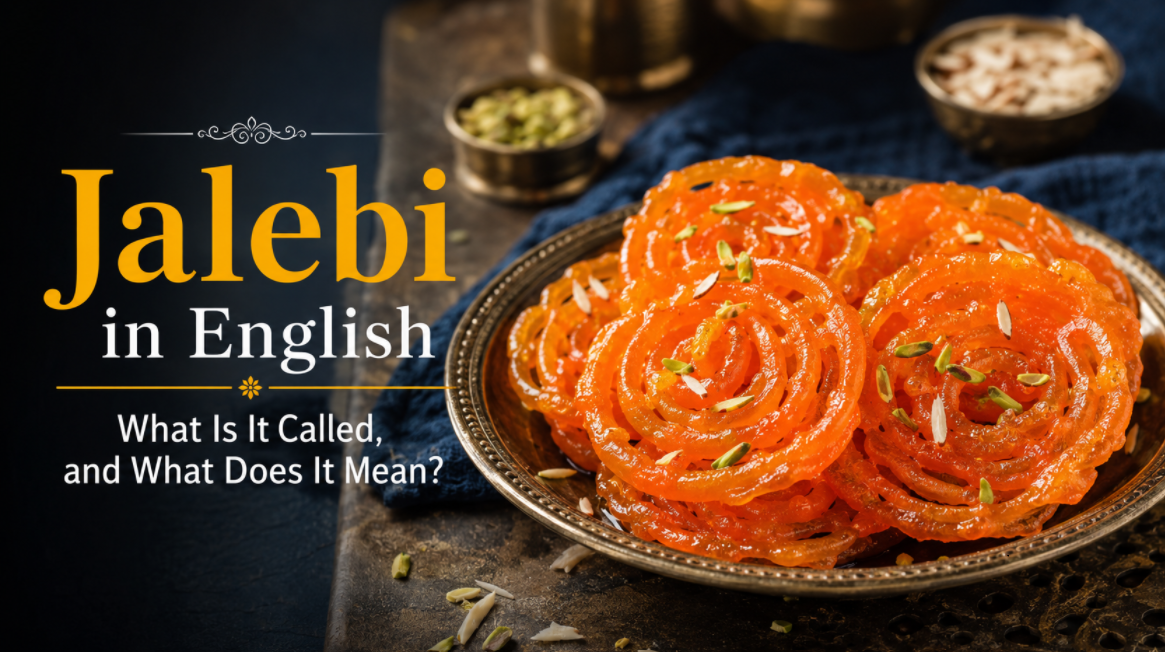
Jalebi is one of the most recognizable and beloved traditional sweets of the Indian subcontinent. Known for its bright golden-orange colour, intricate spiral shape, crisp texture, and irresistible sweetness, jalebi has been a cherished part of South Asian food culture for generations. But when people ask, “What is jalebi called in English?”, the answer is not always as straightforward as it may seem.
The simplest answer is that jalebi is generally called “jalebi” in English as well. Since it is a culturally specific sweet with no exact English equivalent, the original name is widely retained. However, when explaining it to someone unfamiliar with Indian cuisine, jalebi can be described as a deep-fried, spiral-shaped sweet soaked in sugar syrup.
Understanding the meaning of jalebi in English, therefore, requires more than simply translating the word. It involves exploring its ingredients, preparation, appearance, cultural importance, and the unique experience associated with eating it.
In English, the traditional name “jalebi” is commonly used. There is no single English word that perfectly translates the name because jalebi represents a specific type of sweet rather than a generic food category.
For descriptive purposes, you may see jalebi referred to as:
Although these descriptions help explain what jalebi is, they are not direct translations of the word itself.
The most accurate way to introduce it in English is simply: “Jalebi is a traditional South Asian sweet made by deep-frying spiral-shaped batter and soaking it in sugar syrup.”
This description captures the essence of the dessert while preserving its authentic cultural identity.
The word jalebi refers to the sweet itself. In everyday English usage, the term has been adopted as a loanword, much like many other food names that originate from specific cultures.
The name is generally associated with the dessert's distinctive form and traditional method of preparation. Historical accounts often connect jalebi to the broader culinary traditions of the Middle East and South Asia, with the sweet evolving into the familiar form enjoyed across India and neighbouring regions.
It is important to note that the word jalebi does not have a literal English translation that fully captures its meaning. Translating it simply as “sweet” would be too broad, while calling it a “fried dessert” would not communicate its distinctive spiral shape and syrupy texture.
Therefore, the word jalebi itself is the most precise English name.
Traditional jalebi is prepared using a relatively simple combination of ingredients, although the technique requires skill and precision.
The batter is typically made from flour, often with fermentation or a leavening process that helps create the characteristic texture. The batter is then transferred into a cloth, piping bag, or specialized container and carefully squeezed into hot oil or ghee in continuous circular and spiral patterns.
Once fried, the jalebi is removed and immediately immersed in a warm sugar syrup. This allows the syrup to coat the surface and seep into parts of the crisp structure, creating the signature contrast between a crunchy exterior and a juicy, intensely sweet centre.
Depending on the region and recipe, ingredients and preparation methods can vary. Some versions may include yogurt, saffron, cardamom, rose water, or other flavouring ingredients.
The final result is a sweet that is visually striking and richly flavoured.
Jalebi is more than just a dessert. For many people, it represents celebration, nostalgia, tradition, and comfort.
In India, jalebi is commonly enjoyed during festivals, weddings, religious celebrations, family gatherings, and special occasions. It is also a popular street food and is often served fresh at local sweet shops.
One of the reasons for its enduring popularity is its unique combination of textures. Freshly prepared jalebi offers a satisfying crispness that gives way to a burst of sugary syrup. Served warm, it can be especially aromatic and indulgent.
Jalebi is also remarkably versatile. It may be enjoyed on its own, paired with milk or rabri, or served alongside other traditional sweets and savoury foods. In some parts of India, combinations such as jalebi with milk or curd are particularly popular.
People unfamiliar with Indian cuisine sometimes compare jalebi to a pretzel because both can have twisted or looped shapes. However, the similarities largely end with appearance.
A pretzel is generally a baked or boiled-and-baked bread product with a chewy or crisp texture and, in many versions, a savoury flavour. Jalebi, by contrast, is a sweet, deep-fried confection soaked in sugar syrup.
The comparison may help someone visualize the shape, but jalebi has its own distinct ingredients, preparation method, texture, flavour, and cultural significance.
A better English description would therefore be “a crispy, spiral-shaped Indian sweet soaked in sugar syrup.”
The word is commonly pronounced approximately as “juh-LAY-bee” in English.
Pronunciation can vary slightly depending on regional accents and languages. In Hindi and other South Asian languages, the pronunciation may sound somewhat different from the way an English speaker naturally says the word.
When speaking English, however, “juh-LAY-bee” is generally understandable and widely recognized.
Jalebi holds a special place in South Asian culinary traditions. It is frequently associated with celebrations and festive occasions, but it is equally popular as an everyday indulgence.
In many Indian cities and towns, the sight of freshly made jalebi being prepared in a large pan of hot oil is a familiar part of local food culture. Vendors expertly create spirals of batter before transferring the fried sweets into fragrant sugar syrup.
Regional variations also exist. The size, thickness, crispness, sweetness, and flavour profile of jalebi can differ depending on where it is prepared. Some versions are thinner and crispier, while others are thicker and softer.
This regional diversity is part of what makes jalebi such an interesting and enduring food tradition.
If you need to explain jalebi to an English-speaking audience, the following description is both simple and accurate:
“Jalebi is a traditional South Asian sweet made by deep-frying spiral-shaped batter and soaking it in fragrant sugar syrup. It is known for its crispy texture, bright colour, and intensely sweet flavour.”
This wording works well in menus, food articles, travel guides, recipes, and cultural explanations.
Rather than searching for a single English translation, it is better to retain the original word jalebi and explain its characteristics.
So, what is jalebi called in English? The answer is simple: it is still called jalebi. The word has become widely recognized in English-language discussions of Indian and South Asian cuisine, and there is no exact English equivalent that captures its identity.
For those unfamiliar with it, jalebi can be described as a crispy, spiral-shaped, deep-fried sweet soaked in sugar syrup. Yet even this description cannot fully express its cultural significance or the sensory experience of enjoying it fresh and warm.
Ultimately, jalebi is more than a translation challenge. It is a culinary tradition that carries the flavours of celebration, heritage, craftsmanship, and nostalgia. Whether enjoyed at a festival, purchased from a local sweet shop, or prepared at home, jalebi continues to hold a special place in the hearts—and on the plates—of millions of people.
Jalebi is generally called “jalebi” in English. There is no exact English translation for the word. It can be described as a spiral-shaped, deep-fried Indian sweet soaked in sugar syrup.
The word jalebi refers to a traditional South Asian sweet. In English, it is best explained rather than directly translated as a crispy, spiral-shaped sweet dipped or soaked in sugar syrup.
Yes. Jalebi is one of the most popular traditional sweets associated with Indian cuisine, although similar forms of syrup-soaked fried sweets are found across parts of South Asia and the Middle East.
Jalebi is typically made from a flour-based batter that is shaped into spirals, deep-fried, and soaked in sugar syrup. Recipes can vary by region and tradition.
Jalebi is sweet. Its defining characteristic is its sugary syrup coating, which gives it a distinctly sweet and indulgent flavour.
A simple description is: “Jalebi is a traditional South Asian dessert made by deep-frying spiral-shaped batter and soaking it in sugar syrup.”
Although jalebi and pretzels may have somewhat similar twisted shapes, they are very different foods. Jalebi is a sweet, syrup-soaked fried confection, while a pretzel is generally a baked bread product.
In English, jalebi is commonly pronounced approximately as “juh-LAY-bee.” The exact pronunciation may vary slightly depending on the speaker's regional accent or language background.