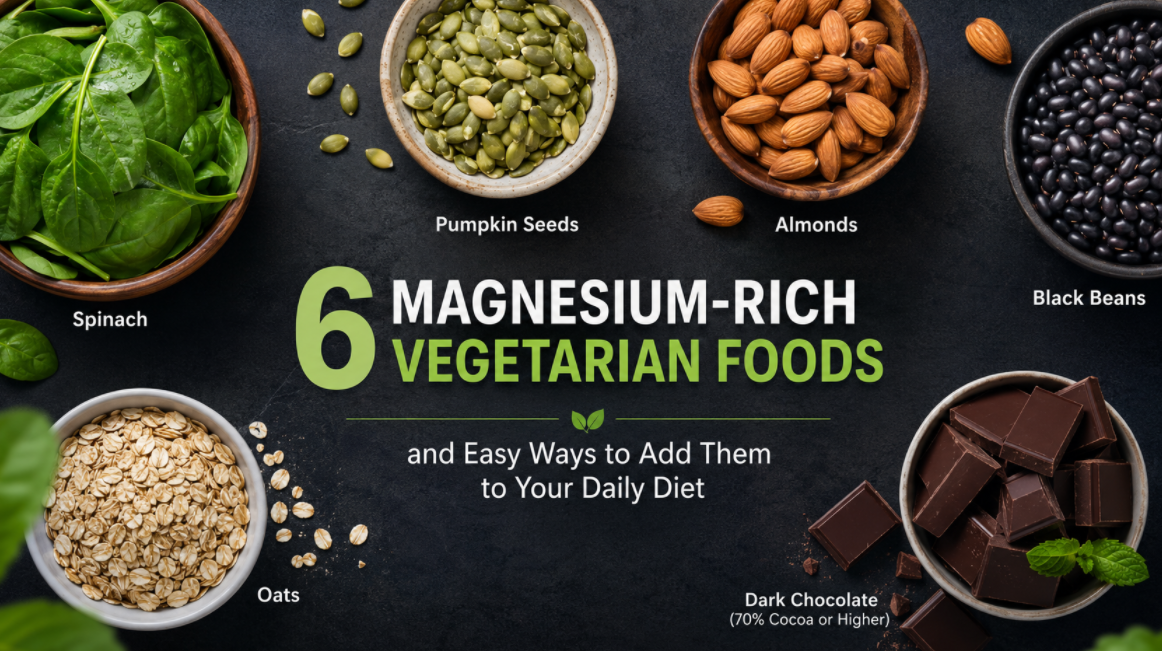
6 Magnesium-Rich Vegetarian Foods And Easy Ways To Add Them To Your Daily Diet

Magnesium is one of the most important minerals your body needs, yet many people fail to get enough of it through their daily diet. This essential nutrient plays a vital role in more than 300 biochemical reactions, supporting everything from muscle function and nerve signaling to heart health, bone strength, and energy production.

A balanced vegetarian diet can easily provide adequate magnesium when it includes a variety of nutrient-rich whole foods. By incorporating the right ingredients into everyday meals, you can naturally improve your magnesium intake without relying on supplements unless advised by a healthcare professional.

Here are six magnesium-rich vegetarian foods and practical ways to make them a regular part of your daily routine.


1. Spinach

Spinach is among the richest plant-based sources of magnesium. Along with this essential mineral, it provides iron, folate, vitamin K, vitamin A, and powerful antioxidants that support overall health.

Regular consumption of spinach may contribute to stronger bones, healthy blood circulation, and improved muscle function.

Easy ways to include spinach:

  • Add fresh spinach to salads.
  • Blend it into smoothies with fruits.
  • Mix chopped spinach into lentils or vegetable curries.
  • Prepare spinach parathas or whole-wheat wraps.
  • Stir it into soups, pasta, or rice dishes.

2. Pumpkin Seeds

Pumpkin seeds are tiny nutritional powerhouses packed with magnesium, healthy fats, protein, zinc, iron, and antioxidants. They make an excellent snack and support heart health, immune function, and muscle recovery.

These seeds are also a convenient option for busy individuals looking to increase their nutrient intake.

Easy ways to add pumpkin seeds:

  • Sprinkle them over oatmeal.
  • Mix them into yogurt.
  • Add them to salads.
  • Blend them into homemade granola.
  • Enjoy a handful as a healthy afternoon snack.

3. Almonds

Almonds are one of the best vegetarian sources of magnesium. Besides magnesium, they provide vitamin E, healthy monounsaturated fats, fiber, and protein that help support heart health and long-lasting energy.

Eating almonds regularly may also help promote better blood sugar control and satiety.

Ways to include almonds daily:

  • Eat a handful as a snack.
  • Add sliced almonds to breakfast cereals.
  • Blend them into smoothies.
  • Use almond butter on whole-grain toast.
  • Include chopped almonds in homemade energy bars.

4. Black Beans

Black beans are rich in magnesium, plant protein, dietary fiber, iron, and several B vitamins. Their high fiber content supports digestive health while helping you stay full for longer.

They are also an excellent protein source for vegetarians.

Daily meal ideas:

  • Add black beans to salads.
  • Prepare bean soups or stews.
  • Use them in burritos or wraps.
  • Mix them into rice bowls.
  • Create homemade black bean patties.

5. Oats

Oats are a nutritious whole grain that provides magnesium along with soluble fiber, particularly beta-glucan, which is known to support heart health and healthy cholesterol levels.

Because oats are versatile and filling, they make an excellent breakfast option.

Easy ways to enjoy oats:

  • Prepare overnight oats.
  • Cook oatmeal with fruits and nuts.
  • Blend oats into smoothies.
  • Use oat flour in baking.
  • Add roasted oats to homemade snack mixes.

6. Dark Chocolate (70% Cocoa or Higher)

Good-quality dark chocolate contains surprisingly high amounts of magnesium, along with antioxidants known as flavonoids that may support heart health.

Although nutritious, it should still be consumed in moderation because it contains calories and added fat.

Smart ways to enjoy dark chocolate:

  • Eat one or two small squares after meals.
  • Add grated dark chocolate to oatmeal.
  • Mix cocoa powder into smoothies.
  • Use dark chocolate in homemade trail mix.
  • Pair it with fresh fruits for dessert.

Why Magnesium Is Essential for Your Health

Magnesium supports numerous body functions that contribute to overall well-being. Adequate intake may help:

  • Support healthy muscle and nerve function
  • Maintain normal heart rhythm
  • Strengthen bones alongside calcium and vitamin D
  • Assist in energy production
  • Support healthy blood sugar regulation
  • Help regulate blood pressure
  • Promote restful sleep
  • Contribute to stress management and relaxation

Low magnesium intake over time may increase the risk of fatigue, muscle cramps, weakness, irregular heartbeat, and poor bone health.


Simple Tips to Increase Magnesium Naturally

Adding magnesium-rich foods doesn't require major dietary changes. Small daily habits can make a meaningful difference.

Here are a few practical ideas:

  • Include leafy greens with lunch or dinner.
  • Choose nuts and seeds instead of processed snacks.
  • Eat whole grains instead of refined grains.
  • Add beans or lentils to meals several times a week.
  • Include a serving of fruit with magnesium-rich foods.
  • Rotate different plant-based protein sources throughout the week.

A varied diet helps ensure you receive magnesium along with other essential vitamins and minerals that work together to support overall health.


Can You Get Enough Magnesium on a Vegetarian Diet?

Yes. A well-planned vegetarian diet can easily meet your magnesium requirements.

Foods such as leafy greens, legumes, whole grains, nuts, seeds, and cocoa naturally contain significant amounts of magnesium. Eating a variety of these foods throughout the week is generally sufficient for most healthy adults.

However, people with certain medical conditions, digestive disorders, or higher nutritional needs should consult a healthcare professional before considering magnesium supplements.


Conclusion

Magnesium is an essential mineral that supports muscle function, heart health, bone strength, energy production, and hundreds of important processes throughout the body. Fortunately, meeting your daily magnesium needs doesn't have to be difficult.

Simple vegetarian foods like spinach, pumpkin seeds, almonds, black beans, oats, and dark chocolate offer an excellent combination of magnesium and other valuable nutrients. By including these foods regularly in balanced meals and snacks, you can naturally improve your magnesium intake while supporting your overall health.

Rather than focusing on a single "superfood," aim for a diverse, nutrient-rich vegetarian diet. Consistency is key, and small, sustainable dietary changes can contribute to long-term wellness.


Frequently Asked Questions (FAQs)

1. How much magnesium does an adult need daily?

The recommended daily intake varies by age and sex. Most adult men require around 400–420 mg per day, while adult women generally need 310–320 mg, with increased requirements during pregnancy.

2. Which vegetarian food contains the most magnesium?

Pumpkin seeds, spinach, almonds, black beans, oats, and dark chocolate are among the richest vegetarian sources of magnesium.

3. Can magnesium help reduce muscle cramps?

Magnesium plays an important role in normal muscle function. If cramps are related to low magnesium intake, increasing magnesium-rich foods may help. However, muscle cramps can have many causes, so persistent symptoms should be evaluated by a healthcare professional.

4. Is dark chocolate a good source of magnesium?

Yes. Dark chocolate containing at least 70% cocoa provides a notable amount of magnesium along with beneficial antioxidants. Enjoy it in moderation as part of a balanced diet.

5. Do I need magnesium supplements if I follow a vegetarian diet?

Not necessarily. Most people can meet their magnesium needs through a varied vegetarian diet that includes leafy greens, legumes, nuts, seeds, and whole grains. Supplements should only be taken under medical advice if a deficiency or increased need is identified.

6. What are the signs of low magnesium intake?

Possible signs include fatigue, muscle cramps, weakness, loss of appetite, nausea, tingling sensations, and abnormal heart rhythms. These symptoms are not specific to magnesium deficiency, so it's important to consult a healthcare professional for proper evaluation if they occur.

 
Talkfever - Growing worldwide https://talkfever.com