English
 Arabic
 French
 Spanish
 Portuguese
 Deutsch
 Turkish
 Dutch
Dutch
 Italiano
 Russian
 Romaian
 Portuguese (Brazil)
 Greek
Greek
Property Inspection: A Guide to Understanding Your Building's Condition
Home |
2026-08-31 12:48:00
 Social Networth OS
 Creator Commerce
 Launch Startup
 Global News
 Creator Award
 Talkfever App
See All
Talkfever App
See All

Upgrade to Pro
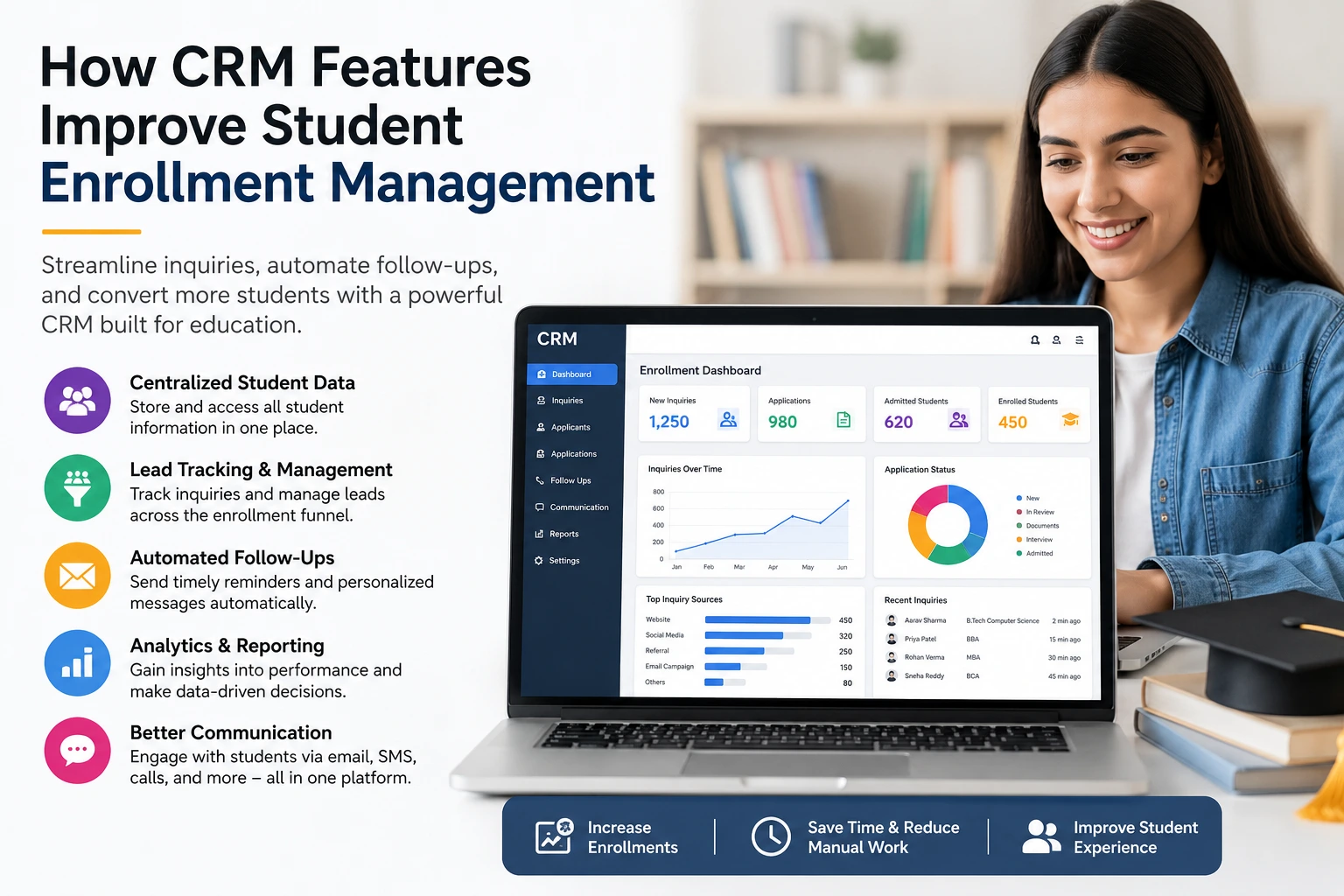
Student enrollment management has become increasingly complex for educational institutions. Schools, colleges, universities, and training centers must handle growing numbers of inquiries, applications, follow-ups, and communications while maintaining a positive experience for prospective students. Managing these processes manually often leads to delays, missed opportunities, and inefficient workflows.
Customer Relationship Management (CRM) software has emerged as a powerful solution for streamlining enrollment operations. By automating administrative tasks and improving communication, CRM systems help institutions attract, engage, and convert prospective students more effectively. Understanding how CRM features improve student enrollment management can help educational organizations make smarter technology investments and achieve better enrollment outcomes.
One of the most valuable CRM features is the ability to centralize student information in a single platform. Educational institutions receive inquiries from websites, social media channels, email campaigns, events, referrals, and other sources. Without a centralized system, tracking and managing these leads can become difficult.
A CRM stores all student information in one place, allowing admissions teams to access contact details, communication history, application status, and engagement records instantly. This centralized approach reduces confusion and improves operational efficiency.
Student enrollment begins with capturing prospective student inquiries. School CRM systems automatically collect leads from multiple channels and organize them within a structured database.
Admissions teams can track each lead through different stages of the enrollment journey, from initial inquiry to final admission. Automated lead tracking ensures that no prospect is overlooked and enables institutions to focus on high-priority applicants.
Many prospective students require multiple interactions before making enrollment decisions. Manual follow-ups can be time-consuming and inconsistent, especially when dealing with large volumes of inquiries.
CRM platforms automate follow-up emails, reminders, notifications, and communication workflows. Automated follow-ups keep prospective students engaged and informed throughout the admissions process, increasing the likelihood of conversion.
Effective communication is essential for successful enrollment management. CRM systems provide multi-channel communication capabilities that allow institutions to connect with students through email, SMS, phone calls, messaging platforms, and social media.
Personalized communication helps institutions build stronger relationships with prospective students. Admissions teams can send relevant information based on student interests, academic goals, and application status, creating a more engaging experience.
Managing applications manually often creates administrative bottlenecks. CRM software simplifies the process by allowing institutions to track application submissions, required documents, interview schedules, and admission decisions from a centralized dashboard.
This streamlined workflow reduces paperwork, minimizes processing delays, and helps admissions teams manage applications more efficiently.
Modern CRM systems provide advanced analytics and reporting tools that offer valuable insights into enrollment performance. Institutions can monitor application trends, lead conversion rates, campaign effectiveness, and student engagement metrics.
These insights enable administrators to identify successful recruitment strategies and make informed decisions to improve future enrollment efforts. Data-driven decision-making helps institutions allocate resources more effectively and maximize recruitment outcomes.
Student enrollment often involves multiple departments, including admissions, marketing, finance, and academic administration. CRM platforms improve collaboration by providing shared access to student information and communication records.
Team members can work together more efficiently, ensuring a consistent experience for prospective students throughout the enrollment process.
A smooth enrollment process creates a positive first impression of an institution. CRM systems help reduce response times, improve communication, and provide personalized support to applicants.
When students receive timely updates and relevant information, they are more likely to remain engaged and complete the enrollment process. A better student experience often leads to higher enrollment rates and improved institutional reputation.
As educational institutions expand, enrollment management becomes increasingly challenging. CRM solutions are designed to scale with organizational growth, allowing institutions to manage larger volumes of inquiries and applications without sacrificing efficiency.
Scalable CRM systems support long-term growth while maintaining consistent service quality and operational performance.
CRM software plays a critical role in improving student enrollment management by centralizing data, automating workflows, enhancing communication, and providing actionable insights. These features help educational institutions streamline admissions processes, improve student engagement, and increase enrollment success rates. By adopting a robust CRM solution, schools, colleges, and universities can create more efficient enrollment strategies while delivering a superior experience for prospective students.