English
 Arabic
 French
 Spanish
 Portuguese
 Deutsch
 Turkish
 Dutch
Dutch
 Italiano
 Russian
 Romaian
 Portuguese (Brazil)
 Greek
Greek
 Creator, Content & Commerce (3C)
 IMS for Investors
 Global News
 Vdo Junction
 Talkfever App
The Role of C in System Programming and Operating Systems
Other |
2025-03-04 09:45:17
Mobile applications have become essential for businesses looking to improve customer engagement, increase sales, and strengthen their digital presence. From startups to large enterprises, companies are investing heavily in mobile technology to stay competitive in today’s fast-moving digital market.
However, building a successful mobile app involves much more than coding alone. A structured development process helps businesses create scalable, secure, and user-friendly applications that meet customer expectations. Professional mobile app development services follow a systematic approach to ensure smooth app performance, better user experience, and long-term business growth.
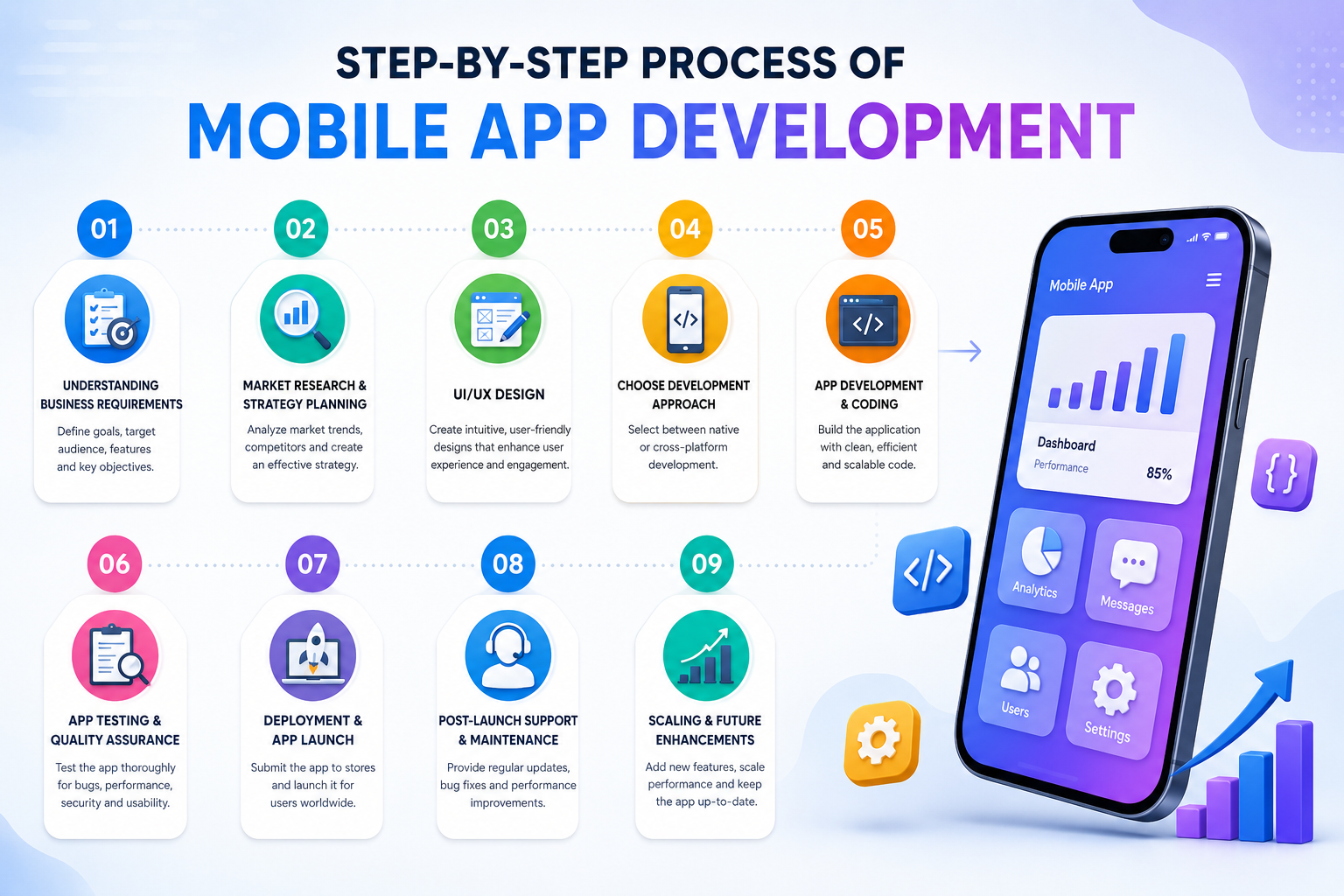
Here is a step-by-step breakdown of the mobile app development process in 2026.
The first step in mobile app development is understanding the business goals and target audience. Developers and business owners work together to identify:
This stage helps create a clear roadmap for the project.
For example, an ecommerce app may require:
Meanwhile, a healthcare app may need:
A strong planning phase reduces future development risks and improves project efficiency.
After understanding business requirements, the next step involves market research and mobile application strategy planning.
This process includes:
Businesses must also decide whether they want:
The strategy phase plays a major role in determining project scope, timeline, scalability, and overall app performance.
User interface (UI) and user experience (UX) design are critical parts of modern mobile app development.
At this stage, designers focus on:
The goal is to create a visually appealing and easy-to-use application.
Good UI/UX design improves:
Businesses that invest in professional UI/UX design often experience better customer satisfaction and higher app usage rates.
Before coding begins, developers select the most suitable app development approach.
Native apps are built specifically for Android or iOS platforms using:
Native apps provide:
Cross-platform frameworks like React Native and Flutter allow developers to create apps for both Android and iOS using a shared codebase.
Benefits include:
Many businesses now prefer cross-platform solutions because they reduce development time while reaching wider audiences.
This is the core development stage where developers begin building the mobile application.
The process usually includes:
Frontend development focuses on what users see and interact with, while backend development manages:
Professional mobile app development services also ensure that apps are optimized for:
Modern apps may also include advanced technologies such as:
Testing is one of the most important stages in the mobile app development process.
Quality assurance teams test the application for:
Different testing methods include:
Testing ensures the app performs smoothly across multiple devices and operating systems before launch.
Once testing is complete, the app is prepared for deployment.
Apps are submitted to:
The deployment process includes:
App approval timelines may vary depending on platform guidelines and security reviews.
A successful launch strategy often includes:
Mobile app development does not end after launch. Continuous maintenance is essential for long-term success.
Post-launch support includes:
As technology evolves, businesses must regularly update their apps to meet changing customer expectations and platform requirements.
Ongoing maintenance also helps improve:
As businesses grow, mobile apps often require additional features and scalability improvements.
Future enhancements may include:
Businesses that plan scalability from the beginning can expand their applications more efficiently without rebuilding the entire system.
The step-by-step process of mobile app development involves careful planning, strategy, design, development, testing, deployment, and continuous maintenance. Each stage plays an important role in building secure, scalable, and high-performing mobile applications.
Modern businesses rely on professional mobile app development services to create apps that improve customer engagement, streamline operations, and support long-term growth. Whether it is Android, iOS, or cross-platform development, a structured approach helps businesses reduce risks and launch successful digital products in today’s competitive mobile market.