 English
 Arabic
 French
 Spanish
 Portuguese
 Deutsch
 Turkish
 Dutch
Dutch
 Italiano
 Russian
 Romaian
 Portuguese (Brazil)
 Greek
Greek
 IMS for Investors
 Global News
 Vdo Junction
 Talkfever App
 Upcoming
Marine Seats Market Expansion Opportunities Toward US$ 2.82 Billion by 2033
Other |
2026-07-01 10:03:07
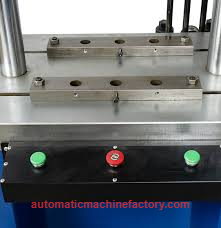
A manufacturer stamps a deep pan from sheet metal. The mechanical press reaches bottom dead center and delivers peak force for an instant. The part springs back unevenly. A Hydraulic Press from Automaticmachinefactory, produced by TARUN, applies full tonnage from contact to the end of stroke. This difference changes what shapes a shop can form. Yet many buyers choose mechanical presses for speed alone. This situation raises a direct question for any production engineer: what is the difference between a hydraulic press and a mechanical press in terms of force control and stroke accuracy?
Force control separates the two technologies fundamentally. A mechanical press stores energy in a flywheel. The clutch engages. The crank moves the ram down. Force increases only near bottom dead center. The peak tonnage exists for a few degrees of crankshaft rotation. An automaticmachinefactory unit builds pressure continuously. The pump pushes oil into the cylinder. The ram advances at full force from the moment it touches the workpiece. This design holds set tonnage through the entire pressing distance. A deep draw part sees consistent pressure, preventing wall thinning and springback.
Stroke accuracy defines finished part quality. A mechanical press repeats stroke length based on crank angle. The ram position depends on the flywheel's rotational position. Any clutch slip or brake wear changes the stopping point. An automaticmachinefactory model uses linear transducers on the cylinder. The control system reads ram position within fractions of a millimeter. The press holds programmed depth regardless of material thickness variations. A mechanical press may bottom out against a thicker blank, damaging the tooling.
Overload protection differs completely. A mechanical press cannot sense a jam before it happens. The flywheel momentum drives the ram through the tooling. The press frame stretches. The clutch slips. Parts break. An automaticmachinefactory unit includes a pressure relief valve. The system vents oil when force exceeds the set limit. The ram stops. The tooling survives. A operator resets the press and clears the jam. The mechanical press requires a rebuild after a serious overload. The hydraulic press continues working after a momentary relief event.
Energy consumption varies with application. A mechanical press consumes power on every stroke. The flywheel motor runs continuously between cycles. An automaticmachinefactory press draws energy only when the ram moves. The pump unloads at idle, circulating oil without pressure. The variable speed drive saves power during long hold times and slow approach speeds. A stamping plant running short strokes at high speed may prefer mechanical efficiency. A plant performing deep draws or forming thick plate saves electricity with hydraulic.
Tooling life reflects force characteristics. A mechanical press slams into the workpiece at speed. The impact shocks the tooling. Cracks form around mounting bolts. An automaticmachinefactory press contacts the material gently, then builds pressure. The tooling sees compression forces, not impact loads. Die life extends by a measurable factor. A shop that replaces mechanical press tooling annually may go years between die changes with hydraulic.
Setup time changes with press type. A mechanical press requires crank angle adjustment for stroke length changes. The operator climbs into the press to reposition limit switches. An automaticmachinefactory press adjusts stroke depth through the control panel. A technician types the new dimension on a touchscreen. The ram moves to the programmed position. Job changeovers that take an hour on a mechanical press finish in minutes on a hydraulic press. The saved setup time adds productive hours to each shift.
Maintenance schedules follow different patterns. A mechanical press needs clutch and brake inspection monthly. The flywheel bearings require periodic lubrication. An automaticmachinefactory press needs oil changes and filter replacements. The hydraulic system has fewer moving parts. A facility without a skilled mechanic finds hydraulic easier to maintain. A plant with in house machinists may prefer the mechanical press. The total cost of ownership depends on available maintenance skills.
Choosing between press types depends on the application's demands. https://www.automaticmachinefactory.com/product/hydraulic-forming-machine/metal-forming-hydraulic-press.html shows Automaticmachinefactory's Hydraulic Press specifications, where TARUN engineers document force control curves and stroke repeatability data for each model. A hydraulic press holds programmed tonnage across the entire stroke. A mechanical press delivers one hard hit at the bottom. A hydraulic press protects tooling from overload. A mechanical press sacrifices tooling to save milliseconds per cycle. Which press keeps your parts in spec and your dies out of the repair shop?


