English
 Arabic
 French
 Spanish
 Portuguese
 Deutsch
 Turkish
 Dutch
Dutch
 Italiano
 Russian
 Romaian
 Portuguese (Brazil)
 Greek
Greek
 IMS for Investors
 Global News
 Vdo Junction
 Talkfever App
 Upcoming
The Cost of Hiring App Developers in San Francisco A Complete Breakdown
Music |
2026-06-16 12:58:54
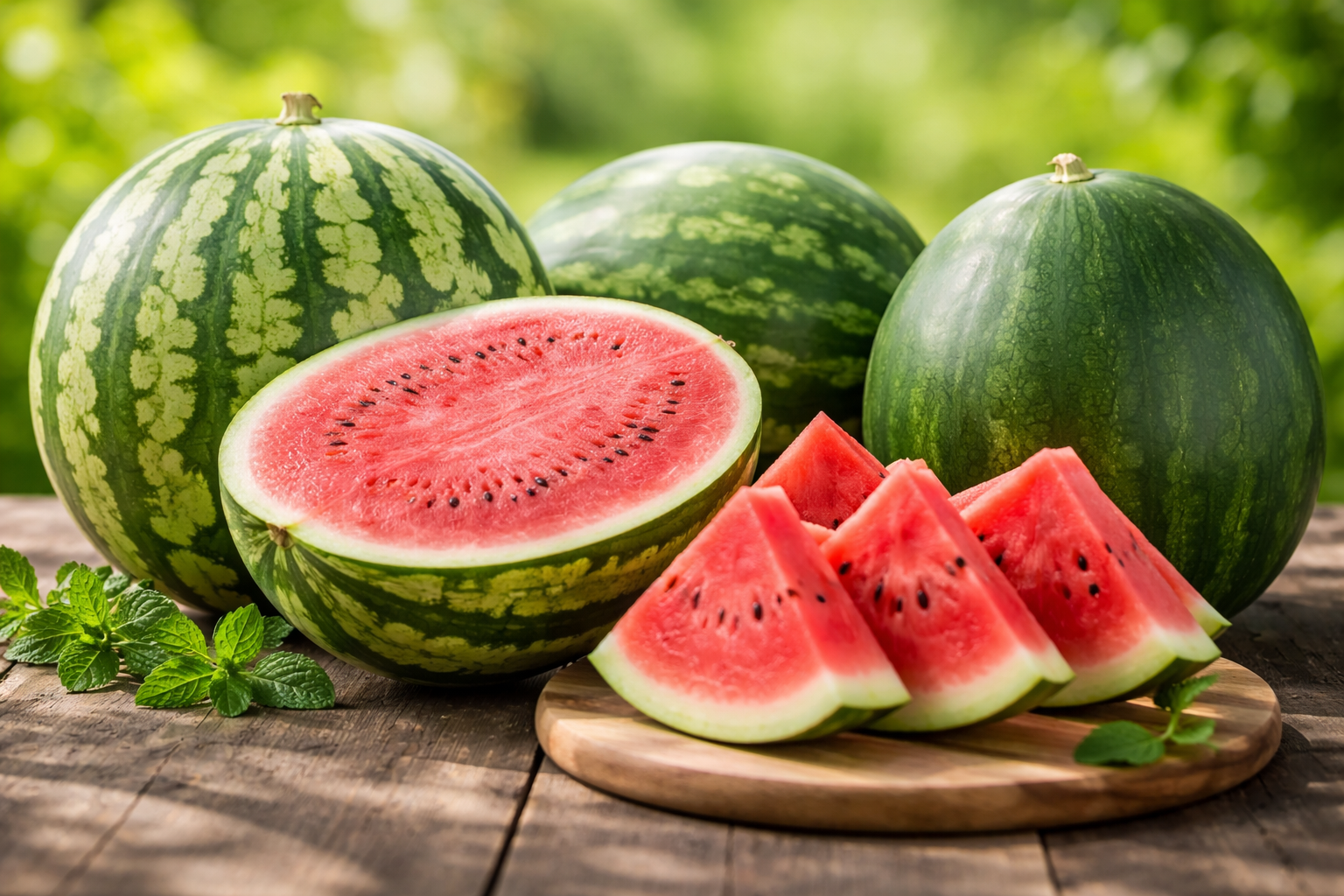
When summer arrives, few fruits rival the refreshing appeal of watermelon. But standing at a fruit stall, many buyers pause at a common question: Should you choose a striped watermelon or a plain (unstriped) one? Does the rind pattern reveal anything about nutrition, sweetness, or quality?
The short answer: the stripes don’t determine nutrition—but they can still tell you something useful. Let’s break down the science, myths, and smart buying tips so you can confidently pick the best watermelon every time.
At first glance, the difference seems obvious—some watermelons have dark green stripes, while others are uniformly light or dark green. But this variation is largely cosmetic and genetic.
Watermelon rind patterns are determined by plant genetics and breeding choices, not by nutritional composition.
In fact, farmers often grow different patterns simply because of market preference and visual appeal, not because one is superior.
Striped patterns themselves come from variations in chlorophyll (the green pigment), which creates alternating light and dark bands on the rind.
Unstriped watermelons, on the other hand, are simply varieties bred to have a uniform rind color.
👉 In simple terms:
Stripes are about appearance—not nutrition.
Here’s where many people expect a difference—but science says otherwise.
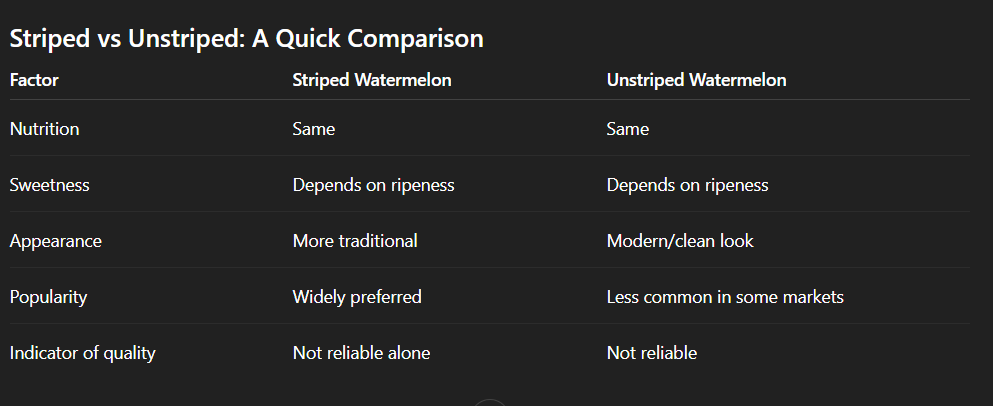
Both striped and unstriped watermelons offer virtually identical nutritional benefits, including:
Recent coverage confirms there is no significant nutritional difference between striped and unstriped varieties.
So if your goal is maximum nutrition, the rind pattern should not influence your decision.
👉 What actually matters:
These factors have far more impact on nutrient levels than the outer appearance.
This is one of the biggest myths.
Many people believe striped watermelons are sweeter—but that’s not reliably true.
Sweetness depends on:
Not the presence or absence of stripes.
In fact, even completely stripeless watermelons can be just as sweet and juicy as striped ones.
That said, some traditional striped varieties (like Crimson Sweet) are known for good flavor, which may have contributed to this misconception.
👉 Reality check:
Stripes don’t equal sweetness—ripeness does.
Here’s where stripes can offer a small clue—but only when used correctly.
Experts suggest:
However, stripe patterns alone are not a reliable indicator of ripeness.
Instead, combine multiple signs for better accuracy.
If nutrition and taste are your goals, forget stripes and focus on these proven indicators:
This is one of the most reliable signs of maturity.
👉 Notice something important:
None of these involve stripes.
No evidence supports this.
False—sweetness depends on sugar content, not rind.
Also false—appearance doesn’t determine internal quality.
If your goal is maximum nutrition, the answer is simple:
👉 Pick the ripest watermelon—not the most striped one.
Both striped and unstriped watermelons deliver the same health benefits. The real difference lies in:
Choose based on these factors, and you’ll always get better taste and nutrition.
The debate between striped and unstriped watermelon is largely a visual illusion. While stripes may look appealing and sometimes hint at maturity, they don’t determine nutrition or quality.
If you want the best watermelon this summer:
Because at the end of the day, the sweetest, juiciest, and most nutritious watermelon isn’t defined by stripes—it’s defined by how well it was grown and when it was picked.