English
 Arabic
 French
 Spanish
 Portuguese
 Deutsch
 Turkish
 Dutch
Dutch
 Italiano
 Russian
 Romaian
 Portuguese (Brazil)
 Greek
Greek
 Creator, Content & Commerce (3C)
 IMS for Investors
 Global News
 Vdo Junction
 Talkfever App
Graphene Ceramic Spray Market Navigating Growth Opportunities and Forecasted Outlook from 2025-2034
Other |
2025-04-12 05:07:22
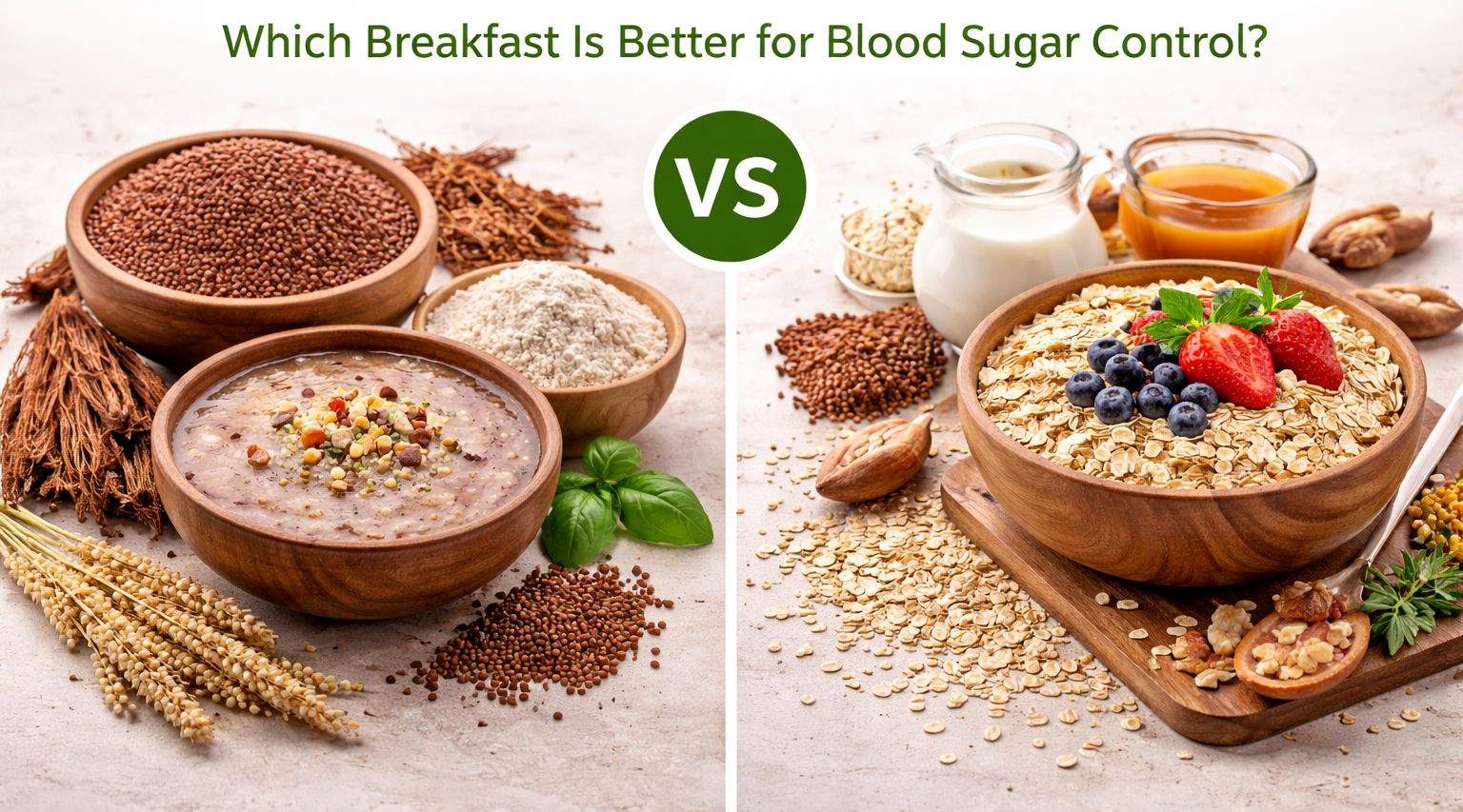
Managing diabetes begins with one of the most important daily decisions: what to eat for breakfast. The first meal of the day sets the tone for blood sugar stability, energy levels, and metabolic performance. Among the many “healthy” breakfast options, ragi (finger millet) and oats stand out as two nutrient-dense, fiber-rich grains often recommended for people with diabetes. But which one truly offers better glycemic control and long-term health benefits?
This article takes a professional, evidence-based look at both options—comparing their nutritional profiles, glycemic impact, and suitability for diabetic individuals.
For individuals with diabetes, breakfast is not just about satiety—it is about stabilizing blood glucose levels after an overnight fast. A well-balanced breakfast should:
Both ragi and oats claim to fulfill these criteria—but they do so in different ways.
Ragi is a traditional grain widely consumed in India, especially valued for its high mineral content.
Key Nutritional Benefits:
Ragi is particularly known for its low glycemic response when consumed in whole or minimally processed forms.
Oats, especially rolled or steel-cut oats, are globally recognized as a heart-healthy grain.
Key Nutritional Benefits:
Oats are often recommended in diabetic diets due to their ability to slow digestion and glucose absorption.
The glycemic index (GI) measures how quickly a food raises blood sugar levels. Lower GI foods are generally better for diabetes management.
Ragi’s GI can vary depending on preparation:
While ragi is fiber-rich, finely ground or cooked ragi can cause quicker glucose spikes if not paired with protein or fats.
Oats typically have a low to moderate GI, particularly:
The presence of beta-glucan fiber in oats forms a gel-like substance in the gut, slowing carbohydrate absorption and improving post-meal blood sugar control.
Oats tend to provide more predictable glycemic control, especially when consumed in minimally processed forms. The soluble fiber helps:
For diabetics looking for stable, controlled blood glucose levels, oats often have a slight edge.
Ragi can be highly beneficial, but it requires careful preparation and combination. When consumed correctly:
However, to avoid glucose spikes, ragi should ideally be paired with:
Avoid sugary instant oats or flavored packets.
Avoid sweetened ragi preparations or excessive jaggery.
Each person’s metabolism reacts differently, so personalization is essential.
Both ragi and oats are excellent breakfast choices for individuals managing diabetes—but they serve slightly different purposes.
Oats emerge as the more reliable option for consistent blood sugar control, thanks to their soluble fiber and low glycemic impact. They are particularly effective for those seeking predictable glucose stability and heart health benefits.
Ragi, on the other hand, is a nutrient powerhouse that can be equally beneficial when consumed in its whole form and paired correctly with proteins and fats. It is especially valuable for individuals looking to diversify their diet and boost mineral intake.
Ultimately, the best approach is not choosing one over the other—but strategically incorporating both into a balanced, varied diabetic diet. Smart preparation, portion awareness, and food combinations make all the difference.
Yes, diabetics can consume ragi daily in moderate portions. However, it should be paired with protein or healthy fats to prevent rapid blood sugar spikes.
Oats are generally better for consistent blood sugar control due to their soluble fiber content. However, ragi can also be beneficial when prepared properly.
Steel-cut oats or rolled oats are the best choices. Avoid instant oats, as they have a higher glycemic index and may spike blood sugar.
Ragi can increase blood sugar if consumed in large quantities or in highly processed forms. Balanced meals can help mitigate this effect.
Yes, alternating between the two is an excellent strategy. It provides nutritional variety and helps maintain long-term dietary balance.
Typically, ½ to 1 cup of cooked oats or a medium serving of ragi-based food is appropriate—but this may vary depending on individual needs and activity levels.