English
 Arabic
 French
 Spanish
 Portuguese
 Deutsch
 Turkish
 Dutch
Dutch
 Italiano
 Russian
 Romaian
 Portuguese (Brazil)
 Greek
Greek
nba2king Ranking the Best Power Forwards in NBA 2K26 MyTEAM
Sports |
2026-05-12 01:32:45
 Social Networth OS
 Creator Commerce
 Launch Startup
 Global News
 Creator Award
 Talkfever App
Ver Todos
Talkfever App
Ver Todos

Atualize para o Pro
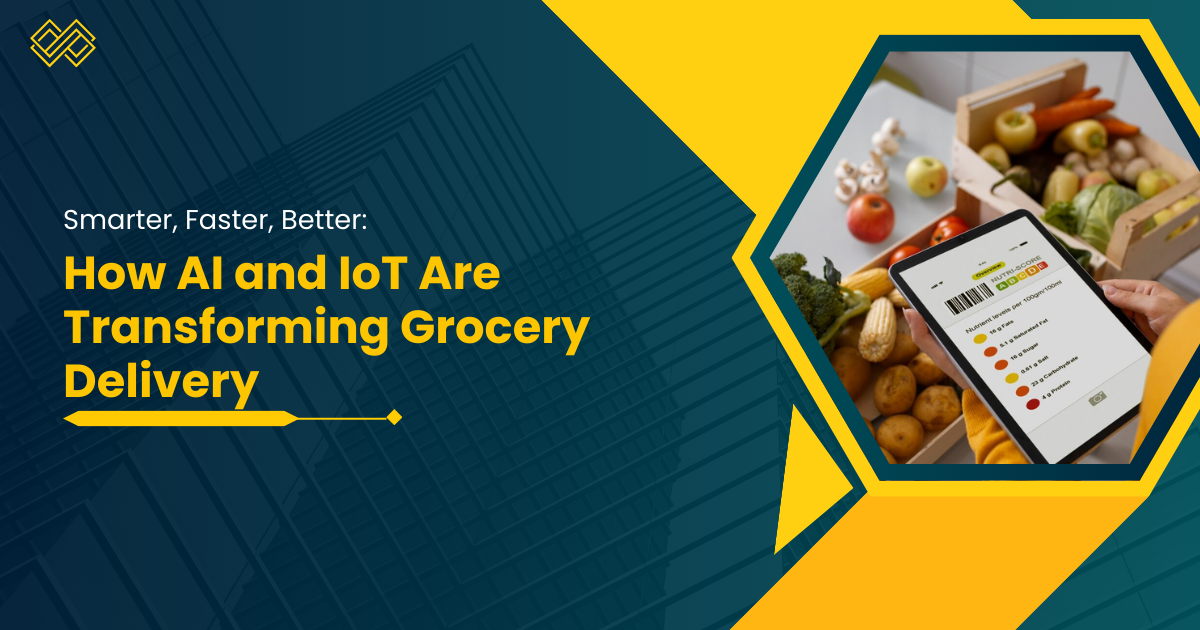
The grocery delivery industry is evolving at an unprecedented pace. By 2030, the global online grocery market is projected to reach $1.1 trillion, growing at a 25% compound annual growth rate (CAGR), according to Statista. This growth is driven by rising consumer expectations, demand for convenience, and advancements in technology. Studies show that 70% of consumers now prioritize same-day delivery options, emphasizing the need for timely and efficient services. As consumers become accustomed to on-demand services, the challenge for businesses lies in ensuring timely deliveries, accurate inventory management, and minimal operational costs. Technology has proven to be the backbone of modern grocery delivery services.
By leveraging Artificial Intelligence (AI), the Internet of Things (IoT), and real-time data analytics, grocery delivery providers can address key challenges and redefine operational efficiency. For example, integrating real-time analytics can improve delivery accuracy by 30%, while IoT-enabled inventory systems reduce stock outages by 40%, creating a more responsive and customer-centric model that meets today’s market demands.
Technology in grocery delivery isn’t just about digitizing traditional methods. It’s about transforming the way products move from warehouses to customers’ homes. Advanced tools like AI algorithms, IoT-enabled devices, and real-time data platforms have revolutionized inventory management, logistics, and customer interaction.
By optimizing processes and offering deeper insights, technology empowers businesses to scale efficiently while ensuring a smooth customer experience.
AI excels in analyzing vast datasets, including historical sales, seasonal trends, and customer behavior. This predictive capability enables grocery delivery app development services to stock items more accurately, reducing instances of both overstocking and stockouts. For example, AI can predict a spike in the demand for specific items during festivals or cold weather.
Manually tracking inventory is both time-consuming and error-prone. AI-powered tools automate inventory management by monitoring stock levels in real time and alerting businesses when supplies run low. This minimizes wastage and ensures customers receive their orders without delays.
AI algorithms analyze customer preferences to provide personalized product recommendations. For example, if a customer frequently orders organic produce, the system can suggest new organic options, enhancing the shopping experience and encouraging repeat purchases.
IoT devices, such as GPS trackers and sensors, ensure transparency in the delivery process. Customers and businesses can monitor real-time updates on delivery vehicles' locations, ensuring timely arrivals.
One of the biggest challenges in grocery delivery is maintaining the freshness of perishable items. IoT-enabled sensors monitor storage conditions, including temperature and humidity, to ensure optimal preservation during transit. If deviations occur, the system sends immediate alerts for corrective action.
IoT-powered RFID (Radio Frequency Identification) tags enable seamless tracking of inventory at every stage. These tags provide real-time data on stock levels and product movement, enhancing warehouse efficiency.
Customers expect complete transparency throughout the delivery process. Real-time data ensures they receive timely notifications about order status, from placement to delivery. This builds trust and enhances customer satisfaction.
Delivery routes play a significant role in reducing operational costs and improving efficiency. Real-time traffic data helps drivers avoid congested areas and choose the fastest routes, ensuring on-time deliveries while minimizing fuel consumption.
Real-time data collected from IoT sensors can also monitor the health of delivery vehicles. Predictive maintenance prevents breakdowns and reduces downtime, ensuring smoother operations.
The integration of Artificial Intelligence (AI), the Internet of Things (IoT), and real-time data analytics is transforming the grocery delivery industry. These technologies address common pain points in the supply chain, logistics, and customer experience, offering remarkable benefits.
Customers demand convenience, speed, and transparency in their grocery delivery experience. AI and IoT cater to these expectations:
Real-Time Tracking: IoT-enabled GPS devices allow customers to track their orders from warehouse to doorstep. This visibility builds trust and satisfaction.
Personalized Recommendations: AI analyzes purchasing history and preferences to suggest products that customers are likely to buy, creating a more tailored shopping experience.
Prompt Notifications: Real-time data triggers instant alerts for order confirmations, delays, or delivery status, ensuring customers are always informed.
The grocery delivery industry is cost-sensitive, and these technologies play a pivotal role in reducing operational expenses:
Automation: AI-driven automation eliminates the need for manual intervention in areas like order sorting, inventory management, and customer support. This reduces labor costs.
Optimized Routes: AI-powered logistics systems calculate the most efficient delivery routes, saving time and fuel.
Product Wastage Reduction: IoT devices monitor storage conditions, ensuring groceries are kept at optimal temperatures to reduce spoilage, particularly for perishable goods.
Meeting customer expectations for quick deliveries is crucial in this competitive market.
Dynamic Routing: AI analyzes traffic conditions, delivery priorities, and weather updates to determine the fastest route in real time.
Efficient Logistics: IoT sensors in delivery vehicles provide real-time updates on vehicle performance and delivery progress, minimizing downtime and delays.
Developing a robust grocery delivery app is essential to leverage the benefits of AI, IoT, and real-time data. Below are the key aspects:
A grocery delivery app must include several essential features to meet evolving customer expectations:
User-Friendly Interface: Simple navigation and clear design make it easier for customers to browse, add items to their cart, and place orders without confusion.
Real-Time Order Tracking: GPS integration provides transparency, enabling customers to follow their order’s journey from dispatch to delivery.
Secure Payment Options: Incorporating multiple payment gateways such as credit cards, digital wallets, and cash-on-delivery ensures secure and flexible transactions.
AI-Powered Recommendations: The app uses AI to suggest relevant products based on the customer’s previous purchases and browsing patterns, increasing convenience and sales.
AI is at the core of enhancing app functionality:
Chatbots: Instant query resolution through AI-driven chatbots ensures round-the-clock customer support.
Advanced Search: AI-powered search functions offer smart filtering and sorting options to help users find products faster.
Demand Prediction: By analyzing purchase trends, AI predicts demand for specific items, helping businesses manage inventory more effectively and reduce stockouts.
While AI, IoT, and real-time data bring significant advantages, implementing these technologies presents challenges that businesses must address:
Financial Constraints: Setting up AI and IoT systems involves considerable costs, including software development, hardware installations, and skilled workforce training.
Solution: Small businesses can adopt a phased approach, starting with essential features and gradually expanding their technological infrastructure.
Cybersecurity Risks: Grocery delivery apps collect vast amounts of personal and financial data, making them a target for cyberattacks.
Solution: Businesses need to invest in robust security measures such as end-to-end encryption, regular audits, and compliance with data protection laws like GDPR.
Compatibility Issues: Integrating new technologies with existing systems, such as warehouse management software, can be time-consuming and technically challenging.
Solution: Companies can use middleware solutions to bridge compatibility gaps and ensure seamless integration.
Amazon Fresh is a leader in leveraging technology for grocery delivery:
AI for Demand Forecasting: AI algorithms predict customer demand, enabling efficient inventory management.
IoT for Real-Time Tracking: IoT devices provide real-time updates on order locations, ensuring timely deliveries.
Real-Time Data for Notifications: Customers receive instant updates on order status, enhancing transparency and satisfaction.
Instacart uses innovative technology to streamline grocery delivery operations:
AI Algorithms for Recommendations: If an item is unavailable, AI suggests alternatives to ensure customer satisfaction.
Real-Time Tracking: Customers can monitor their orders through a live map, knowing exactly when to expect delivery.
The future of grocery delivery is set to be shaped by groundbreaking technologies:
Impact on Delivery Times: Autonomous vehicles and drones promise faster deliveries by eliminating delays caused by human errors or limitations.
Cost Reduction: Automation reduces reliance on delivery personnel, cutting labor costs.
Example: Companies like Amazon are already testing drone deliveries to revolutionize last-mile logistics.
Supply Chain Transparency: Blockchain ensures an immutable record of product origins, shipment details, and storage conditions, enhancing trust.
Quality Assurance: Consumers can verify the authenticity and freshness of groceries, particularly for organic and premium products.
Voice-Activated Apps: Voice assistants enable hands-free shopping, allowing users to add items to their cart through simple voice commands.
AR for Interactive Shopping: AR lets customers "preview" products, such as viewing a 3D model of a product or simulating how it will fit in their kitchen.
A Grocery Delivery App Development Company is crucial in creating apps that integrate cutting-edge technologies like AI, IoT, and blockchain. These companies focus on developing scalable, secure, and customizable platforms to meet the unique needs of businesses.
An intuitive interface ensures that customers can easily browse and purchase products.
Apps should provide live updates on order status, fostering transparency and reliability.
Integration with smart home devices like Alexa or Google Assistant adds convenience and attracts tech-savvy users.
AI algorithms analyze patterns in customer orders to optimize stock management and delivery routes, ensuring timely and efficient service.
AI tools personalize the shopping experience by understanding individual preferences, leading to higher customer retention rates.
IoT-enabled sensors monitor storage conditions, ensuring that perishable items remain fresh during delivery.
RFID technology tracks inventory with precision, reducing errors and ensuring accurate stock records.
The grocery delivery industry is undergoing a significant transformation, fueled by the integration of AI, IoT, and real-time data. These technologies address long-standing challenges, such as delivery inefficiencies, inventory mismanagement, and poor customer experiences.
Businesses that embrace this technological synergy and collaborate with a Grocery Delivery App Development Company can achieve operational excellence and stand out in a competitive market.
As consumer expectations continue to evolve, the role of technology in grocery delivery will only grow, making it an essential investment for future-ready businesses.