


 IMS for Investors
 Global News
 Vdo Junction
 Talkfever App
 Upcoming
iPhone 18 Pro To Feature 5G Satellite Connectivity And Apple's C2 Modem
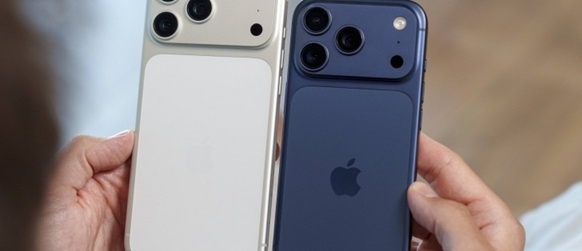
The smartphone industry stands on the brink of a paradigm shift. Since the introduction of the iPhone 14 in 2022, Apple has dipped its toes into satellite communications with Emergency SOS, a life-saving feature that allows users to text for help when stranded beyond cellular reach. However, this functionality has always been a safety net—limited to low-bandwidth text, requiring users to awkwardly point their phones at the sky, and strictly reserved for emergencies.
That is about to change. According to multiple reports and supply chain leaks, the upcoming iPhone 18 Pro and iPhone 18 Pro Max, expected in September 2026, will feature a revolutionary upgrade: 5G satellite connectivity powered by Apple's second-generation in-house C2 modem . This leap forward moves satellite communication from a niche safety tool to a core feature of the mobile experience, effectively turning every low-Earth orbit satellite into a distant cell tower .
This comprehensive article explores how this technology works, why Apple is pursuing it, the costs involved, and what it means for the future of connectivity.
How It Works: The Technology Behind 5G Satellite Connectivity
The C2 Modem and NR-NTN Standard
At the heart of this upgrade is Apple's custom-designed C2 baseband chip. Following the debut of the C1 chip in the iPhone 16e, the C2 represents a significant evolutionary step. Built on TSMC's advanced 2-nanometer process, the C2 modem integrates support for NR-NTN (New Radio Non-Terrestrial Networks) , a 5G standard that enables direct communication between smartphones and satellites .
The implications of this standard are profound. NR-NTN allows the iPhone 18 Pro to treat satellites as if they were conventional cellular towers. Instead of relying on ground-based infrastructure, the device can establish a direct data link with low-Earth orbit (LEO) satellites, which orbit approximately 500 to 1,200 kilometers above the Earth .
From Emergency Text to Full Internet Access
Current satellite features on iPhones operate at Kbps speeds, sufficient only for compressed text messages. The iPhone 18 Pro's implementation aims for Mbps or even Gbps speeds, theoretically supporting:
-
Voice and video calls
-
Web browsing and email
-
Streaming media
-
Cloud service access
-
Sharing photos with location data during emergencies
This represents a fundamental reimagining of what satellite connectivity can deliver. Rather than being a "break glass in case of emergency" feature, 5G satellite access becomes a genuine complement to terrestrial networks.
Seamless Connectivity and Improved User Experience
Perhaps the most user-facing improvement is the elimination of the "point-to-the-sky" requirement. Current iPhone satellite features demand precise alignment with satellites, a process that can be frustrating in stressful situations. With the C2 modem and advanced antenna design, the iPhone 18 Pro is expected to support automatic, seamless switching between cellular and satellite networks .
Reports suggest the new system will work even when the device is in a pocket, backpack, or inside vehicles . This is achieved through:
-
More sensitive beam-forming antennas capable of tracking satellites without user intervention
-
Intelligent power management that preserves battery life while maintaining background satellite connectivity
-
Seamless handover protocols that prevent dropped connections when moving between satellite coverage areas
Multi-Network Compatibility
Unlike the current arrangement that relies exclusively on Globalstar, Apple is reportedly pursuing partnerships with multiple satellite providers. The most significant potential collaboration is with SpaceX's Starlink, which operates the world's largest LEO satellite constellation with over 6,000 active satellites .
The iPhone 18 Pro is expected to support multiple satellite networks simultaneously, automatically selecting the strongest available signal . This multi-network approach ensures redundancy and maximizes global coverage.
Why Apple Is Pursuing 5G Satellite Connectivity
Closing the Coverage Gap
Despite impressive advances in cellular infrastructure, vast swaths of the Earth remain unserved or underserved. According to industry estimates, approximately 15% of the Earth's land surface and even larger portions of oceans and airspace lack reliable cellular coverage. For frequent travelers, outdoor enthusiasts, maritime workers, and aviation passengers, this creates frustrating dead zones where connectivity simply vanishes.
5G satellite connectivity promises to eliminate these dead zones entirely. Whether hiking in remote mountains, sailing across oceans, or flying at 35,000 feet, iPhone 18 Pro users could maintain basic connectivity .
Reducing Dependency on Qualcomm
Apple's modem development has been a multi-year journey with significant challenges. The company acquired Intel's smartphone modem business in 2019 for $1 billion, signaling its determination to reduce reliance on Qualcomm. After struggles with the first-generation modem, the C2 represents Apple's most ambitious push yet.
By bringing modem design entirely in-house, Apple gains several advantages:
-
Tighter hardware-software integration, enabling features not possible with off-the-shelf components
-
Reduced licensing costs paid to Qualcomm
-
Unified control over the technology roadmap, allowing features like satellite connectivity to be deeply integrated from the ground up
Competitive Pressure
Apple has historically led in premium smartphone features, but in the satellite communications arena, competitors have stolen a march. Huawei introduced satellite text messaging in 2022 and has since expanded to satellite image transmission and even satellite calling on select models .
By leapfrogging directly to 5G satellite data, Apple aims to not just catch up but potentially surpass competitors with a more comprehensive, higher-bandwidth solution.
Enabling New Use Cases and Services
Beyond basic connectivity, satellite capabilities open doors to new services:
Enhanced Emergency Services: With the ability to send photos alongside location data, emergency responders gain critical situational awareness before dispatch .
Apple Maps Integration: Satellite-connected mapping could provide navigation assistance even in remote areas with no cellular data .
Third-Party APIs: Apple is reportedly developing APIs that would allow apps like WhatsApp, iMessage, and even social media platforms to utilize satellite connectivity, turning satellite access into a platform feature rather than a system utility .
The Costs: Hardware, Service, and Regional Availability
Hardware Costs
The technological sophistication of the C2 modem comes with a significant price tag. Industry sources indicate the 2nm C2 modem costs approximately $280 per unit to manufacture, substantially higher than the 3nm modems used in current generation devices .
This cost increase stems from:
-
The cutting-edge 2nm manufacturing process, which has lower yields than mature nodes
-
The complex antenna arrays required for satellite communication
-
Advanced packaging technologies that integrate memory directly with the modem die
These component costs will inevitably influence the final retail price. Analysts expect the iPhone 18 Pro to command a premium over its predecessor, potentially adding $200-$300 to the starting price compared to equivalent iPhone 17 models .
Service Subscription Models
Perhaps the most significant ongoing cost will be service subscriptions. Apple's current satellite features are offered with a two-year complimentary period, but this has been repeatedly extended, suggesting Apple is still determining the optimal commercial model.
For iPhone 18 Pro's advanced satellite capabilities, multiple pricing structures are possible:
Tiered Subscription Plans:
-
Basic SOS and messaging: Potentially $5-$10 per month for continued access to emergency services and limited text messaging
-
Standard data plans: $30-$50 per month for moderate data allowances suitable for messaging and occasional browsing
-
Premium plans: $70-$120 per month for higher data caps supporting streaming and video calls
Carrier Bundling: Apple may work with mobile carriers to integrate satellite access into premium postpaid plans, similar to how international roaming is currently packaged. This would simplify billing but potentially limit consumer choice.
Pay-Per-Use: For users who rarely venture beyond cellular coverage, a pay-as-you-go model could prove attractive, with charges only incurred when satellite connectivity is actually used.
Regional Availability and Restrictions
A critical consideration for potential buyers is that 5G satellite connectivity will not be universally available at launch. The feature faces significant regulatory and technical hurdles:
United States and Canada are expected to be the first markets with full support, leveraging both Globalstar's existing infrastructure and potential Starlink integration .
European Union markets may follow shortly after, though individual country approvals could create a staggered rollout.
China presents unique challenges. Reports suggest the iPhone 18 Pro's satellite features will likely be unavailable on devices sold in mainland China . This stems from multiple factors:
-
Spectrum allocation differences
-
National security concerns regarding direct satellite access
-
The presence of domestic alternatives like China's Tiantong and Beidou systems
Chinese users may find themselves paying premium prices for hardware whose signature feature cannot be activated—a situation that has already generated controversy in online discussions .
Other Asian markets including Japan, South Korea, and Singapore may receive the feature later, pending regulatory approvals and partner agreements.
Challenges and Limitations
Despite the promise, significant hurdles remain:
Infrastructure Requirements
Apple's current satellite partner, Globalstar, operates a constellation that was designed for low-bandwidth applications, not high-speed 5G data. Enabling true 5G satellite connectivity will require substantial upgrades to ground infrastructure and potentially new satellites with advanced capabilities .
Indoor Performance
While the iPhone 18 Pro's improved antennas will work in pockets and vehicles, reliable indoor satellite connectivity remains challenging. Satellite signals struggle to penetrate building materials, meaning users may still need proximity to windows for reliable connections .
Regulatory Complexity
Satellite communications operate in internationally regulated spectrum bands, and countries maintain sovereign control over their airspace. Achieving truly global satellite connectivity requires navigating a patchwork of national regulations, licensing requirements, and technical standards .
The SpaceX Factor
Apple's reported negotiations with SpaceX have been characterized as "on-again, off-again" by industry insiders . While a partnership would provide access to the world's most capable LEO constellation, commercial disagreements, and competitive tensions could derail these discussions.
Comparison with Competitors
Huawei's Satellite Leadership
Huawei currently leads in satellite smartphone features, having launched:
-
Satellite text messaging in 2022 (Mate 50 series)
-
Satellite image transmission in 2024 (Pura 70 series)
-
Dual satellite support (Beidou and Tianshu) in 2025 (Mate X6)
However, Huawei's implementation remains limited to messaging and images, not general internet access. The company conducted NR-NTN public trials in late 2025 but has not yet commercialized full 5G satellite data .
Android Ecosystem
Qualcomm has worked with multiple Android manufacturers on Snapdragon Satellite, a global satellite messaging solution. However, adoption has been limited, and the service has not achieved the scale of Apple's implementation. Google is integrating satellite SOS into Android 16, but this remains emergency-focused rather than general connectivity .
The Future: What Comes After iPhone 18 Pro
If the iPhone 18 Pro successfully commercializes 5G satellite connectivity, it will likely trigger a cascade of industry developments:
Expanded Constellations: Satellite operators will accelerate deployment of 5G-capable satellites to meet anticipated demand.
Broader Android Adoption: Success in the premium market will pressure Android manufacturers to develop competing solutions.
New Applications: Developers will create applications specifically designed for satellite-connected users, from remote work tools to adventure-focused social platforms.
Regulatory Evolution: Governments will need to modernize spectrum regulations to accommodate the reality of consumer satellite connectivity.
Conclusion
The iPhone 18 Pro's 5G satellite capability, powered by Apple's C2 modem, represents more than just another feature increment. It signals a fundamental shift in how we think about mobile connectivity—moving from the assumption of terrestrial coverage to the expectation of universal access.
For users who frequently venture beyond cellular range—whether for work, adventure, or simply the peace of mind that comes with knowing help is always reachable—this technology could prove genuinely transformative. The ability to maintain connectivity from mountain peaks, ocean crossings, and remote wilderness areas reshapes the boundaries of modern life.
However, this future comes with significant caveats. The hardware will command premium pricing. Service subscriptions will add ongoing costs. And for millions of potential customers in markets like China, the feature may remain tantalizingly out of reach due to regulatory barriers.
As with many Apple innovations, the true impact of 5G satellite connectivity may take years to fully materialize. The iPhone 18 Pro will plant a flag, establishing that direct satellite access belongs in consumer hands. What grows from that foundation—new services, new applications, new expectations about connectivity—will unfold over subsequent generations.
What is certain is that by September 2026, when the iPhone 18 Pro arrives in stores, the smartphone industry will have crossed a threshold. From that point forward, the question will shift from "Do I have signal?" to "Which network am I connected to—terrestrial or satellite?" For billions of smartphone users, that distinction may eventually fade into irrelevance, replaced by the simple expectation that connectivity should simply work, anywhere on Earth .
The iPhone 18 Pro and its C2 modem may well be remembered as the device that made that expectation a reality.
- Art & Craft
- Causes & Effect
- Dance & Music
- Health & Fitness
- Food & Wellness
- Historic Places
- Homes & Gardening
- Literature & Knowledge
- Science and Technology
- Social Networking
- Social Commerce
- Party & Celebration
- Religion & Festivals
- Shopping & Vendors
- Sports & Games
- Film & Theater
- Digital Creators & Community
- Influencer CCC
- Corporate & Collaboration
- Startup & Scope
- Investment & Growth
- VC & Angel Investors
- Agriculture & farmers
- Nature & Universe
- News & Media
- Real Estate & Property
- Artificial Intellegence
- Political Coverage
- Winners & Loosers
 Russian
 English
 Arabic
 Hindi
Hindi
 French
 Spanish
 Portuguese
 Deutsch
 Turkish
 Dutch
Dutch
 Italiano
 Romaian
 Portuguese (Brazil)
 Greek
Greek
