• 🚀 Reinventing Reality: The Rise of Physical AI in Designing, Building, and Operating the World Around Us


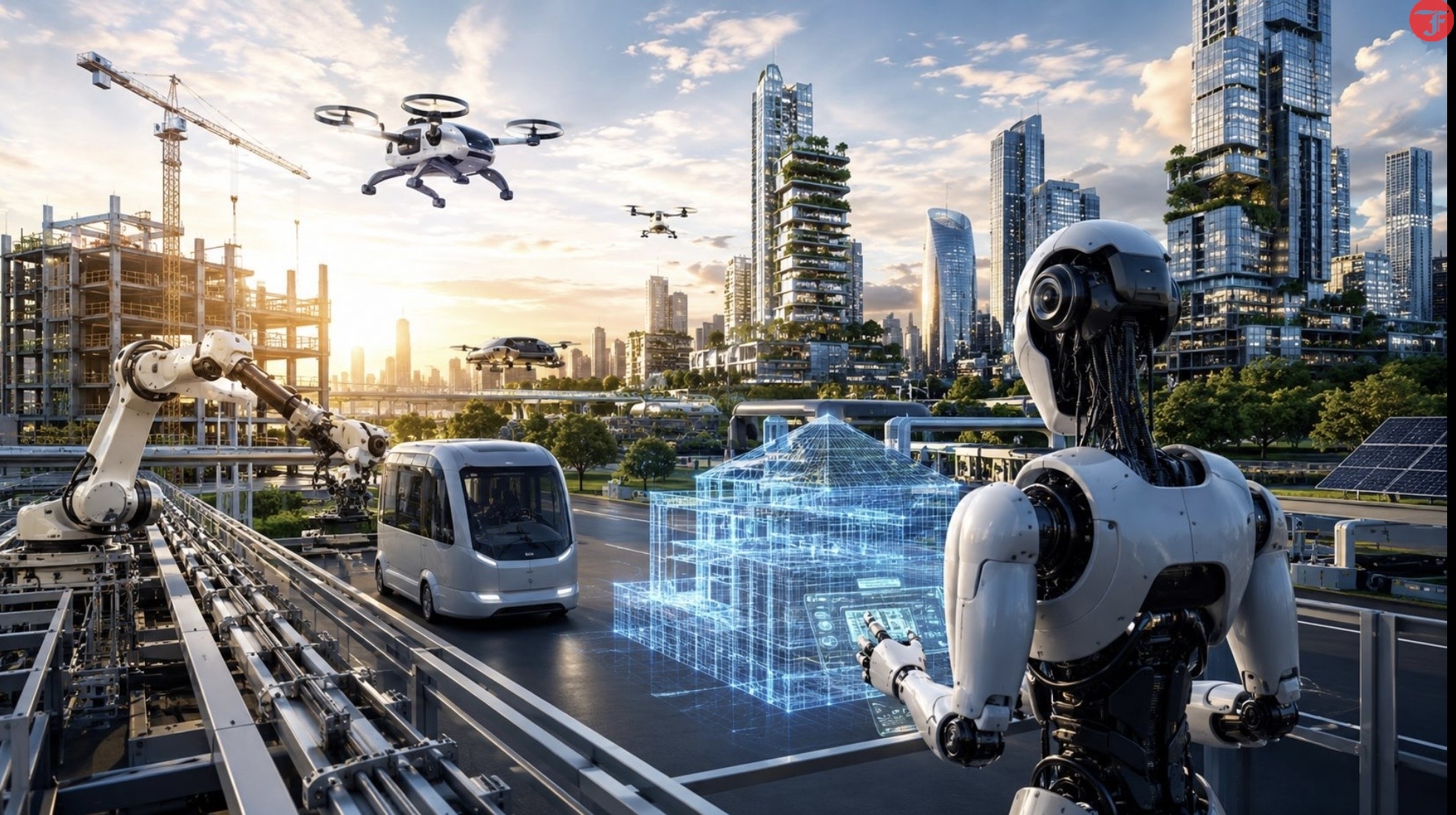
    Artificial Intelligence is no longer confined to screens, software, and digital workflows. A new frontier is emerging—Physical AI—where intelligence moves beyond prediction and enters the real world to perceive, reason, and act. From autonomous construction sites and smart factories to intelligent infrastructure and adaptive buildings, Physical AI is transforming how we design, build, and operate the environments around us. 🌍🤖


    Imagine a world where:
    ✅ Buildings continuously optimize energy consumption and occupant comfort.
    ✅ Robots collaborate seamlessly with human teams on construction projects.
    ✅ Digital twins simulate real-world scenarios before decisions are executed.
    ✅ Infrastructure predicts maintenance needs before failures occur.
    ✅ Cities become adaptive ecosystems powered by real-time intelligence.


    Physical AI represents the convergence of Artificial Intelligence, Robotics, IoT, Digital Twins, Computer Vision, and Edge Computing, creating systems that can understand and interact with the physical world in unprecedented ways. Industry leaders increasingly view this evolution as the next major phase of AI, extending intelligence from digital content creation into real-world operations and decision-making.


    For architects, engineers, urban planners, manufacturers, technology leaders, and investors, this is more than a technological shift—it is a fundamental transformation of the global economy and the future of human-machine collaboration. Physical AI is not simply automating tasks; it is enabling a smarter, safer, more sustainable, and more responsive built environment.


    As we move toward an era where intelligence is embedded into the physical fabric of society, the question is no longer if Physical AI will reshape industries, but how quickly organizations will adapt to this new reality.


    📖 Read the full article:
    https://medium.com/@jckapadia003/reinventing-reality-the-rise-of-physical-ai-in-designing-building-and-operating-the-world-around-bc1c7950f941


    #PhysicalAI #ArtificialIntelligence #DigitalTransformation #SmartCities #DigitalTwins #Robotics #Industry40 #ConstructionTechnology #Engineering #Innovation #FutureOfWork #IndustrialAI #SmartInfrastructure #Automation #IoT #MachineLearning #TechnologyLeadership #UrbanInnovation #BuiltEnvironment #FutureTech
    🚀 Reinventing Reality: The Rise of Physical AI in Designing, Building, and Operating the World Around Us Artificial Intelligence is no longer confined to screens, software, and digital workflows. A new frontier is emerging—Physical AI—where intelligence moves beyond prediction and enters the real world to perceive, reason, and act. From autonomous construction sites and smart factories to intelligent infrastructure and adaptive buildings, Physical AI is transforming how we design, build, and operate the environments around us. 🌍🤖 Imagine a world where: ✅ Buildings continuously optimize energy consumption and occupant comfort. ✅ Robots collaborate seamlessly with human teams on construction projects. ✅ Digital twins simulate real-world scenarios before decisions are executed. ✅ Infrastructure predicts maintenance needs before failures occur. ✅ Cities become adaptive ecosystems powered by real-time intelligence. Physical AI represents the convergence of Artificial Intelligence, Robotics, IoT, Digital Twins, Computer Vision, and Edge Computing, creating systems that can understand and interact with the physical world in unprecedented ways. Industry leaders increasingly view this evolution as the next major phase of AI, extending intelligence from digital content creation into real-world operations and decision-making. For architects, engineers, urban planners, manufacturers, technology leaders, and investors, this is more than a technological shift—it is a fundamental transformation of the global economy and the future of human-machine collaboration. Physical AI is not simply automating tasks; it is enabling a smarter, safer, more sustainable, and more responsive built environment. As we move toward an era where intelligence is embedded into the physical fabric of society, the question is no longer if Physical AI will reshape industries, but how quickly organizations will adapt to this new reality. 📖 Read the full article: https://medium.com/@jckapadia003/reinventing-reality-the-rise-of-physical-ai-in-designing-building-and-operating-the-world-around-bc1c7950f941 #PhysicalAI #ArtificialIntelligence #DigitalTransformation #SmartCities #DigitalTwins #Robotics #Industry40 #ConstructionTechnology #Engineering #Innovation #FutureOfWork #IndustrialAI #SmartInfrastructure #Automation #IoT #MachineLearning #TechnologyLeadership #UrbanInnovation #BuiltEnvironment #FutureTech
    ·229 Vue ·0 Aperçu
  • Compare Brand Reputation 🏆


    🔹 Brand reputation influences service quality, software support, reliability, and resale value. Established manufacturers typically offer stronger customer support networks and spare-part availability. Reading customer feedback helps identify recurring issues and overall satisfaction levels. A trusted brand often provides greater confidence throughout device ownership.


    ✔ Research user reviews
    ✔ Assess service network availability
    ✔ Evaluate reliability history
    ✔ Compare customer satisfaction


    #BrandComparison, #PhoneBrands, #MobileSelection, #TechResearch, #SmartphoneGuide
    Compare Brand Reputation 🏆 🔹 Brand reputation influences service quality, software support, reliability, and resale value. Established manufacturers typically offer stronger customer support networks and spare-part availability. Reading customer feedback helps identify recurring issues and overall satisfaction levels. A trusted brand often provides greater confidence throughout device ownership. ✔ Research user reviews ✔ Assess service network availability ✔ Evaluate reliability history ✔ Compare customer satisfaction #BrandComparison, #PhoneBrands, #MobileSelection, #TechResearch, #SmartphoneGuide
    ·1KB Vue ·0 Aperçu
  • Evaluate Processor Performance


    ⚡ The processor is the brain of a smartphone.


    ◆ Check:
    • Chipset generation
    • CPU speed
    • AI capabilities
    • Energy efficiency


    ◆ Why it matters:
    • Faster app loading
    • Better multitasking
    • Improved gaming performance
    • Longer software support


    Modern processors from leading manufacturers offer advanced performance and power management. Choosing a capable processor ensures your phone remains responsive and relevant for years.


    #ProcessorPerformance, #MobileTechnology, #SmartphoneTips, #TechGuide, #PerformanceMatters
    Evaluate Processor Performance ⚡ The processor is the brain of a smartphone. ◆ Check: • Chipset generation • CPU speed • AI capabilities • Energy efficiency ◆ Why it matters: • Faster app loading • Better multitasking • Improved gaming performance • Longer software support Modern processors from leading manufacturers offer advanced performance and power management. Choosing a capable processor ensures your phone remains responsive and relevant for years. #ProcessorPerformance, #MobileTechnology, #SmartphoneTips, #TechGuide, #PerformanceMatters
    ·252 Vue ·0 Aperçu
  • Industrial Digital Twin Expansion Suite

    Siemens may expand its digital twin technology for industrial manufacturing, offering enhanced simulation capabilities for factories. This project would allow companies to create virtual replicas of their production lines, enabling predictive modeling, optimization, and risk reduction before physical implementation.

    With advanced analytics and AI, manufacturers could test multiple production scenarios, reducing waste and improving throughput. The solution would integrate seamlessly with existing Siemens automation systems, strengthening Industry 4.0 adoption. The digital twin suite could also include sustainability metrics, helping industries track carbon emissions and energy usage in real time.

    This aligns with global ESG mandates and regulatory frameworks. Expected adoption sectors include automotive, aerospace, and heavy engineering.

    #DigitalTwin, #Industry40, #SmartManufacturing, #SiemensTech, #Automation, #IndustrialAI, #Sustainability, #FactoryOfFuture
    Industrial Digital Twin Expansion Suite Siemens may expand its digital twin technology for industrial manufacturing, offering enhanced simulation capabilities for factories. This project would allow companies to create virtual replicas of their production lines, enabling predictive modeling, optimization, and risk reduction before physical implementation. With advanced analytics and AI, manufacturers could test multiple production scenarios, reducing waste and improving throughput. The solution would integrate seamlessly with existing Siemens automation systems, strengthening Industry 4.0 adoption. The digital twin suite could also include sustainability metrics, helping industries track carbon emissions and energy usage in real time. This aligns with global ESG mandates and regulatory frameworks. Expected adoption sectors include automotive, aerospace, and heavy engineering. #DigitalTwin, #Industry40, #SmartManufacturing, #SiemensTech, #Automation, #IndustrialAI, #Sustainability, #FactoryOfFuture
    ·2KB Vue ·0 Aperçu
  • The gaming PC isn't just evolving; it's at the epicenter of a technological and economic revolution. As we look toward 2026, the line between cutting-edge innovation and major revenue streams is blurring faster than ever. Here’s what’s driving the next era:

    🚀 The Innovation Engine:

    AI-Native Hardware: It’s not just about graphics anymore. Dedicated NPUs in CPUs and AI-accelerated GPUs are revolutionizing gameplay—think real-time pathfinding, NPCs with true conversational memory, and dynamic worlds that adapt to your playstyle.

    The Seamless Ecosystem: The wall between PC and cloud is crumbling. Your rig is becoming a personal node in a hybrid network, offloading intensive ray-traced scenes or letting you pick up a session instantly on any device. The "gaming PC" is becoming a "gaming hub."

    Beyond Performance: Innovation is now immersive. Haptic feedback in peripherals, eye-tracking for foveated rendering, and even neuro-response accessories are moving from niche to mainstream, making the experience as revolutionary as the frame rate.

    Sustainability & Design: The push for efficiency is driving innovation in liquid cooling, power supplies, and component architecture. Sleek, minimalist, and eco-conscious designs are becoming a major selling point.

    💰 The Revenue Revolution:

    The Direct-to-Consumer Pivot: Brands are building ecosystems—selling not just a PC, but curated games, subscription access to beta features, and premium support. The hardware is the gateway to a recurring revenue model.

    Platform Plays: Proprietary launchers and storefronts from hardware manufacturers are competing for a slice of the digital marketplace, challenging traditional platforms.

    The Creator & Professional Crossover: The same rig that plays games powers AI-assisted content creation, 3D rendering, and simulation. This expands the target market dramatically, justifying higher price points for versatile, professional-grade performance.

    Component-as-a-Service? Could we see subscription models for guaranteed yearly GPU upgrades? The conversation is starting, promising new revenue streams and customer loyalty.

    The Bottom Line for 2026:

    The gaming PC is no longer a solitary box under a desk. It’s the heart of a connected, intelligent, and expansive digital lifestyle. Companies that win will be those that integrate silicon with software ecosystems and view users not just as buyers, but as subscribers to an ever-evolving experience.

    The innovation drives desire. The desire drives revenue. And in 2026, the cycle is spinning faster than a 10,000 RPM SSD.

    What’s your take? Which innovation will be the biggest revenue driver: AI, the hybrid cloud, or the creator economy?

    #GamingPC #PCGaming #Innovation #TechTrends #GamingIndustry #RevenueModels #2026Predictions #AI #CloudGaming #Esports #Hardware
    The gaming PC isn't just evolving; it's at the epicenter of a technological and economic revolution. As we look toward 2026, the line between cutting-edge innovation and major revenue streams is blurring faster than ever. Here’s what’s driving the next era: 🚀 The Innovation Engine: AI-Native Hardware: It’s not just about graphics anymore. Dedicated NPUs in CPUs and AI-accelerated GPUs are revolutionizing gameplay—think real-time pathfinding, NPCs with true conversational memory, and dynamic worlds that adapt to your playstyle. The Seamless Ecosystem: The wall between PC and cloud is crumbling. Your rig is becoming a personal node in a hybrid network, offloading intensive ray-traced scenes or letting you pick up a session instantly on any device. The "gaming PC" is becoming a "gaming hub." Beyond Performance: Innovation is now immersive. Haptic feedback in peripherals, eye-tracking for foveated rendering, and even neuro-response accessories are moving from niche to mainstream, making the experience as revolutionary as the frame rate. Sustainability & Design: The push for efficiency is driving innovation in liquid cooling, power supplies, and component architecture. Sleek, minimalist, and eco-conscious designs are becoming a major selling point. 💰 The Revenue Revolution: The Direct-to-Consumer Pivot: Brands are building ecosystems—selling not just a PC, but curated games, subscription access to beta features, and premium support. The hardware is the gateway to a recurring revenue model. Platform Plays: Proprietary launchers and storefronts from hardware manufacturers are competing for a slice of the digital marketplace, challenging traditional platforms. The Creator & Professional Crossover: The same rig that plays games powers AI-assisted content creation, 3D rendering, and simulation. This expands the target market dramatically, justifying higher price points for versatile, professional-grade performance. Component-as-a-Service? Could we see subscription models for guaranteed yearly GPU upgrades? The conversation is starting, promising new revenue streams and customer loyalty. The Bottom Line for 2026: The gaming PC is no longer a solitary box under a desk. It’s the heart of a connected, intelligent, and expansive digital lifestyle. Companies that win will be those that integrate silicon with software ecosystems and view users not just as buyers, but as subscribers to an ever-evolving experience. The innovation drives desire. The desire drives revenue. And in 2026, the cycle is spinning faster than a 10,000 RPM SSD. What’s your take? Which innovation will be the biggest revenue driver: AI, the hybrid cloud, or the creator economy? #GamingPC #PCGaming #Innovation #TechTrends #GamingIndustry #RevenueModels #2026Predictions #AI #CloudGaming #Esports #Hardware
    1
    ·9KB Vue ·0 Aperçu
Talkfever - Growing worldwide https://talkfever.com/