


 IMS for Investors
 Global News
 Vdo Junction
 Talkfever App
 Upcoming
Makhana or Singhada? A Nutrition Expert's Guide to Better Digestion and Blood Sugar
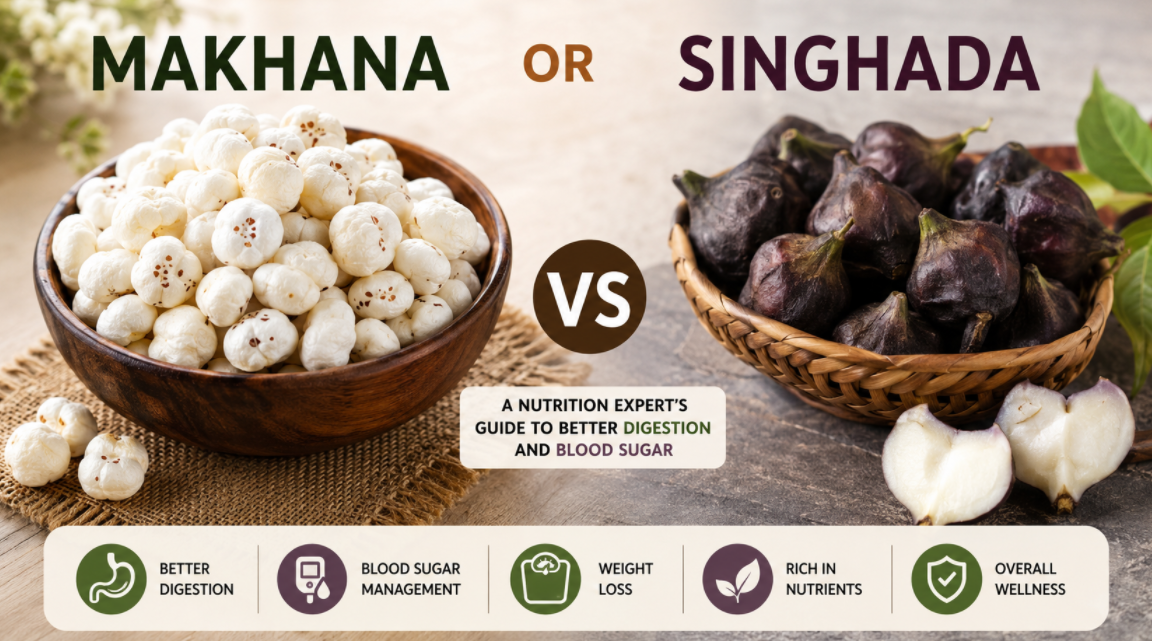
When it comes to healthy Indian snacks, makhana (fox nuts) and singhada (water chestnut) are among the most nutritious choices. Both have been used in traditional Indian diets for centuries and are valued for their unique nutritional profiles. Whether you're trying to improve digestion, manage blood sugar, or lose weight, choosing the right snack can make a meaningful difference.
But which one is actually healthier—makhana or singhada?
The answer depends on your health goals. While makhana is known for its high protein content and low glycemic impact, singhada offers hydration, fiber, and essential minerals that support overall wellness.
Here's a nutrition expert's comparison of these two popular superfoods.
Nutritional Comparison: Makhana vs. Singhada
Both foods are naturally gluten-free, low in fat, and packed with nutrients. However, their nutritional strengths differ.
Makhana (Fox Nuts)
Makhana is harvested from the seeds of the lotus plant and is often roasted as a healthy snack. It contains:
- Good-quality plant protein
- Dietary fiber
- Calcium
- Magnesium
- Potassium
- Phosphorus
- Antioxidants
- Very little fat
Its low calorie density and satisfying crunch make it a favorite among nutritionists for weight management.
Singhada (Water Chestnut)
Singhada is an aquatic vegetable commonly consumed fresh or as flour during fasting seasons.
It provides:
- Complex carbohydrates
- Dietary fiber
- Potassium
- Vitamin B6
- Manganese
- Copper
- Water content
- Natural antioxidants
Its naturally high water content makes it refreshing and easy to digest.
Which Is Better for Digestion?
Digestive health depends on fiber intake, hydration, and foods that are gentle on the stomach.
Why Singhada Supports Digestion
Singhada contains both fiber and significant moisture, helping maintain healthy bowel movements. It is light on the stomach and is often recommended during digestive discomfort because it is easy to digest.
Benefits include:
- Promotes regular bowel movements
- Helps prevent constipation
- Supports healthy gut bacteria
- Keeps the digestive tract hydrated
Its cooling nature is also appreciated in traditional Indian nutrition practices.
Why Makhana Helps Gut Health
Makhana is rich in dietary fiber, which improves digestion and keeps you feeling full for longer.
Regular consumption may help:
- Improve bowel regularity
- Reduce overeating
- Support healthy gut function
However, consuming excessive amounts without adequate water may occasionally contribute to bloating in sensitive individuals.
Winner for Digestion
Singhada has a slight advantage because of its combination of fiber, water content, and easy digestibility. People with sensitive stomachs often tolerate it better.
Which Is Better for Blood Sugar Control?
Managing blood sugar involves choosing foods that digest slowly and prevent sudden glucose spikes.
Makhana for Diabetes
Makhana is considered a diabetes-friendly snack because it has:
- Low glycemic index
- Moderate carbohydrates
- Good fiber content
- Plant protein
These nutrients slow digestion, helping maintain stable blood sugar levels.
Replacing fried snacks with roasted makhana may reduce unnecessary calorie and refined carbohydrate intake.
Singhada and Blood Sugar
Fresh singhada contains natural carbohydrates that provide energy. While it also contains fiber, its carbohydrate content is higher than roasted makhana.
People with diabetes do not necessarily need to avoid singhada, but portion control is important.
Fresh singhada can still be part of a balanced meal when paired with protein or healthy fats.
Winner for Blood Sugar
Makhana is generally the better choice for individuals managing diabetes or prediabetes because it produces a slower rise in blood glucose compared to many carbohydrate-rich snacks.
Which Is Better for Weight Loss?
Weight loss depends on creating a calorie deficit while maintaining satiety.
Why Makhana Is Popular for Weight Loss
Nutrition experts frequently recommend roasted makhana because it:
- Is relatively low in calories
- Contains protein and fiber
- Keeps you fuller for longer
- Reduces unhealthy snacking
A bowl of roasted makhana seasoned with herbs can satisfy cravings without adding excessive calories.
Singhada for Healthy Weight Management
Singhada is naturally low in fat and contains fiber that contributes to fullness.
However, because it contains more natural starch, it provides more carbohydrates than makhana.
It remains an excellent whole-food option but may not be as filling calorie-for-calorie as roasted makhana.
Winner for Weight Loss
Makhana clearly takes the lead due to its higher protein content, lower calorie density, and superior satiety.
Additional Health Benefits
Benefits of Makhana
- Rich in antioxidants
- Supports heart health
- Helps maintain healthy bones because of calcium and phosphorus
- May aid healthy aging by reducing oxidative stress
- Naturally gluten-free
- Excellent snack for fasting
Benefits of Singhada
- Supports hydration
- Rich source of potassium for heart health
- Contains vitamin B6 that supports brain function
- Provides natural energy
- Supports healthy digestion
- Naturally gluten-free
Who Should Choose Makhana?
Makhana is ideal for:
- People with diabetes
- Individuals trying to lose weight
- Fitness enthusiasts
- Office workers seeking healthier snacks
- Those wanting higher protein snacks
- People looking for evening snack alternatives
Who Should Choose Singhada?
Singhada is suitable for:
- People experiencing digestive issues
- Individuals needing hydration-rich foods
- Children requiring natural energy
- Older adults with sensitive digestion
- People observing fasting traditions
- Those looking for naturally refreshing foods
Can You Eat Both Together?
Absolutely.
Rather than viewing makhana and singhada as competitors, they can complement each other in a balanced diet.
For example:
- Roasted makhana as a mid-morning snack
- Fresh singhada in salads or as an afternoon snack
- Singhada flour in fasting recipes
- Makhana added to trail mixes or homemade granola
Combining a variety of nutrient-rich foods provides a broader range of vitamins, minerals, and antioxidants.
Expert Tips
To maximize health benefits:
- Choose roasted makhana instead of fried or heavily salted versions.
- Eat fresh singhada rather than processed products whenever possible.
- Pair either snack with protein-rich foods such as yogurt or nuts for better blood sugar control.
- Practice portion control, especially if managing diabetes or weight.
- Include both as part of a balanced diet rich in fruits, vegetables, whole grains, and lean protein.
Conclusion
Both makhana and singhada deserve a place in a healthy diet, but the better option depends on your nutritional goals.
If your priority is weight loss, blood sugar management, and long-lasting fullness, makhana is the clear winner. Its combination of protein, fiber, and lower glycemic impact makes it one of the healthiest snack choices available.
On the other hand, if your focus is better digestion, hydration, and natural energy, singhada offers unique advantages thanks to its water content, fiber, and essential minerals.
Instead of choosing one over the other, consider incorporating both into your weekly meal plan. Eating a variety of whole, minimally processed foods is one of the simplest ways to support digestive health, maintain stable blood sugar, and improve overall well-being.
Frequently Asked Questions (FAQs)
1. Is makhana better than singhada for diabetes?
Yes. Roasted makhana generally has a lower glycemic impact and contains more protein, making it a better snack option for people managing blood sugar.
2. Which is better for weight loss: makhana or singhada?
Makhana is typically better for weight loss because it is lower in calories, higher in protein, and keeps you feeling full for longer.
3. Can people with diabetes eat singhada?
Yes. Fresh singhada can be included in moderation as part of a balanced meal. Portion control is important due to its carbohydrate content.
4. Is makhana good for digestion?
Yes. Its fiber content supports healthy digestion and promotes satiety. Drinking enough water alongside fiber-rich foods is recommended.
5. Can I eat makhana and singhada every day?
Yes, both can be enjoyed regularly in moderate portions as part of a healthy, balanced diet.
6. Which snack contains more protein?
Makhana contains significantly more protein than singhada, making it a preferred option for people looking to increase protein intake.
7. Is singhada flour healthier than refined flour?
Yes. Singhada flour is naturally gluten-free, contains more nutrients than refined wheat flour, and is commonly used during fasting.
8. Which is healthier overall?
Neither is universally better. Makhana excels in weight management and blood sugar control, while singhada stands out for digestive health, hydration, and mineral content. Including both in your diet provides complementary nutritional benefits.
 English
 Arabic
 French
 Spanish
 Portuguese
 Deutsch
 Turkish
 Dutch
Dutch
 Italiano
 Russian
 Romaian
 Portuguese (Brazil)
 Greek
Greek