


 IMS for Investors
 Global News
 Vdo Junction
 Talkfever App
 Upcoming
5 (Pretty) Big Marketing Strategies from Top Beauty Brands
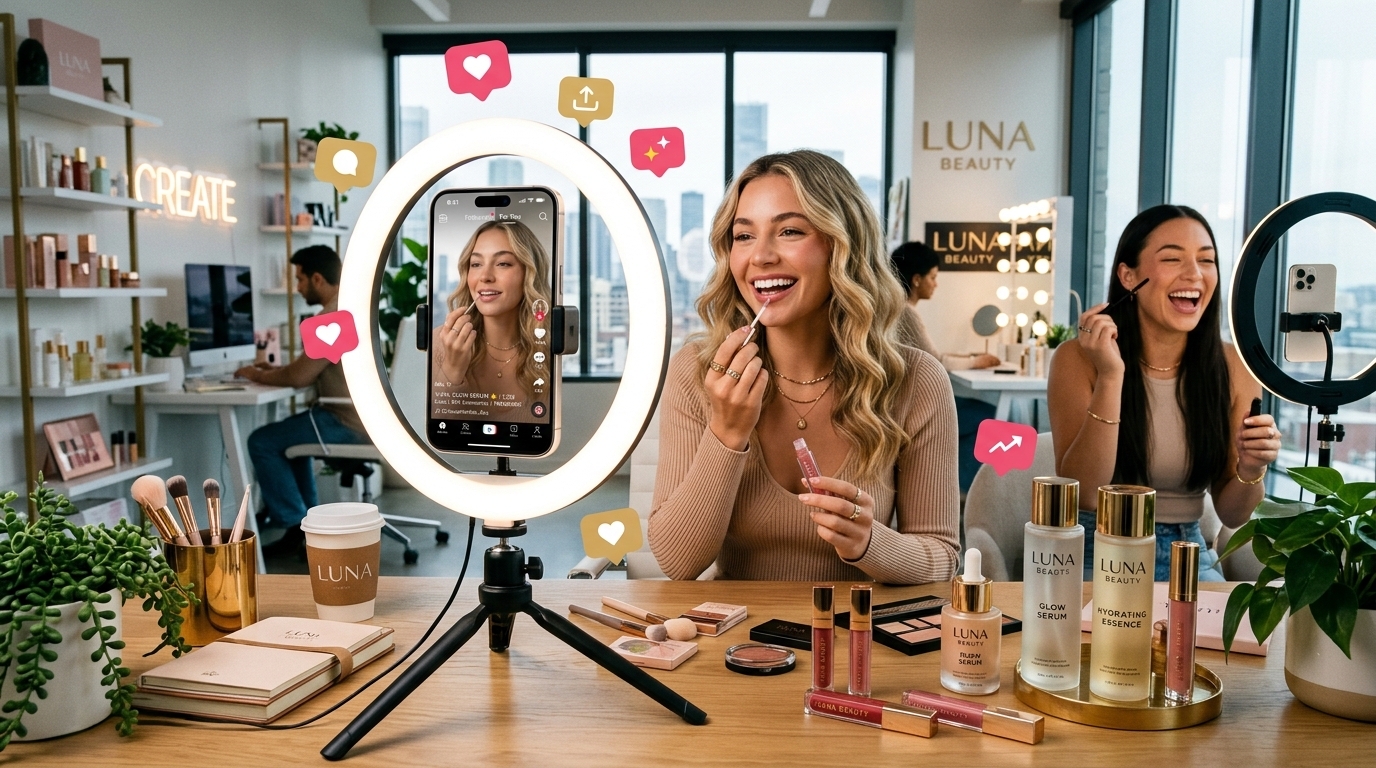
The beauty industry grew about 10% globally last year, even while shoppers tightened their budgets elsewhere. That kind of growth doesn't happen by accident. Behind every viral serum and sold-out lip product sits a smart, deliberate marketing strategy.
The brands winning right now share a few key habits. They meet shoppers on social platforms, prove their products actually work, and build communities that keep people coming back. They also treat the unboxing moment as part of the experience, not an afterthought.
In this guide, we break down the five biggest marketing strategies top beauty brands use today. You'll see real examples, current data, and practical takeaways you can apply yourself. By the end, you'll understand exactly why these strategies work and how to start using them.
Here's what we'll cover:
-
Social commerce and influencer marketing
-
Ingredient transparency and education
-
Sensory-driven content
-
Community building
-
Packaging as a marketing tool
Why Beauty Marketing Looks So Different Now
Beauty marketing used to reward speed. Faster launches, faster content, faster trends. That model is fading. In its place comes a focus on trust, proof, and consistency over time.
Shoppers have changed too. They scan ingredient lists with apps, read clinical studies, and follow cosmetic chemists on TikTok. They trust creator recommendations more than polished brand ads. This shift forces brands to earn attention rather than buy it.
Three forces drive the change:
-
Social platforms now lead discovery. TikTok and Instagram are where products are found, researched, and bought.
-
Proof beats promises. Shoppers want evidence, not just aspirational imagery.
-
Experience matters end to end. From the first ad to the final unboxing, every touchpoint counts.
Keep these forces in mind as we walk through each strategy. They explain why these five approaches work so well in 2026.
Strategy 1: Social Commerce and Influencer Marketing
The biggest shift in beauty marketing is where people shop. TikTok and Instagram aren't just for awareness anymore. They're the beginning, middle, and often the end of the buying journey.
Shoppers discover a product, watch a tutorial, read reviews, and buy it without ever leaving the app. Many search TikTok for solutions before they ever open Google. This compresses the old "see it, consider it, buy it" funnel into a single scroll.
Beauty marketers now allocate 70 to 75% of their budgets to commerce media. That's where high-trust conversion happens. The smart brands build content that fits each platform natively rather than recycling old ad campaigns.
The Rise of the Dermfluencer
One of the clearest signals of this shift is the dermfluencer. These are dermatologists and credentialed experts who explain skincare science in simple, scroll-stopping content. Shoppers trust them because they bring real authority.
The numbers show how powerful this trend has become:
-
Dermfluencer content generated $578M in earned media value, up 42% in recent years.
-
That content drove 1.9 billion total engagements.
-
More than 1,300 brands and press titles now partner with dermfluencers.
Science-led brands lead the way here. CeraVe earned $10.8M in dermfluencer-driven value, Neutrogena $9.9M, and La Roche-Posay $9.2M. Each pairs medical expertise with clear product education, which builds credibility at scale.
Why Mid and Macro Creators Win
Bigger isn't always better. Mid and macro creators, those with roughly 80K to 500K followers, often outperform celebrities. They feel like category specialists, cost less, and keep audiences engaged over time.
Rhode's Peptide Lip launch shows this well. Hailey Bieber sparked the initial buzz, but mid and macro creators sustained the momentum. Their GRWM-style content fueled repeatable engagement and organic sharing long after launch day.
The lesson is simple. Reach starts a conversation, but trusted creators keep it going. Brands that build long-term creator partnerships gain more than one-off celebrity posts deliver.
How to Apply This Strategy
You don't need a celebrity budget to use social commerce well. Start with these steps:
-
Create content in each platform's preferred format, like TikTok tutorials and Instagram Reels.
-
Partner with creators whose audience truly matches your category.
-
Enable direct purchasing through platform commerce features.
-
Make products searchable using trending terms, not just formal beauty descriptors.
|
Creator Tier |
Follower Range |
Main Strength |
Best Use |
|
Dermfluencer |
Varies |
Clinical credibility |
Skincare education |
|
Macro creator |
250K–500K |
Scale plus trust |
Sustained momentum |
|
Mid creator |
80K–250K |
Authentic, cost-efficient |
UGC and community |
|
Mega/celebrity |
1M+ |
Wide reach |
Launch awareness |
Strategy 2: Ingredient Transparency and Education
For years, beauty marketing leaned on aspiration and pretty imagery. That no longer works on its own. Today's shoppers demand to know what's inside a product and whether it actually works.
This change cuts across every price point. Mass-market brands now deliver clinical-grade ingredients like peptides and bond builders at accessible prices. As a result, packaging and heritage alone can't justify a premium anymore. The proof has to be in the formula.
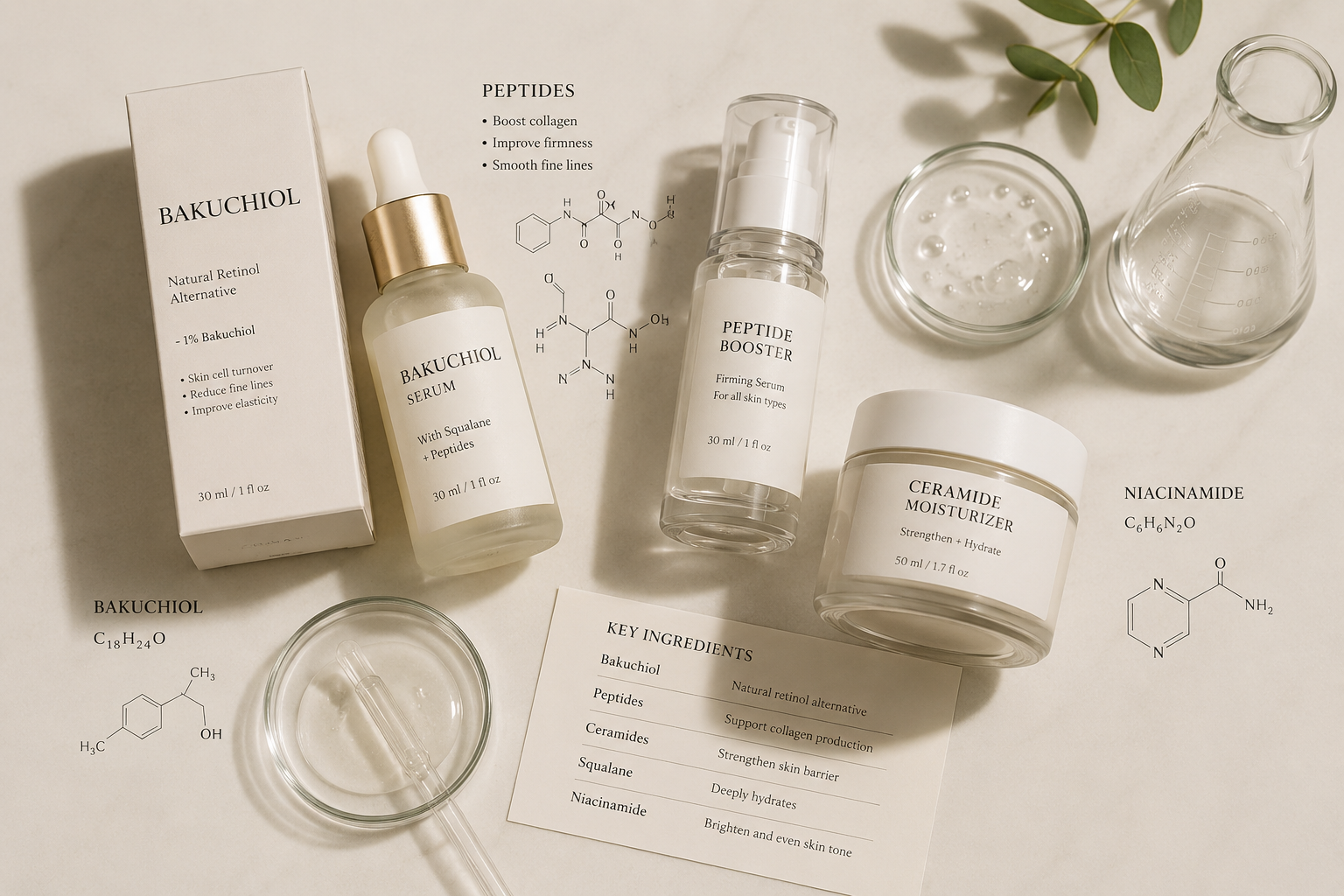
Consider bakuchiol, the natural retinol alternative. It's growing about 7.2% a year in the US as both mass and prestige brands adopt ingredient-forward messaging. Shoppers recognize the name, understand the benefit, and seek it out.
Education Replaces Persuasion
Beauty products now need explanation. Routines, actives, and claims have grown complex. Shoppers expect brands to clearly show how a product fits into their lives.
This matters because education shortens the path to purchase. When someone understands why an ingredient works, hesitation drops. They feel confident instead of confused. Brands that explain clearly convert interest more reliably than those chasing novelty.
Here's how top brands educate effectively:
-
Lead with active ingredients and concentrations in product titles.
-
Create simple content explaining how each ingredient works.
-
Share clinical testing results and third-party verification.
-
Partner with credible voices like dermatologists and chemists.
Clean Beauty Goes Deeper
Clean beauty keeps growing, forecast to reach $33.2 billion by 2034. But "clean" has evolved past simple "free from" claims. It now means transparency, traceability, and verification you can check.
Shoppers armed with ingredient-scanning apps audit products in seconds. So brands that hide behind vague claims get caught fast. The winners share their sourcing and testing openly, which turns honesty into a competitive edge.
|
Old Approach |
New Approach |
Why It Works |
|
Aspirational imagery |
Ingredient education |
Builds informed trust |
|
"Free from" claims |
Full transparency |
Survives app scrutiny |
|
Vague promises |
Clinical proof |
Reduces buyer hesitation |
|
Celebrity endorsement |
Expert validation |
Carries real authority |
Strategy 3: Sensory-Driven Content
You can't smell a fragrance or feel a cream through a screen. That's the challenge sensory-driven content solves. Top brands now build content that brings texture, scent, and feel to life.
Sensory experience has moved from a nice extra to a real commercial engine. Fragrance proves the point. It's projected to be the fastest-growing mass beauty sub-category at 11% expansion, and 37% of US shoppers now cite scent as a primary purchase driver.
This shift changes how brands create content. Static images don't capture texture or scent. Video does the heavy lifting instead, showing the satisfying swirl of a balm or the glide of a serum. Process matters more than the final result.
How Sensory Content Builds Demand
Sensory-driven creativity rarely triggers an instant sale. Its value builds over time through repeated exposure and recall. Someone watches a creamy application video three times before they finally buy. That's normal, and it's powerful.
Brands that measure this content by immediate clicks alone misread its value. The real payoff shows up in familiarity and recognition. When a shopper finally sees the product on a shelf, it already feels like a friend.
To use sensory content well, try this:
-
Film close-up application videos that show texture clearly.
-
Describe scent in relatable, vivid words.
-
Highlight the ritual and feel, not just the outcome.
-
Give the content room to build recall over time.
Neuro-Beauty and Functional Scent
Fragrance has also gained a new role. Neuro-beauty positions scent as a functional tool that shifts mood, not just a pleasant smell. Brands now talk about how a fragrance makes you feel calm or energized.
This deeper framing gives sensory content more substance. It connects a physical experience to an emotional benefit. That combination keeps shoppers engaged and gives them a reason to choose one scent over another.
Strategy 4: Community Building
The best beauty brands don't just sell products. They build communities that people want to belong to. This turns one-time buyers into loyal fans who promote the brand for free.
Community works because it shifts the relationship. Instead of talking at customers, brands invite them in. Creators become long-term partners who shape how products get explained and tested. Their value lies in closeness to the audience, not just reach.
amika offers a strong example. The hair care brand built a community that stylists genuinely want to join. Most brands treat professionals as a sales channel and stop there. amika instead made them real partners, which earned authentic, lasting advocacy.
Why Long-Term Relationships Beat One-Off Posts
One-off creator activations lose relevance fast. Audiences now expect familiarity and continuity. They want to see the same trusted faces use a product over weeks, not just once.
This is why creators increasingly function as ongoing partners. They explain, test, and normalize products over time. That steady presence builds the kind of trust a single sponsored post can't match.
Strong communities also create useful feedback loops. Members tell brands what works and what doesn't. Brands that listen refine both their messaging and their products faster than competitors.
Building Your Own Community
You can build a community at any size. Focus on genuine connection rather than follower counts. Here's where to start:
-
Pick a clear group to serve, like a skin type or a profession.
-
Show up consistently with helpful, honest content.
-
Invite feedback and actually act on it.
-
Reward loyal members with early access or recognition.
-
Turn your best customers into long-term creator partners.
The goal isn't to broadcast. It's to belong. When people feel part of something, they stick around and bring friends.
Strategy 5: Packaging as a Marketing Tool
Packaging is the one touchpoint every customer holds in their hands. Smart beauty brands treat it as part of the marketing experience, not just a container. The box shapes how a customer feels before they even try the product.
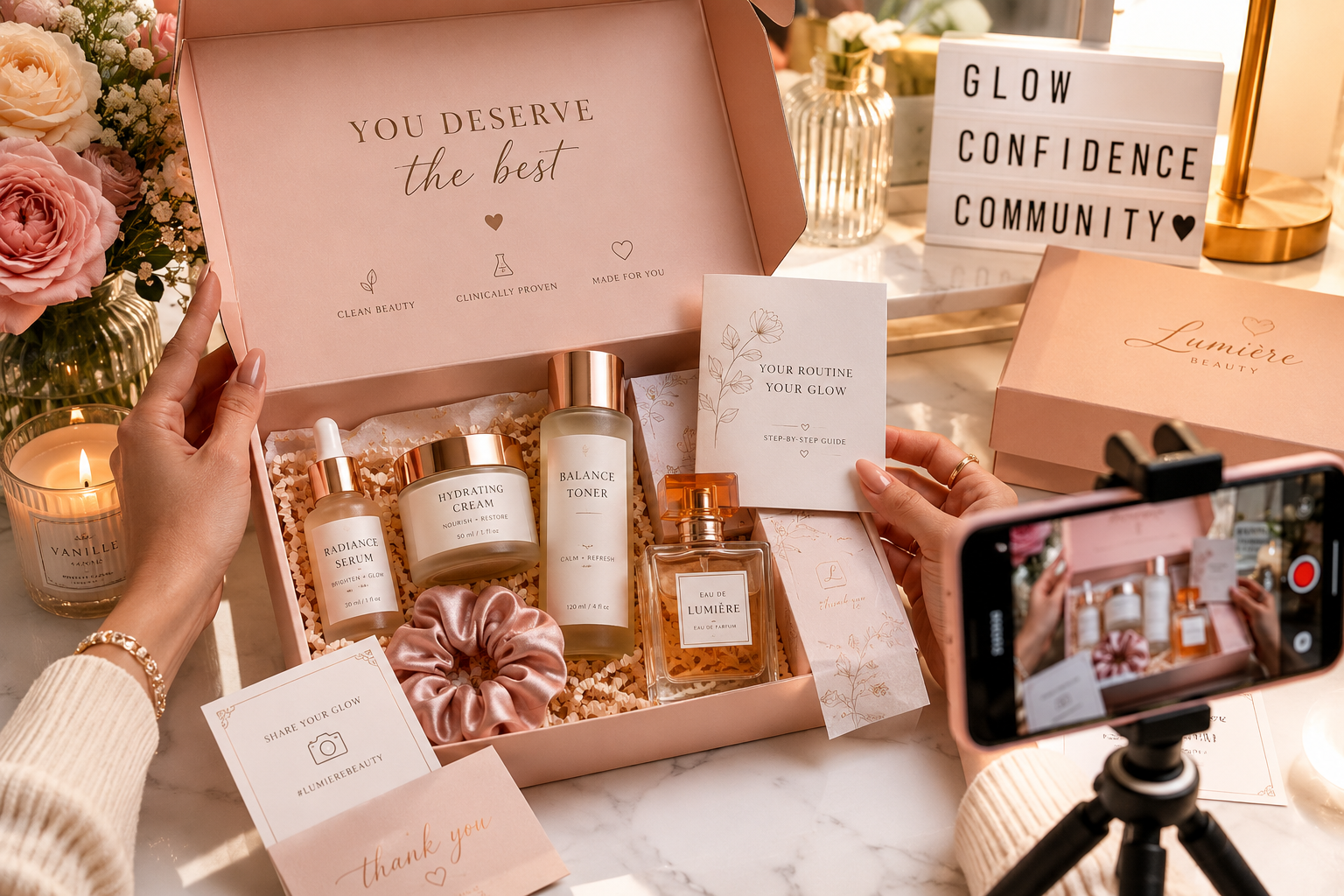
First impressions form in seconds. A crushed or bare package signals carelessness. A thoughtful, well-built one signals quality. That feeling transfers straight to the product inside.
Packaging also fuels social sharing. Unboxing videos are everywhere, and a beautiful reveal gives customers a reason to film and post. That's free promotion earned through design alone.
Using Packaging to Educate and Onboard
Packaging can do more than protect. It can teach. Many brands tuck guides and instructions right into the box so customers learn how to use a product correctly. This reduces confusion and boosts results.
For products with multi-step routines, structured Booklet Packaging keeps the guide and the products together. The customer opens the box and immediately understands the order to use things. That small touch improves the experience and lowers support questions.
Education-led packaging works especially well for complex categories. Think serums with specific application steps, or fragrance sets with layering tips. When the box explains the ritual, the customer feels guided rather than lost.
Matching Packaging to Brand Positioning
Packaging should reflect what your brand stands for. A clean beauty brand might choose recyclable materials and a note about sourcing. A prestige brand might invest in weight, texture, and finish that signal luxury.
Here's how different goals shape packaging choices:
|
Brand Goal |
Packaging Focus |
Customer Signal |
|
Build trust |
Clear info and seals |
"This brand is honest" |
|
Feel premium |
Quality materials |
"This is worth the price" |
|
Reduce confusion |
Guides and inserts |
"I know how to use this" |
|
Drive sharing |
Memorable unboxing |
"I want to film this" |
|
Support sustainability |
Eco materials |
"This brand cares" |
The choices you make in Custom Packaging protect fragile items like glass serum bottles while reinforcing your brand story. Sturdy inserts keep products safe in transit, and consistent branding ties the box to your wider identity. When the packaging matches the promise, trust grows.
Putting the Five Strategies Together
These five strategies work best as a system, not as isolated tactics. Each one reinforces the others. Social commerce drives discovery, education builds trust, sensory content deepens desire, community creates loyalty, and packaging seals the experience.
The brands growing fastest think in connected systems. A shopper might find a product through a dermfluencer, learn about its ingredients on the product page, watch a texture video, join the brand's community, and finally enjoy a thoughtful unboxing. Every step builds on the last.
Here's a quick recap of the key points:
-
Meet shoppers on social platforms where discovery and purchase now happen.
-
Prove your products work through transparency and expert education.
-
Bring texture and scent to life with sensory video content.
-
Build a community that turns buyers into long-term advocates.
-
Treat packaging as a marketing tool that educates and delights.
You don't need to master all five at once. Pick the one that fits your biggest gap and start there. Build slowly, measure what works, and add the next strategy when you're ready.
Why You Can Trust These Strategies
These strategies aren't guesses. They come from current industry data and the real moves of leading beauty brands. The 10% global growth, the dermfluencer surge, and the rise of social commerce all reflect measured shifts, not passing fads.
We've also grounded each strategy in plain reasoning. You don't just learn that something is popular. You learn why it works, so you can apply it with confidence. That understanding holds up far better than chasing the latest viral moment.
The deeper truth is consistency. Beauty in 2026 rewards brands that stay coherent across every touchpoint. When your social content, your product claims, your community, and your packaging all tell the same honest story, shoppers trust you. That trust is what turns strategy into lasting growth.
Frequently Asked Questions
1. What is the biggest marketing strategy for beauty brands today?
Social commerce and influencer marketing lead the way. Shoppers now discover, research, and buy products directly on TikTok and Instagram. That's why beauty brands spend 70 to 75% of their budgets on commerce media. The key is creating platform-native content and partnering with creators whose audience matches your category.
2. Why is ingredient transparency so important now?
Shoppers actively research what they put on their skin, often using ingredient-scanning apps. They expect clear information about activities, concentrations, and testing. Brands that explain ingredients openly build trust and earn repeat purchases. Vague or hidden claims get caught quickly and damage credibility.
3. What is a dermfluencer and why do they matter?
A dermfluencer is a dermatologist or credentialed expert who shares skincare science in simple, engaging content. They matter because they bring real authority to a crowded, confusing market. Their content drove $578M in earned media value recently, and science-led brands like CeraVe and La Roche-Posay see strong results from these partnerships.
4. How does packaging work as a marketing tool?
Packaging shapes first impressions, educates customers, and encourages social sharing. A thoughtful box signals quality and reduces confusion when it includes guides or instructions. It also gives customers a reason to film unboxing videos, which spreads your brand for free. Strong packaging reinforces your brand story at the exact moment a customer holds your product.
5. Are mid-tier creators better than celebrities for beauty marketing?
Often, yes. Mid and macro creators with 80K to 500K followers feel like category specialists and cost less than celebrities. They keep audiences engaged over time and drive repeatable, authentic content. Rhode's Peptide Lip launch showed that mid and macro creators sustained momentum even after a celebrity sparked the initial buzz.
6. What is sensory-driven content in beauty marketing?
It's content that brings texture, scent, and feel to life through video and vivid description. Since you can't smell or touch a product through a screen, brands show satisfying application and describe scent in relatable words. This content builds desire over time through familiarity and recall rather than instant clicks.
7. Can a small beauty brand use these strategies?
Absolutely. You don't need a large budget to start. Partner with smaller creators, explain your ingredients clearly, film simple texture videos, build a genuine community, and invest in thoughtful packaging. Focus on the strategy that fills your biggest gap first, then add others as you grow.
Final Thoughts
The top beauty brands win because they connect with shoppers at every step. They show up on social platforms, prove their products work, create content you can almost feel, build communities worth joining, and treat packaging as part of the story.
None of this requires a massive budget. It requires honesty, consistency, and a real understanding of what shoppers want. Start with one strategy that fits your brand, apply it well, and measure the results.
Beauty marketing in 2026 favors brands that think in systems and earn trust over time. Pick your first strategy today, and build from there. The growth follows the trust.
 Russian
 English
 Arabic
 French
 Spanish
 Portuguese
 Deutsch
 Turkish
 Dutch
Dutch
 Italiano
 Romaian
 Portuguese (Brazil)
 Greek
Greek