English
 Arabic
 French
 Spanish
 Portuguese
 Deutsch
 Turkish
 Dutch
Dutch
 Italiano
 Russian
 Romaian
 Portuguese (Brazil)
 Greek
Greek
Mirtazapine Drug Market expected to gain market growth in the forecast period of 2021 to 2028
Other |
2025-07-22 05:45:52
 Social Networth OS
 Creator Commerce
 Launch Startup
 Global News
 Creator Award
 Talkfever App
Hepsini Gör
Talkfever App
Hepsini Gör

Upgrade to Pro
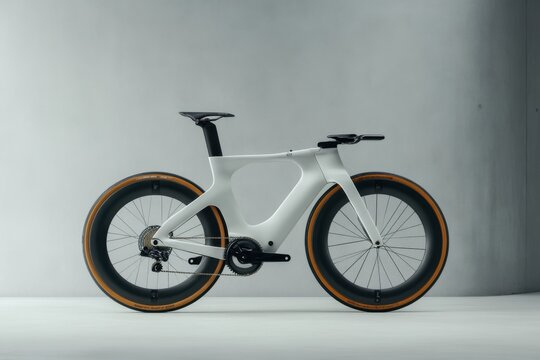
The bicycle, a pinnacle of simple mechanical efficiency for over a century, is undergoing a cognitive revolution. It is evolving from a passive vehicle into an intelligent partner, becoming a node in a vast urban network. This new paradigm is the Self-Aware Bicycle—a machine equipped with a suite of IoT sensors, powered by onboard AI, and deeply integrated into a connected ecosystem. This shift is creating the "Cognitive Cyclist," a rider whose experience is enhanced, safety improved, and efficiency maximized by a bicycle that understands itself, its environment, and its user. We are moving beyond GPS tracking and cadence sensors into an era of truly predictive, interactive, and resilient two-wheeled mobility.
How It Works: The Anatomy of a Self-Aware Bicycle
The self-aware bicycle is built on three synergistic layers that transform raw data into actionable intelligence.
The Sensory Layer (IoT Sensors): Embedded throughout the frame are miniaturized, low-power sensors that act as the bike's nervous system. This includes:
LiDAR & Ultrasonic Sensors: For proximity detection, blind-spot monitoring, and collision avoidance.
Microphones & Vibration Sensors: To detect the specific acoustic signature of aggressive drivers, road surface anomalies (potholes, gravel), or even the onset of mechanical failure (e.g., a loose spoke or bearing wear).
Biometric Sensors (in grips/saddle): Monitoring rider heart rate, exertion level, and grip stress.
Environmental Sensors: Measuring air quality, temperature, and humidity.
Precise Location & Attitude Sensors: GPS fused with inertial measurement units (IMUs) for centimeter-accurate positioning and understanding of the bike's lean and pitch.
The Cognitive Layer (On-Device AI): An onboard microcontroller with a dedicated AI accelerator (NPU) processes sensor data in real-time. This "brain" performs edge computing, identifying patterns and making instant decisions without relying on the cloud. It can recognize a car door opening, distinguish between a hazardous pothole and a harmless crack, or detect rider fatigue from biometric and handling data.
The Ecosystem Layer (Connectivity): Via 5G/C-V2X (Cellular Vehicle-to-Everything), the bicycle communicates bidirectionally.
Vehicle-to-Infrastructure (V2I): It receives signals from smart traffic lights for priority passage and learns of road closures.
Vehicle-to-Vehicle (V2V): It exchanges data with cars, scooters, and other bikes to form a cooperative awareness mesh, warning of fast-approaching vehicles at blind intersections.
Vehicle-to-Network (V2N): It uploads aggregated, anonymized data on road conditions and traffic flow to city planners and shares its status with the rider's digital ecosystem (calendar, health app, etc.).
Why Now? The Converging Catalysts
This transformation is being driven by powerful, concurrent trends:
The Micromobility Boom: The proliferation of e-bikes and scooters has created demand for safer, more manageable fleets and a regulatory push for better integration with urban infrastructure.
Maturation of Enabling Tech: The miniaturization and cost reduction of LiDAR, the rollout of low-latency 5G networks, and the advent of ultra-efficient AI chips make this architecture commercially viable.
The Safety Imperative: With urban cycling accident rates a persistent concern, technology offers a path to proactive collision prevention rather than reactive protection.
Data-Driven Urbanism: Cities are actively seeking IoT-generated data to optimize traffic flow, plan infrastructure, and meet sustainability goals, creating a willing partner for connected bicycle networks.
Benefits and Advantages: A Transformative Riding Experience
The transition to a cognitive cycling ecosystem offers profound advantages:
Predictive Safety: The bicycle can provide haptic feedback through vibrating handlebars or saddle to warn of a car in the blind spot, an impending red-light runner detected by V2I, or a slippery road segment ahead. It can automatically activate brake lights or even initiate gentle motor braking in an e-bike if a forward collision is imminent.
Adaptive Performance: AI tailors the riding experience in real-time. An e-bike's motor assistance can automatically adjust based on rider fatigue (from biometrics) and upcoming terrain (from map data). Suspension systems can pre-adjust for a detected pothole.
Proactive Maintenance & Security: Vibration analysis can predict component failure weeks in advance, scheduling service before a breakdown. Combined with GPS and biometric authentication, theft becomes nearly impossible; the bike cannot be operated by an unregistered user and can report its location in real-time if moved without authorization.
Enhanced Routing & Efficiency: Navigation evolves from turn-by-turn to context-aware. Routes are optimized not just for distance, but for air quality, rider effort, real-time congestion, and even personal safety scores of different streets at that time of day.
Seamless Urban Integration: The bicycle becomes a key player in multimodal transit. It can reserve a spot on a public bus bike rack, negotiate priority with a smart traffic signal to form a "green wave," and integrate payment for bridge tolls or bike-share transfers.
Disadvantages and Challenges: Navigating the Roadblocks
This promising future faces significant hurdles:
Cost and Complexity: The sensor suite, AI hardware, and robust connectivity will initially place these bicycles in a premium price category, potentially exacerbating mobility inequities.
Cybersecurity and Data Privacy: A connected bicycle is a potential attack surface. Hacking risks range from nuisance (false alarms) to critical safety threats (disabling brakes). The extensive data collected—location, biometrics, travel patterns—creates massive privacy concerns regarding ownership, use, and potential surveillance.
Standardization and Fragmentation: For V2X communication to work, universal protocols are essential. A proprietary ecosystem where a "Google Bike" cannot talk to a "Ford Car" or "Siemens Traffic Light" would collapse the core safety benefits.
Reliance on Infrastructure: The full vision requires massive investment in smart city infrastructure. Early adopters in non-equipped cities will have a limited, degraded experience.
Over-Reliance and Skill Atrophy: There is a risk that constant AI assistance could dull a rider's innate situational awareness and manual handling skills, which remain the ultimate safety backup.
Conclusion: From Tool to Trusted Companion
The self-aware bicycle represents a fundamental reimagining of the rider-machine relationship. It is no longer a simple tool but an intelligent, connected companion deeply embedded in the urban fabric. The goal is not to remove the human from the loop, but to augment the cyclist's senses, extend their capabilities, and create a protective informational cocoon.
While challenges of cost, privacy, and standardization are substantial, the trajectory is clear. The bicycle is becoming cognitive. The future of urban mobility belongs not just to those who ride, but to those who ride connected, where every journey is safer, more efficient, and seamlessly integrated into the smart, responsive city of tomorrow.
Q1: Is this just a fancy e-bike with a big screen?
No. While many current e-bikes have displays and basic connectivity, the self-aware bicycle is defined by its sensor fusion and edge AI. It doesn't just show you data; it interprets the world around it and acts autonomously to enhance safety and performance, often without direct rider input.
Q2: Won't all these sensors and computers make the bike heavy and ugly?
Advancements in miniaturization and composite materials aim to integrate sensors directly into the frame, forks, and handlebars. The goal is "invisible intelligence," where the technology is felt through its benefits, not seen as bulky add-ons. Weight will be a trade-off, but one offset by the efficiency gains of smarter e-bike motor assistance.
Q3: How does my privacy remain protected with a bike that tracks everything?
This is the paramount challenge. Reputable manufacturers will need to adopt privacy-by-design principles: clear user consent, local (on-device) processing of sensitive data like biometrics, strong anonymization for shared urban data, and transparent data ownership policies. Regulatory frameworks like GDPR will be crucial.
Q4: What happens if the system has a glitch or gets hacked?
Redundancy and clear fail-safes are essential. The core mechanical functions (brakes, steering) must remain fully independent. The AI should be an assistive layer that can be safely disengaged. Cybersecurity will require the same rigorous, over-the-air update protocols used by the automotive industry.
Q5: When will this technology be mainstream?
We are in the prototyping and high-end commercialization phase now. Key components will trickle down from luxury and performance models over the next 5-7 years. Widespread adoption is inextricably linked to the parallel rollout of supportive smart city infrastructure, making it a gradual, city-by-city evolution rather than an overnight revolution.