English
 Arabic
 French
 Spanish
 Portuguese
 Deutsch
 Turkish
 Dutch
Dutch
 Italiano
 Russian
 Romaian
 Portuguese (Brazil)
 Greek
Greek
Global commodity chemicals market was valued at USD 2.0 trillion in 2025 and is projected to reach USD 2.62 trillion by 2034
Other |
2026-08-24 09:54:05
 Social Networth OS
 Creator Commerce
 Launch Startup
 Global News
 Creator Award
 Talkfever App
See All
Talkfever App
See All

Upgrade to Pro
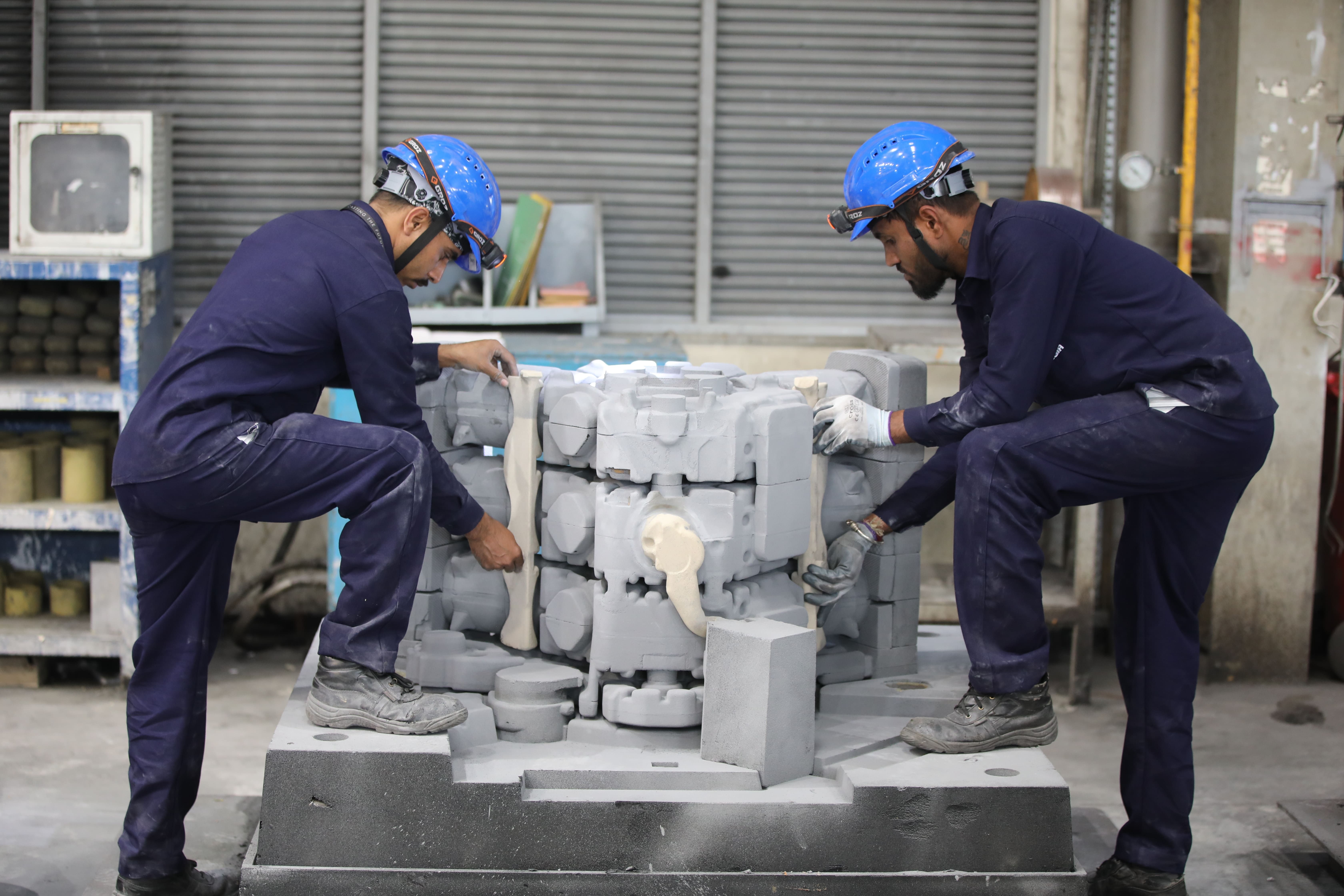
Aluminum die casting is a highly efficient manufacturing process used to produce strong, lightweight, and dimensionally accurate metal components. By injecting molten aluminum into hardened steel molds under high pressure, manufacturers can create complex shapes with smooth finishes and consistent quality.
This process is widely adopted in industries that demand performance, durability, and large-scale production capability.
In aluminum die casting, aluminum alloy is melted in a furnace and transferred into a cold chamber machine. The molten metal is then injected into a precision-engineered steel die at high pressure. Once the metal cools and solidifies, the die opens and the casting is ejected.
Afterward, the component may undergo trimming, CNC machining, surface finishing, or coating depending on application requirements.
Lightweight and Strong
Aluminum provides excellent strength-to-weight ratio, making it ideal for performance-focused applications.
High Dimensional Accuracy
Tight tolerances reduce secondary machining and ensure consistent fit.
Smooth Surface Finish
Parts are suitable for powder coating, anodizing, or painting.
Fast Production Cycles
Short cycle times allow efficient high-volume manufacturing.
Corrosion Resistance
Aluminum naturally resists rust, enhancing long-term durability.
Aluminum die casting is widely used in:
Automotive engine and transmission components
Electrical housings and heat sinks
Industrial machinery parts
Lighting fixtures
Consumer appliances
Aluminum die casting remains a dependable solution for manufacturers seeking precision, efficiency, and scalability. By combining advanced tooling, high-pressure injection technology, and durable aluminum alloys, the process supports the production of high-performance components across multiple industries.