English
 Arabic
 French
 Spanish
 Portuguese
 Deutsch
 Turkish
 Dutch
Dutch
 Italiano
 Russian
 Romaian
 Portuguese (Brazil)
 Greek
Greek
Why U.S. Equipment Operators Trust Aspect Plus for Durable, High-Performance Engines
Other |
2025-05-06 19:36:20
 Social Networth OS
 Creator Commerce
 Launch Startup
 Global News
 Creator Award
 Talkfever App
عرض كل النتائج
Talkfever App
عرض كل النتائج

ترقية الحساب
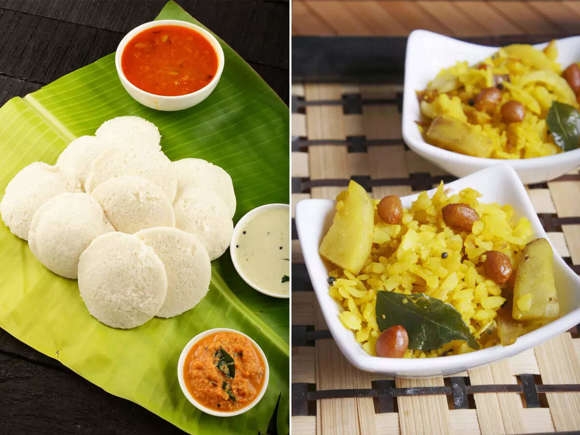
In India, breakfast is more than just the first meal of the day—it sets the tone for energy levels, digestion, and even weight management. Among the most popular traditional choices are idli and poha, both light, affordable, and widely loved. But when the goal is fat loss with sustained energy, which one truly deserves the crown? Let’s compare them across nutrition, calories, digestion, satiety, and overall health impact.
Idli is made from fermented rice and urad dal batter. Its nutritional strength lies in:
Moderate protein from lentils
B vitamins produced during fermentation
Low fat content
Minimal processing
A standard serving of two idlis provides carbohydrates for quick energy, some protein for muscle repair, and small amounts of iron and calcium.
Poha, prepared from flattened rice, is often cooked with peanuts, onions, mustard seeds, and vegetables. Nutritionally, poha offers:
Easily digestible carbohydrates
Slightly higher iron content (especially if fortified)
Healthy fats from peanuts
Fiber from vegetables
Poha’s nutritional profile depends heavily on preparation. Adding vegetables, sprouts, or peanuts significantly boosts its micronutrient value.
Comparison:
Idli provides better protein quality due to lentils and fermentation, while poha offers better iron and flexibility for nutrient enrichment through vegetables.
Calorie control is central to fat loss.
Two medium idlis: ~120–140 kcal
One cup plain poha: ~180–220 kcal (can rise with peanuts and oil)
Idli is naturally low in calories because it is steamed and contains almost no oil. Poha, though still light, becomes calorie-dense when prepared with excess oil or peanuts.
However, weight loss depends not only on calories but also on portion size and satiety. A person may feel fuller with poha due to fiber and texture, while idli’s soft structure may lead to quicker hunger if eaten alone.
Verdict on calories:
Idli wins in calorie efficiency. Poha can still support weight loss if prepared with minimal oil and plenty of vegetables.
Idli stands out because it is fermented. Fermentation:
Breaks down complex carbohydrates
Improves nutrient absorption
Supports healthy gut bacteria
Makes it easy on the stomach
For people with sensitive digestion, acidity, or bloating, idli is often better tolerated.
Poha is also easy to digest since flattened rice is pre-processed and requires little cooking. It is gentle on the stomach but lacks the probiotic advantage of fermented foods.
Comparison:
Idli has an edge in gut health due to fermentation, while poha remains a safe, mild option for digestion.
Satiety (feeling full) depends on fiber, protein, and texture.
Idli provides quick energy from carbs but has lower fiber. It works best when paired with sambar or chutney, which adds protein and fiber.
Poha contains more fiber (especially with vegetables) and fats from peanuts, which slow digestion and improve fullness.
In terms of energy:
Idli gives rapid energy—ideal for early workouts or light mornings.
Poha provides steady energy due to fiber and fat combination—better for long work hours.
Comparison:
Poha offers better satiety, while idli offers faster energy release.
Idli advantages:
Low fat
Fermented for gut health
Light and non-greasy
Ideal for calorie-controlled diets
Poha advantages:
Iron-rich
Customizable with vegetables and protein
Keeps you full longer
Good for active lifestyles
Both are naturally gluten-free and suitable for vegetarians. The health impact depends less on the base food and more on what you add—chutneys, peanuts, vegetables, or ghee can change the nutritional profile drastically.
There is no single winner for everyone.
Choose Idli if:
You want a low-calorie breakfast
You have digestive issues
You prefer a light meal
Your goal is fat loss with minimal calorie intake
Choose Poha if:
You need longer-lasting energy
You want higher iron intake
You feel hungry quickly after idli
You prefer a more filling breakfast
Best strategy: Alternate between the two and prepare them smartly—steamed idli with sambar or vegetable poha with minimal oil.
The battle between idli and poha is not about which is “good” or “bad,” but about how they fit into your lifestyle and goals. Idli shines as a gut-friendly, low-calorie option, while poha excels as a filling, iron-rich energy meal. When prepared with minimal oil and balanced sides, both can support weight loss and sustained energy. The true king of breakfast is not idli or poha—it is portion control, balance, and consistency.
1. Which is better for weight loss: idli or poha?
Idli is lower in calories, making it better for strict calorie control. Poha can still support weight loss if cooked with little oil and more vegetables.
2. Is idli good for gut health?
Yes. Fermentation improves digestion and helps support beneficial gut bacteria.
3. Does poha increase blood sugar?
Poha has a moderate glycemic index. Adding vegetables, peanuts, and lemon helps slow glucose absorption.
4. Can I eat idli or poha daily?
Yes, but variety is important. Rotate with other protein-rich breakfasts like oats, eggs, or sprouts for balanced nutrition.
5. Which gives more energy for workouts?
Idli gives quick energy, while poha provides longer-lasting energy due to fiber and fats.